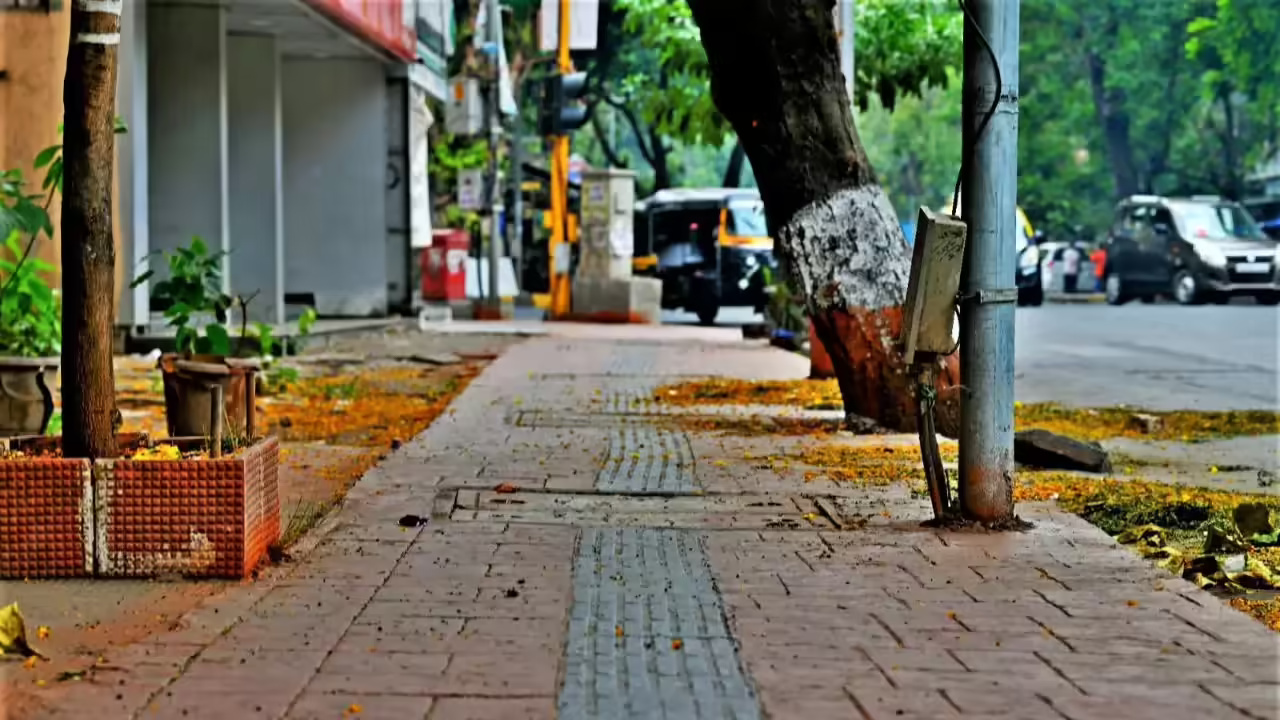
Mumbai Footpath Drive Expands Across Eastern Suburbs
Mumbai’s eastern suburbs are set for a broader pedestrian-access overhaul, with the civic administration identifying roads around Mulund, Bhandup, Kanjurmarg and Ghatkopar for obstruction removal and footpath improvements. The programme covers about 20.5 km across 14 roads in S Ward, alongside interventions near railway stations, where crowding, hawking and mixed traffic frequently compete for limited public space. The Mumbai footpath drive is being shaped around railway access rather than isolated pavement repairs. During inspections across T, S and N wards, senior civic officials directed departments to prepare local plans covering pedestrian movement, traffic circulation and bus operations around station areas.
In Mulund, 13 roads have been identified for action under the programme. The wider exercise in Bhandup and Kanjurmarg is expected to involve the relocation of hawking activity from heavily used station approaches, with alternative spaces planned for affected vendors. The approach attempts to address two competing urban needs: keeping pedestrian corridors usable while avoiding the displacement of livelihoods without a rehabilitation mechanism. At Bhandup railway station’s western approach, officials are examining how bus movements and general traffic can be reorganised alongside pedestrian space. At Kanjurmarg, several stalls are also due to be removed or relocated. Further action is planned at locations including Bhattipada Junction and Peppermint Chawl. The scale of the Mumbai footpath drive matters because railway stations function as some of the city’s most intensive pedestrian zones. A blocked or narrow footpath can push commuters onto carriageways, increasing conflict between pedestrians, buses, two-wheelers and other vehicles. Better-designed station approaches can also reduce walking barriers for older people, children and passengers carrying luggage.
Ghatkopar is another focus. Around three kilometres of footpaths along five roads near Pantnagar are earmarked for clearance of unauthorised hawking and other obstructions. The intervention indicates a shift towards treating footpaths as continuous mobility infrastructure rather than leftover road space. Waste management is being linked to the same street-level programme. Around Badwaik Hospital in Bhandup, the civic body is using targeted collection vehicles, additional bins, attendants and surveillance to tackle recurring roadside dumping. The waste reportedly includes commercial refuse, furniture, mattresses and hospital-related material, making segregation and timely collection particularly important for public hygiene. Urban planners say the effectiveness of the programme will ultimately depend on what happens after clearance. Footpaths need regular enforcement, maintenance, drainage and predictable space for legitimate vending. Without those measures, cleared corridors can quickly become obstructed again.
For Mumbai, the next test is whether these interventions create durable pedestrian routes that connect homes, businesses, bus stops and railway stations, rather than temporary improvements confined to inspection periods.