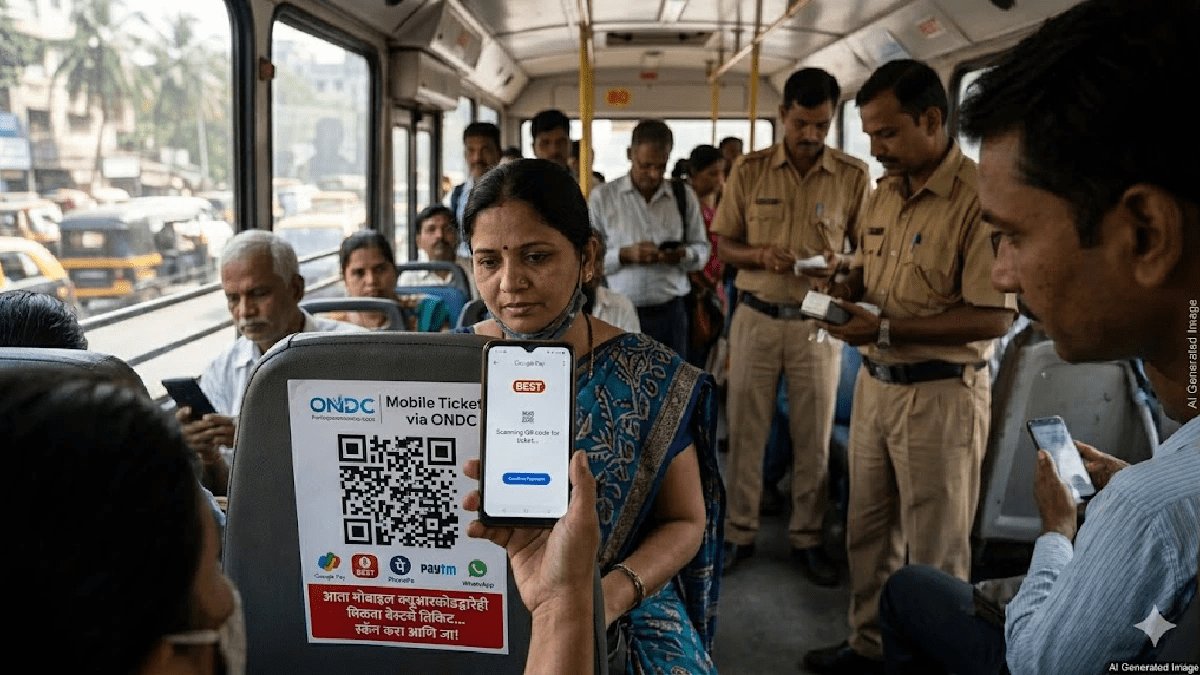
Mumbai’s public bus network is moving towards a more integrated digital ecosystem, as the city’s transport utility enables ticket purchases through widely used consumer platforms, reducing reliance on standalone transit applications. The initiative allows commuters to access digital bus ticketing via interoperable platforms linked to the government-backed Open Network for Digital Commerce. By embedding ticketing within commonly used payment and mobility applications, the system aims to simplify access and expand reach among daily passengers. Transport officials suggest that this approach reflects a shift from closed, app-specific systems to open digital infrastructure, where services are layered onto platforms already embedded in everyday transactions. For commuters, this could mean booking bus rides using familiar payment interfaces without navigating multiple applications.
The adoption of digital bus ticketing is also expected to accelerate the transition away from cash-based transactions. Currently, a relatively small share of bus users rely on digital options, but integration with widely used payment ecosystems could significantly increase uptake. Urban mobility experts note that reducing friction in ticket purchases is key to driving behavioural change, particularly in cities with high commuter volumes. The move is part of a broader push to create unified transport access across modes such as buses, metro rail, and suburban trains. By aligning with an open network framework, the system enables interoperability between different service providers, potentially paving the way for multimodal journey planning and payments within a single interface. From a sustainability perspective, expanding digital bus ticketing can contribute to operational efficiency by reducing paper usage, streamlining fare collection, and improving data availability.
Better data on commuter patterns can support route optimisation, reduce fuel consumption, and enhance service planning—factors critical to building low-emission urban transport systems. However, challenges remain. Digital access is uneven across income groups, and not all commuters may be comfortable with app-based transactions. Ensuring inclusivity will require maintaining parallel systems while gradually building trust in digital alternatives. Experts also highlight the need for robust cybersecurity and data privacy frameworks as public services become increasingly platform-dependent. For the city’s transport network, the integration represents a step towards modernising legacy systems without large-scale infrastructure overhaul. By leveraging existing digital ecosystems, authorities are attempting to improve service delivery while keeping costs manageable.
As Mumbai continues to expand its public transport footprint, the success of such initiatives will depend on user adoption and seamless integration across services. If implemented effectively, digital bus ticketing could become a cornerstone of a more connected, efficient, and commuter-friendly urban mobility system.