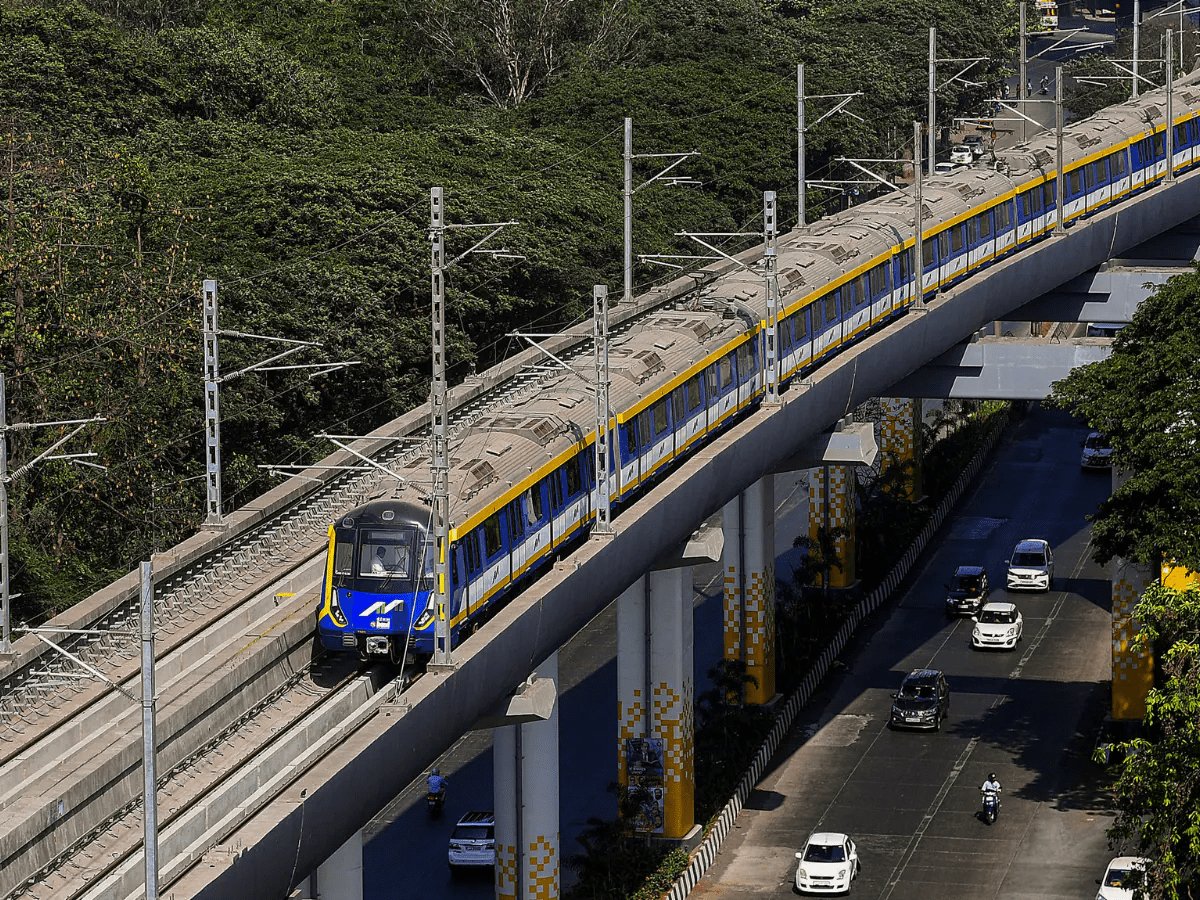
Mumbai is set to expand its underground transit network with a proposed east–south corridor aimed at improving connectivity between dense residential districts and the city’s historic business hub. The planned Mumbai Metro Line 11 is expected to connect Wadala’s Anik depot to the southern waterfront, offering a faster alternative to road-based travel across some of the most congested urban stretches. Spanning roughly 17–18 kilometres, the fully subterranean corridor will pass through high-density zones including Sewri, Byculla, Bhendi Bazaar and the central business district near Chhatrapati Shivaji Maharaj Terminus, before terminating near the Gateway of India precinct. Transport planners suggest the alignment has been designed to link employment centres, heritage districts and emerging residential clusters through a single high-capacity route.
The Mumbai Metro Line 11 is positioned as a critical addition to the city’s expanding rail-based transit system, which aims to reduce dependence on private vehicles and ease pressure on arterial roads. By providing a direct connection between the eastern suburbs and South Mumbai, the corridor is expected to cut travel times significantly for daily commuters who currently rely on a mix of suburban trains, buses and road transport. Urban mobility experts note that underground metro systems, while capital-intensive, are particularly suited for built-up areas where surface expansion is limited. In South Mumbai, where land availability is constrained and heritage conservation is a priority, tunnelling offers a way to add capacity without disrupting existing urban fabric. The project also reflects a broader shift towards integrated transport planning. Officials indicate that the corridor will interface with existing metro lines and suburban rail networks, enabling smoother transfers and supporting the development of a multimodal transit ecosystem. Such integration is seen as essential for improving first- and last-mile connectivity, a persistent gap in Mumbai’s transport landscape.
Beyond mobility, the Mumbai Metro Line 11 carries economic implications. Improved accessibility to commercial districts can influence real estate patterns, potentially redistributing demand across emerging corridors. At the same time, better public transport infrastructure is expected to support workforce mobility and productivity in one of India’s most economically significant regions. However, infrastructure analysts caution that large-scale underground projects come with challenges, including high construction costs, complex engineering conditions, and the need for careful management of urban utilities. Ensuring minimal disruption during construction and maintaining timelines will be critical to the project’s success. From a sustainability perspective, expanding metro connectivity aligns with efforts to reduce carbon emissions by shifting commuters from road-based transport to electrified mass transit. In a city grappling with congestion and air quality concerns, such investments are increasingly viewed as essential rather than optional.
As planning progresses, the effectiveness of the corridor will depend on timely execution and seamless integration with the wider transport network. If delivered as envisioned, the project could play a defining role in reshaping how Mumbai moves, linking its historic core with growing urban districts through a more efficient and resilient transit system.