


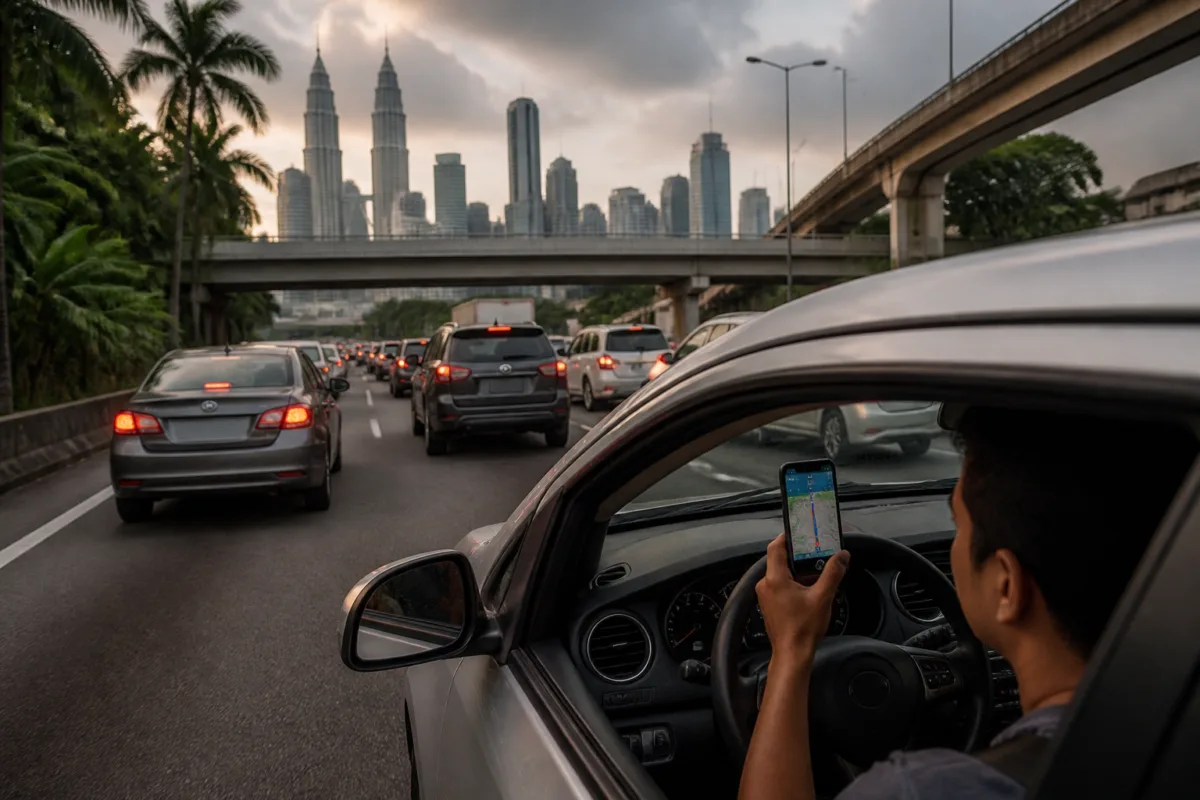
Malaysia has barred civil servants from using Waze for official duties and may impose wider restrictions on the navigation app, Prime Minister Anwar Ibrahim said, citing national security and concerns over the protection of government and personal data.
Anwar said the government could consider a complete ban once viable alternatives are available. He defended the partial restriction in Facebook posts on Friday, saying Malaysia’s security and sovereignty could not be compromised.
“I apologize if the decision to ban this navigation application, which belongs to the Israeli regime, causes inconvenience to the public,” Anwar said. He added that the government’s objective was to protect citizens’ personal information and prevent its alleged misuse by the Israeli government.
Waze rejected the claims. A company spokesperson told Agence France-Presse, as reported by Bloomberg, that suggestions that the app collects sensitive government information or allows any entity to exploit personal user data were “completely false”. The company said it operates under strict privacy policies and global data-protection standards.
The dispute affects an app widely used by Malaysian drivers for live traffic information. Waze relies on crowdsourced updates about congestion, road accidents, speed traps and alternative routes, making it part of the everyday operating layer of urban mobility rather than merely a point-to-point navigation tool.
Anwar has encouraged Malaysians to consider TuJu, a locally developed alternative operated by the Malaysian Highway Authority. The switch has exposed an immediate capacity problem: TuJu experienced disruptions after a sudden surge in users, while some users criticised its directions, limited real-time traffic information and technical glitches.
The Malaysian Highway Authority apologised for the disruptions and said it expected to restore stable navigation services within two weeks. That response indicates that the practical challenge is not only whether an alternative platform exists, but whether it can support a large user base and provide the real-time data that drivers have come to expect.
The episode also places public-sector technology procurement and urban data governance at the centre of a mobility decision. Navigation applications process location-related information and shape how drivers respond to congestion, incidents and road conditions. A government restriction therefore affects both data policy and the day-to-day movement of people across cities and highways.
Anwar said the public controversy was primarily about the reliability of alternatives rather than opposition to the government’s ban itself. The government has not announced a wider public restriction, and any broader measure remains under consideration until officials determine that suitable alternatives are available.

