


Mahindra Last Mile Mobility Ltd is considering an initial public offering (IPO) in about 18 months to fund new electric vehicle products, expand capacity and support its next phase of growth, Chairman Rajesh Jejurikar said in an interview with PTI.
The company has not fixed a listing date, and Jejurikar described the timeline as broad. He said management did not want to become distracted by the demands of preparing for an IPO. Mahindra Last Mile Mobility is valued at around $1 billion, according to the report, and currently has two investors, with a third expected to join shortly.
Jejurikar said the proposed fund-raising would be used partly for value unlocking, but mainly for growth in new segments and products and for capacity expansion. Mahindra & Mahindra would continue to participate in the company, and he said the parent did not intend to reduce its stake significantly.
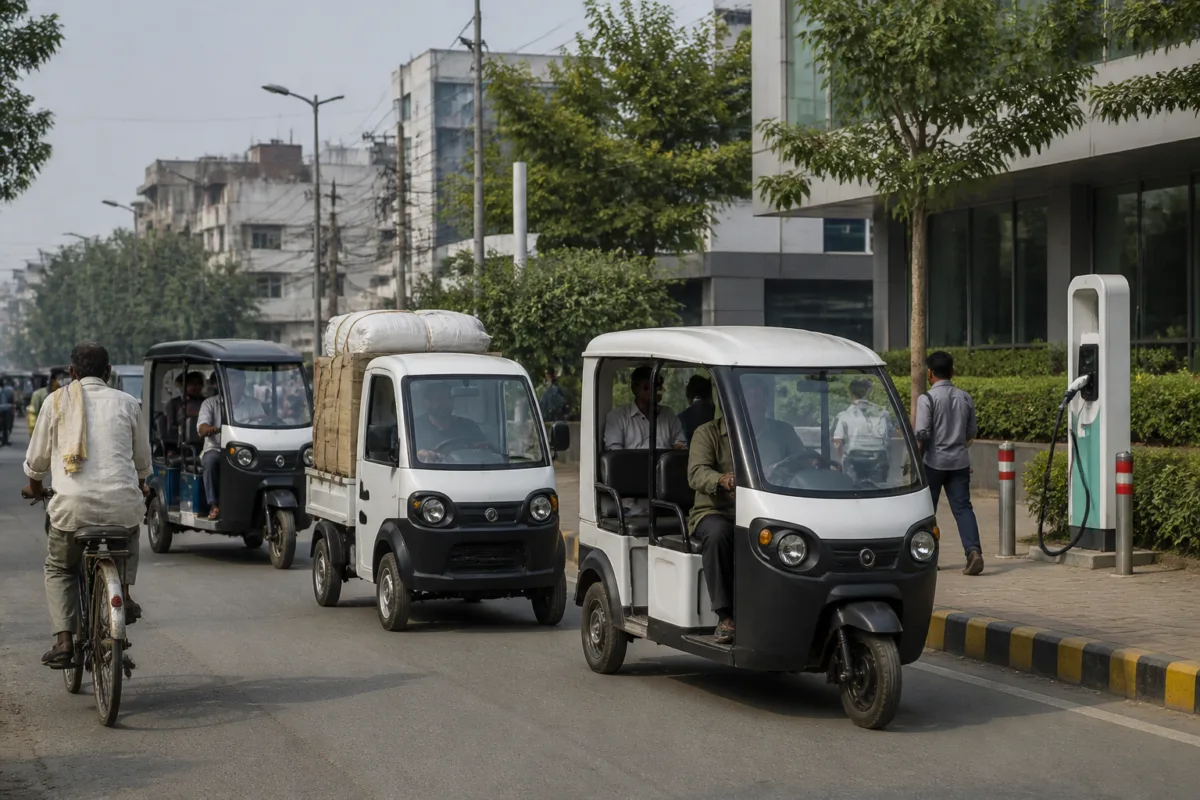
The company is examining electric three- and four-wheelers for both passenger and cargo applications. Its focus remains last-mile transportation within cities rather than intercity mobility. Jejurikar did not disclose specific products or launch plans.
The planned expansion comes as the electric three-wheeler market moves beyond passenger use. Jejurikar said passenger electric three-wheelers had so far driven growth, while cargo vehicles were expected to gain momentum. A stronger cargo segment could have implications for urban deliveries and other short-distance commercial movement, although the company has not provided deployment targets or market forecasts.
Mahindra Last Mile Mobility is also exploring overseas opportunities, particularly in Southeast Asia and Africa, as well as potentially in some Western markets. Jejurikar said recognition through the Earthshot Prize had generated enquiries and could help the company build international partnerships. However, he said detailed global strategy work had not yet begun.
Any overseas expansion would require an assessment of product suitability, business potential and electric vehicle penetration in each market. The company would also need to establish distribution, spare-parts and service networks, making international growth a longer-term process rather than an immediate extension of its Indian operations.
Jejurikar said the £1 million received through the Earthshot Prize would not be used for business expansion. Instead, the money would support women seeking to become drivers and promote women’s empowerment.
The company’s comments also highlight the changing policy environment for electric three-wheelers. Jejurikar said vehicle-price incentives under the FAME and PM E-DRIVE schemes were no longer available for the category, leaving the production-linked incentive scheme as the only remaining support. He said higher production volumes could help reduce material costs, while customers’ recognition of the operating benefits of electric vehicles could create some room for pricing.
For urban transport, the proposed product expansion places the emphasis on commercial viability as much as on electrification. The company’s stated plans depend on achieving scale, developing suitable cargo and passenger products and building service ecosystems. The broad IPO timeline and the absence of disclosed product or capacity details leave the timing and extent of that expansion unresolved.

