


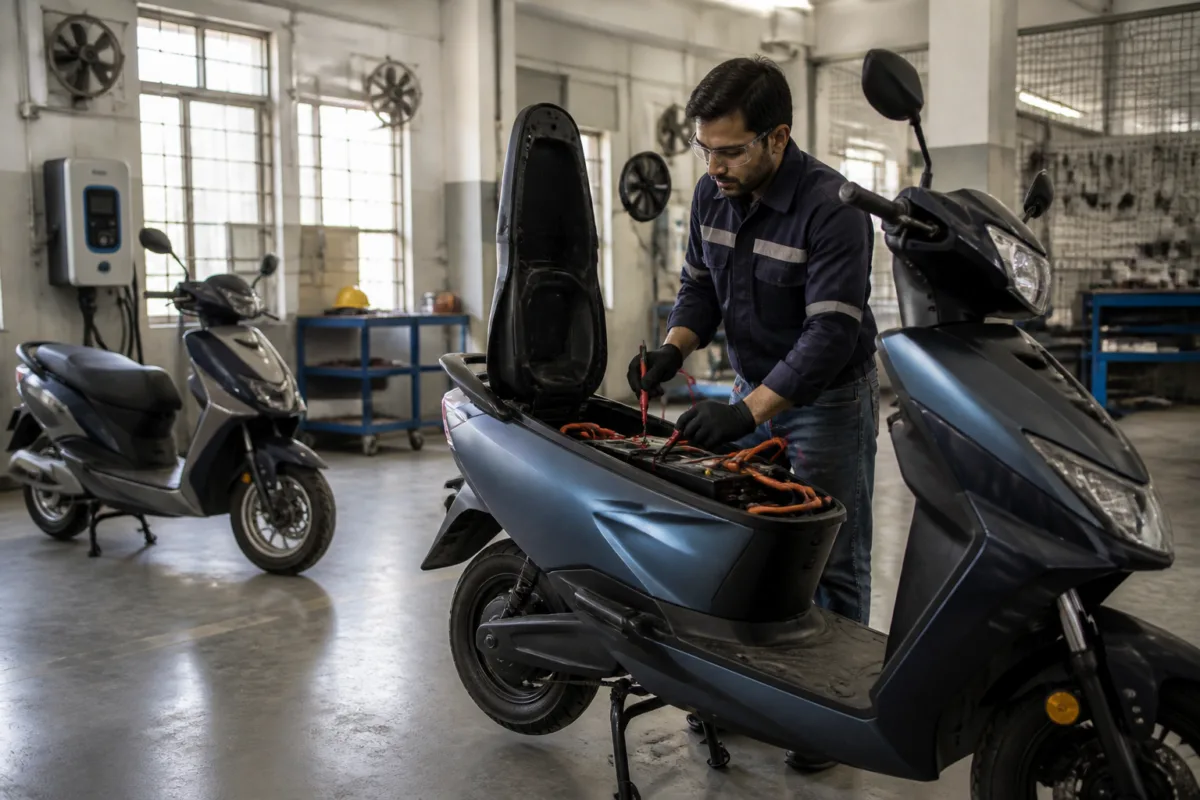
Kolkata-based Saraogi E-Ventures plans to begin trials of sodium-ion battery-powered electric scooters around December, as the company targets price-sensitive buyers and explores alternatives to the lithium-ion technology currently used in most of its models.
The company markets electric two-wheelers under the E-Went brand. Founder and CEO Umang Kumar Saraogi told PTI that some vehicles would be deployed for testing, with the economics, convenience and suitability of the technology to be assessed before any decision on new product launches.
Saraogi said sodium-ion batteries are considered potentially safer than conventional lithium-ion batteries, but their lower energy density can result in bulkier battery packs. The company has not said that it will commercially launch sodium-ion-powered scooters, making the planned trials an evaluation exercise rather than a confirmed product rollout.
The battery tests form part of E-Went’s wider effort to expand in India’s affordable electric two-wheeler market. Saraogi said the company sees an opportunity in scooters priced below Rs 1 lakh, particularly in smaller towns, rural areas and tier-I and tier-II cities where buyers may prioritise purchase price and lifetime maintenance costs.
According to Saraogi, national manufacturers have largely concentrated on relatively expensive models and stronger markets in larger cities. He said regional companies could serve less-penetrated markets through local dealer networks, lower ownership costs and word-of-mouth sales rather than high-cost branding campaigns.
E-Went’s reported sales have risen from around 100 electric two-wheelers a month four years ago to between 1,000 and 1,100 currently. The company operates in West Bengal, Jharkhand, Bihar, Chhattisgarh, Odisha, Assam, Telangana and Andhra Pradesh, and plans to deepen its presence in those states instead of pursuing an immediate pan-India expansion.
The company reported revenue of more than Rs 50 crore in FY26 and is targeting Rs 65 crore in the current financial year, Saraogi said. It aims to become profitable by 2028.
The sodium-ion trials are relevant to urban and regional mobility because battery cost, safety, serviceability and local availability influence whether electric two-wheelers can move beyond premium buyers. Sodium-ion technology could also reduce dependence on imported lithium-ion components if it can meet practical requirements for vehicle range, pack size, charging and durability. However, E-Went’s planned testing will need to establish whether those trade-offs work for affordable scooters before the technology can be considered for wider deployment.

