


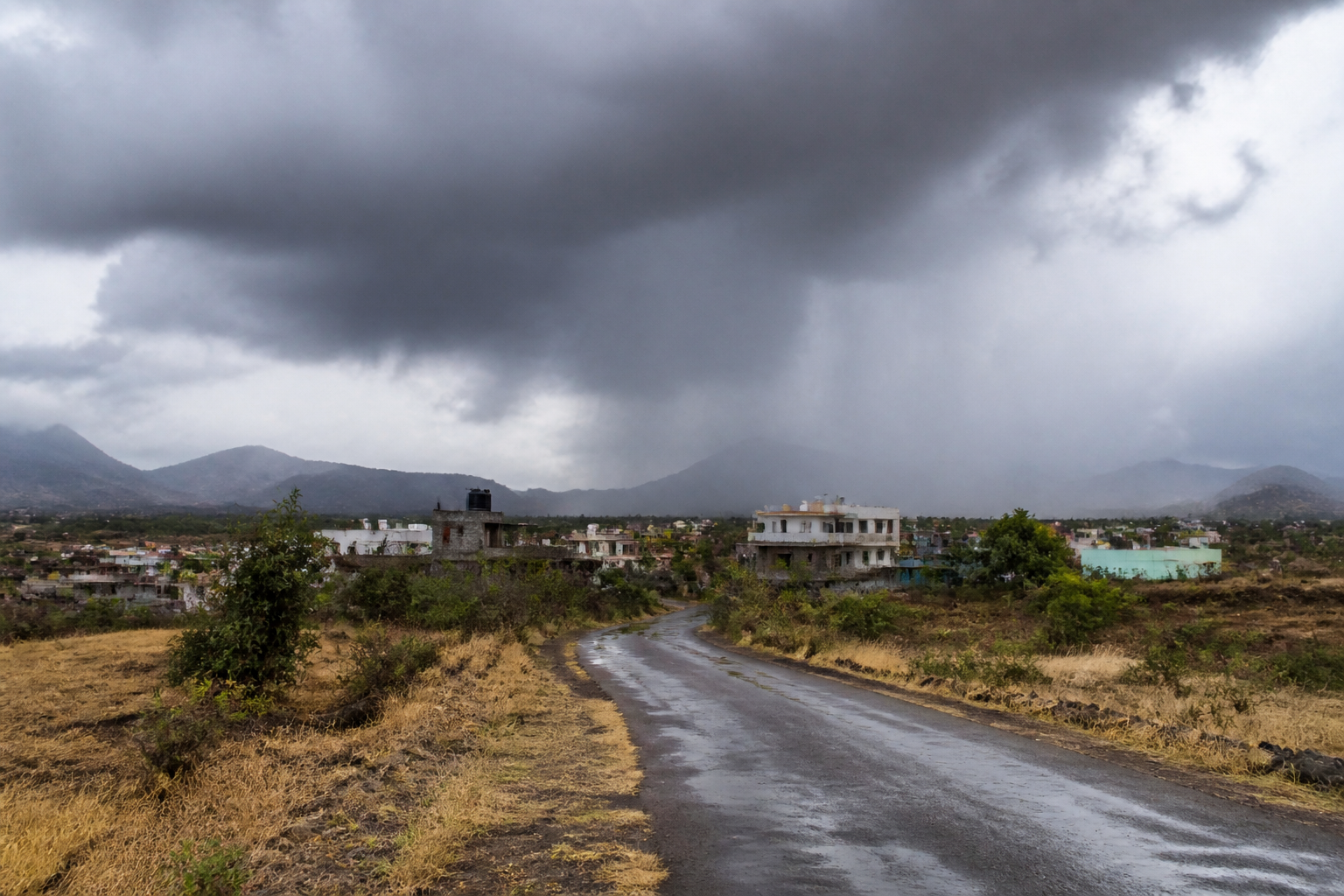
Maharashtra’s monsoon deficit remains at 16% as the India Meteorological Department forecasts the southwest monsoon’s withdrawal from western Rajasthan around 19 September, raising concerns over water availability if dry conditions persist across the state.
The weather department has forecast light to moderate rain in most parts of Maharashtra over the next few days as the impact of a low-pressure area over the Bay of Bengal weakens. The system brought thunderstorms and rain to parts of Marathwada, Vidarbha, northern Madhya Maharashtra and central Maharashtra during the past two to three days.
The low-pressure area is currently active over southeast Rajasthan, adjoining Gujarat and parts of southwest Madhya Pradesh. Rainfall was strongest in the northern parts of Maharashtra in recent days, providing some relief to districts that had recorded deficient precipitation. However, the improvement has not removed the state-wide shortfall.
The department has also forecast a rise of 3 to 5 degrees Celsius in maximum temperatures across Maharashtra over the next five days. With rainfall easing, several areas have already experienced a rise in humidity and discomfort. The combination of higher temperatures and an uneven monsoon could add pressure to local water management, particularly in areas that have not received sustained rainfall.
The southwest monsoon normally begins its withdrawal from western Rajasthan in the second half of September and retreats from the entire country by around 15 October. The withdrawal began on 14 September last year. The forecast for this year indicates that the process could begin from western Rajasthan around 19 September.
According to the report, India has recorded a 15% rainfall deficit for the season, while Maharashtra’s deficit stands at 16%. The uneven distribution of rainfall means that the state-level figure does not reflect conditions uniformly across all districts. Some areas have received recent rain, while others continue to face a prolonged shortfall.
The rainfall pattern has implications beyond agriculture. Urban and rural authorities depend on the timing and distribution of monsoon rain to assess reservoir inflows, drinking-water availability, storm-water risks and heat conditions. Short bursts of intense rain can provide temporary relief without correcting longer-term deficits, while a prolonged dry spell after the monsoon’s withdrawal can increase pressure on local water systems.
Weather experts cited in the report have warned that a prolonged absence of widespread rain could deepen drought conditions in Maharashtra. The department’s immediate forecast is for lighter showers in most parts of the state, followed by warmer conditions during the next five days.
