


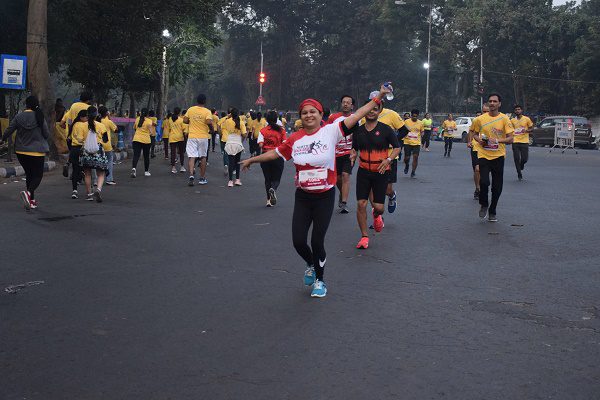
Kolkata recently hosted a sunset mini marathon that drew participants across age groups, transforming sections of the city into temporary pedestrian-friendly corridors. The evening event, designed around recreational running and community engagement, reflects a growing trend of Indian cities reclaiming public spaces for health-focused activities amid rising urban density.
Organised along key city stretches, the run saw residents, fitness enthusiasts, and amateur athletes participating in a structured route timed to coincide with cooler evening hours. Civic officials and organisers framed the initiative as an effort to promote active lifestyles while demonstrating the potential of streets as shared community spaces rather than exclusively traffic-dominated zones.In a city grappling with congestion and limited open areas, such events offer a glimpse into alternative urban design possibilities. Urban planners note that periodic car-free or restricted-traffic events can encourage citizens to reimagine streets as inclusive environments supporting walking, cycling, and social interaction. This aligns with broader global shifts towards people-first urban planning, where mobility is not solely defined by vehicle throughput but by accessibility and quality of life.The sunset format also carries environmental implications. By encouraging outdoor activity during non-peak heat hours, the event reduces exposure to daytime pollution and heat stress—an increasingly critical concern as Indian cities face intensifying climate patterns.
Experts suggest that embedding such timing strategies into urban programming can make cities more adaptive and climate-responsive.Beyond health and environment, the event signals economic ripple effects. Local vendors, small businesses, and informal workers operating near the route benefited from increased footfall, highlighting how well-planned public events can stimulate micro-economies without heavy infrastructure investment. However, maintaining this balance requires careful planning to ensure accessibility for all segments of society, including those who rely on uninterrupted mobility for livelihoods.Transport disruptions during the event were managed through temporary diversions, but they underscore a recurring challenge: how to integrate large-scale public activities into already strained urban systems. Mobility experts argue that cities need more permanent infrastructure—such as dedicated pedestrian zones and cycling tracks—to sustain the benefits of such initiatives beyond one-off events.
As Kolkata experiments with events that prioritise health and shared urban experiences, the sunset mini marathon points to a broader shift in how cities can integrate fitness, environment, and community into everyday planning. The long-term value will depend on whether such initiatives evolve into consistent policy measures that reshape urban life, rather than remaining isolated celebrations of active living.
Also Read:Kolkata Schools Introduce Ayurveda Yoga Curriculum
