


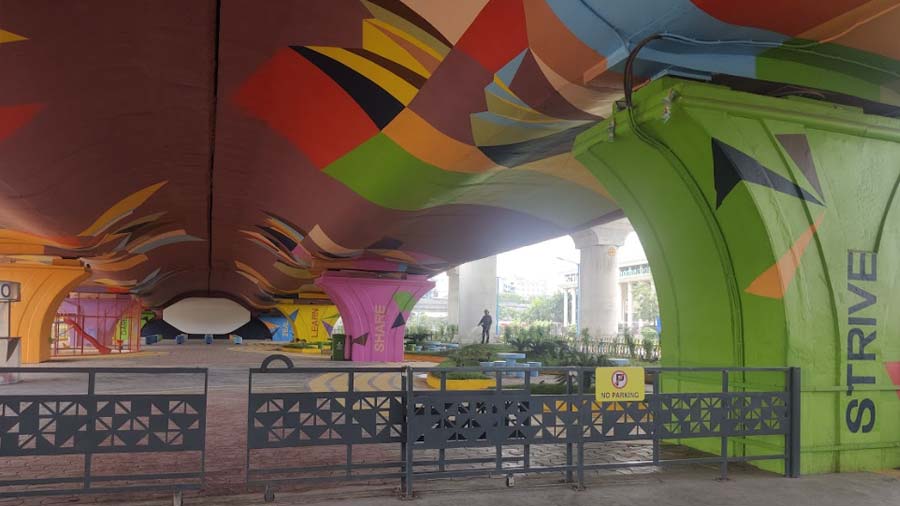
Kolkata’s Nagerbazar neighbourhood is undergoing a visual transformation as flyover pillars are being redesigned with vibrant artwork, signalling a broader shift towards enhancing public spaces through urban design interventions.
The initiative reflects how infrastructure elements, often seen as purely functional, are increasingly being reimagined to improve the aesthetic and social value of city environments.The makeover of flyover pillars in Nagerbazar highlights the growing recognition of streetscapes as critical components of urban experience. By introducing colour and artistic expression into high-traffic zones, authorities aim to create more engaging and people-friendly spaces. Urban designers note that such interventions can significantly alter perceptions of safety and cleanliness, encouraging greater public interaction with otherwise overlooked areas.Beyond visual appeal, the project underscores the role of placemaking in modern city planning. Integrating art into infrastructure can foster a sense of identity and community ownership, particularly in dense urban neighbourhoods. In Kolkata, a city known for its cultural vibrancy, such efforts resonate strongly with local sensibilities, blending tradition with contemporary design approaches.The initiative also has implications for local economies. Improved public spaces can enhance footfall in surrounding areas, benefiting small businesses and informal vendors. Well-maintained and visually appealing environments tend to attract more visitors, creating opportunities for economic activity at the neighbourhood level.
This aligns with broader urban development strategies that emphasise the linkage between design, livability, and economic vitality.Experts highlight that maintaining such projects is as important as their initial execution. Regular upkeep, protection against vandalism, and community engagement are essential to ensure long-term impact. Without sustained efforts, the benefits of beautification initiatives can quickly diminish, reducing their effectiveness in improving urban environments.From a sustainability perspective, reusing existing infrastructure elements for artistic purposes minimises the need for additional construction while enhancing value. Incorporating durable, weather-resistant materials and eco-friendly paints can further align such projects with environmental goals.As cities face increasing pressure to optimise resources, multifunctional use of infrastructure is gaining importance.The transformation at Nagerbazar reflects a broader trend across Indian cities, where urban authorities are investing in design-led solutions to improve quality of life.Such projects demonstrate that relatively small-scale interventions can have a meaningful impact on how people experience their surroundings.
As Kolkata continues to expand and modernise, integrating aesthetics into infrastructure planning will be key to creating inclusive and engaging urban spaces. The focus going forward will be on scaling such initiatives while ensuring they remain accessible, sustainable, and reflective of local culture, contributing to a more vibrant and liveable city landscape.
Also Read:Kolkata EV Adoption Surges Driving Clean Mobility Growth
