


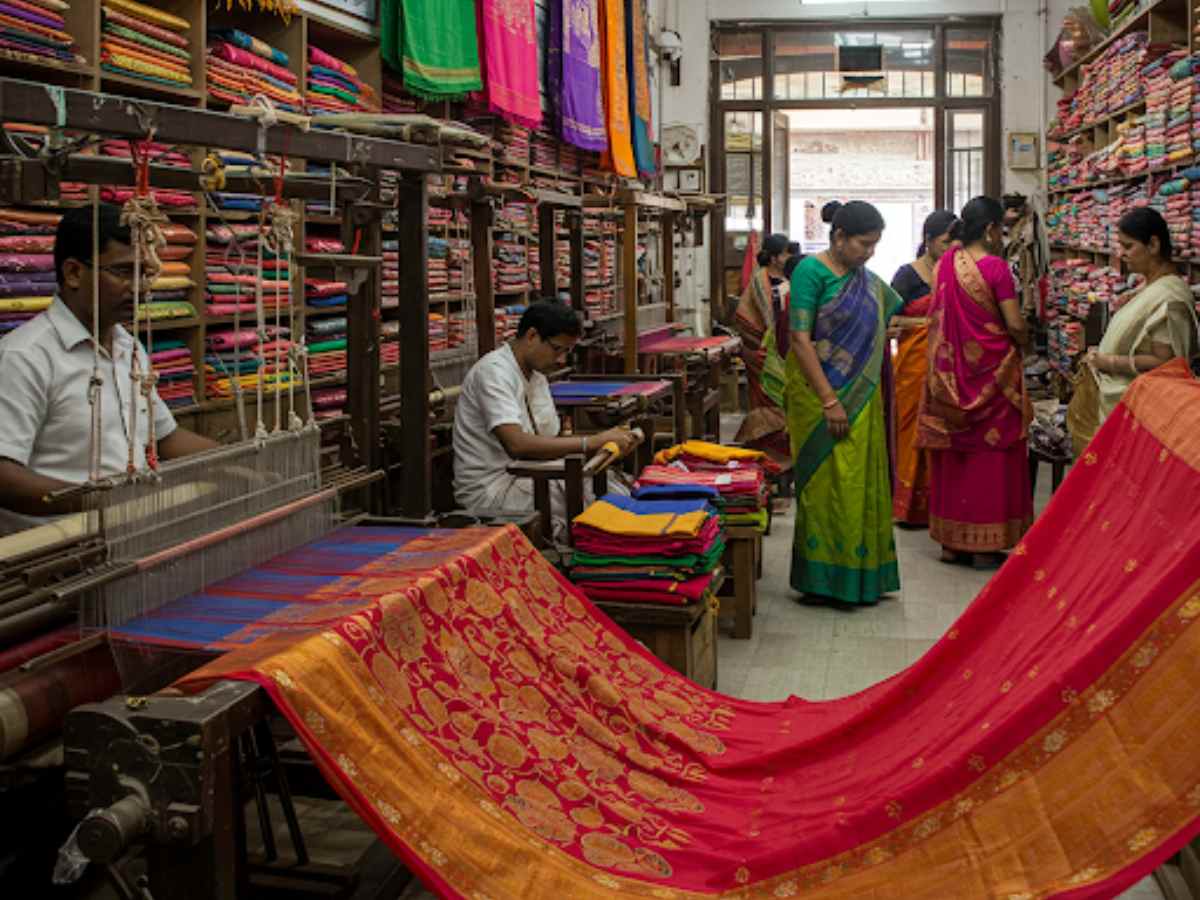
A historic handloom retail institution in Kolkata has completed over a century of operations, offering a window into the city’s enduring relationship with traditional textile economies and their role in shaping urban cultural and commercial landscapes.
The milestone underscores the resilience of craft-based enterprises in adapting to changing consumer markets while preserving regional heritage.The store, established during a period when indigenous industries were gaining prominence, has long served as a platform for showcasing handwoven textiles from across Bengal. Its continued relevance highlights the sustained demand for artisanal products, even as mass-produced alternatives dominate the broader retail environment.Industry observers note that such institutions play a crucial role in bridging rural craftsmanship with urban consumption.Kolkata’s historical association with the handloom sector has contributed significantly to its economic and cultural identity. The city has traditionally functioned as a key marketplace for textiles produced in surrounding regions, supporting livelihoods across weaving communities. The longevity of this retail establishment reflects the strength of these linkages and the adaptability of traditional industries within evolving urban economies.From an economic perspective, the handloom sector remains an important contributor to employment, particularly in rural and semi-urban areas. By maintaining consistent demand channels, urban retail spaces like this store help sustain production networks and preserve specialised skills that might otherwise decline.
Experts emphasise that integrating such sectors into modern retail frameworks is essential for ensuring their long-term viability.The milestone also brings attention to the challenges faced by the handloom industry, including competition from mechanised production, shifting consumer preferences, and pricing pressures. To remain competitive, many traditional enterprises are exploring design innovation, branding, and digital platforms to reach new audiences. The ability to balance authenticity with modernisation is seen as critical for future growth.Urban planners highlight that preserving heritage businesses contributes to the character and diversity of city environments.As commercial spaces become increasingly standardised, maintaining institutions with historical and cultural significance enhances the uniqueness of urban landscapes. This aligns with broader efforts to promote inclusive and culturally rich city development.Sustainability considerations further reinforce the relevance of handloom products, which are often produced using low-energy processes and natural materials. As consumers become more conscious of environmental impact, there is growing interest in textiles that align with sustainable consumption patterns. This trend presents new opportunities for traditional sectors to position themselves within contemporary markets.
The 110-year milestone of Kolkata’s handloom store serves as both a celebration of heritage and a reminder of the ongoing transformation within the textile industry. As cities continue to evolve, the integration of traditional industries into modern economic frameworks will be key to preserving cultural identity while supporting inclusive and sustainable growth.
Also Read:
