


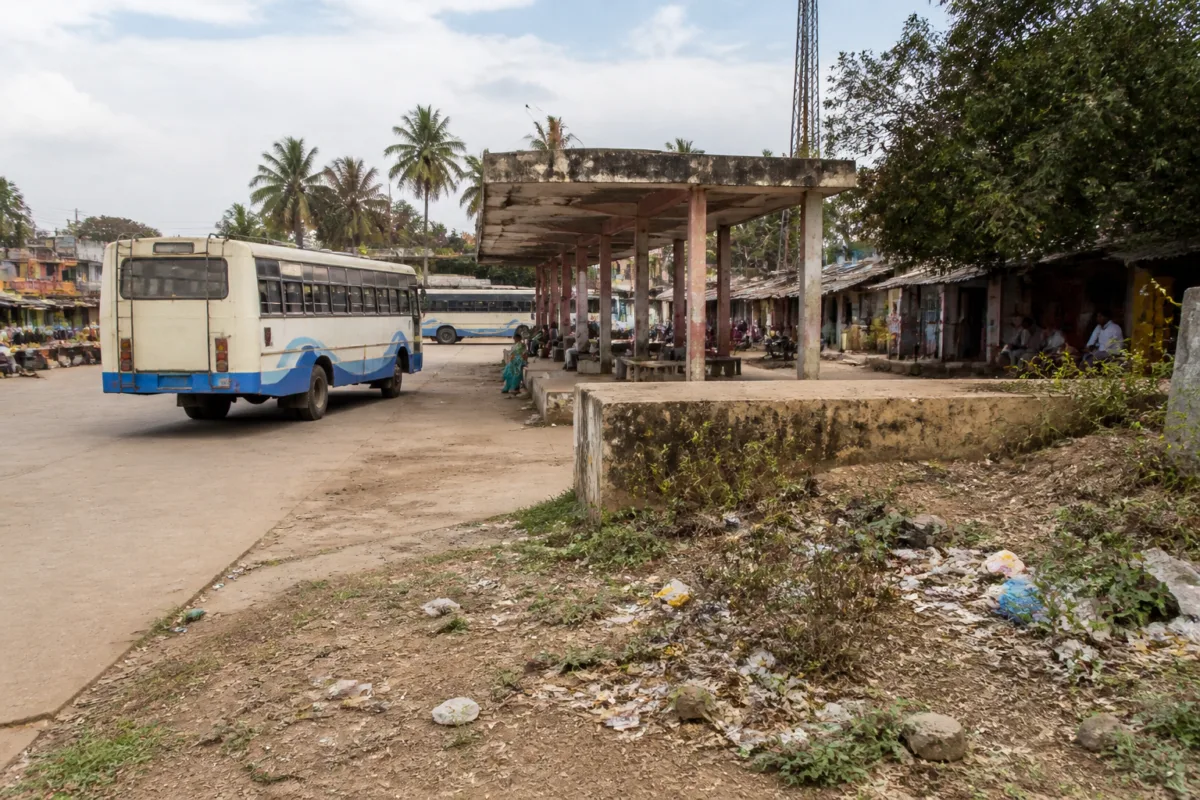
Shahapur’s old bus stand is facing allegations of persistent waste accumulation, poor sanitation and inadequate basic facilities, raising concerns about the upkeep of a prominent public transport site in the city.
The bus stand, operated by the Kalyana Karnataka Road Transport Corporation (KKRTC), occupies valuable property in Shahapur’s central area, according to a report by Prajavani. The report says vacant space under the terminal has remained unused for several years and has reportedly become a dumping area for plastic and other waste.
Social worker Ismail Thimmappuri alleged that people using nearby shops and establishments throw waste in the vacant area daily. The report also said the area is being used for open defecation, resulting in foul conditions around the bus stand. These claims were attributed to the social worker and passengers quoted in the report.
The report said a toilet had already been built at the site, but called for its modernisation or replacement if the relevant contract period had ended. It also carried demands for passenger-oriented construction in the remaining vacant space, designated bins and daily waste removal.
Passengers were reported to be facing a shortage of basic amenities, including clean drinking water. The condition of the premises was said to be affecting people waiting for or boarding buses, while waste from neighbouring properties was also cited as a concern.
The report said instructions had been issued to shops around the terminal to stop dumping waste. It also stated that closed-circuit cameras would be installed and action would be taken against those found littering. The transport department was reportedly told that the bus stand land falls under its responsibility and that it must ensure cleanliness. The report further said notices had been issued to officials several times, without a response, and that legal action could follow.
The complaints place responsibility for the terminal’s immediate maintenance with the transport corporation while also pointing to the need for enforcement around adjoining commercial premises. For passengers, the reported gaps extend beyond cleanliness to drinking water, sanitation and the productive use of public land. The report did not provide details of a confirmed implementation schedule, cost estimate or named official responsible for the proposed improvements.

