


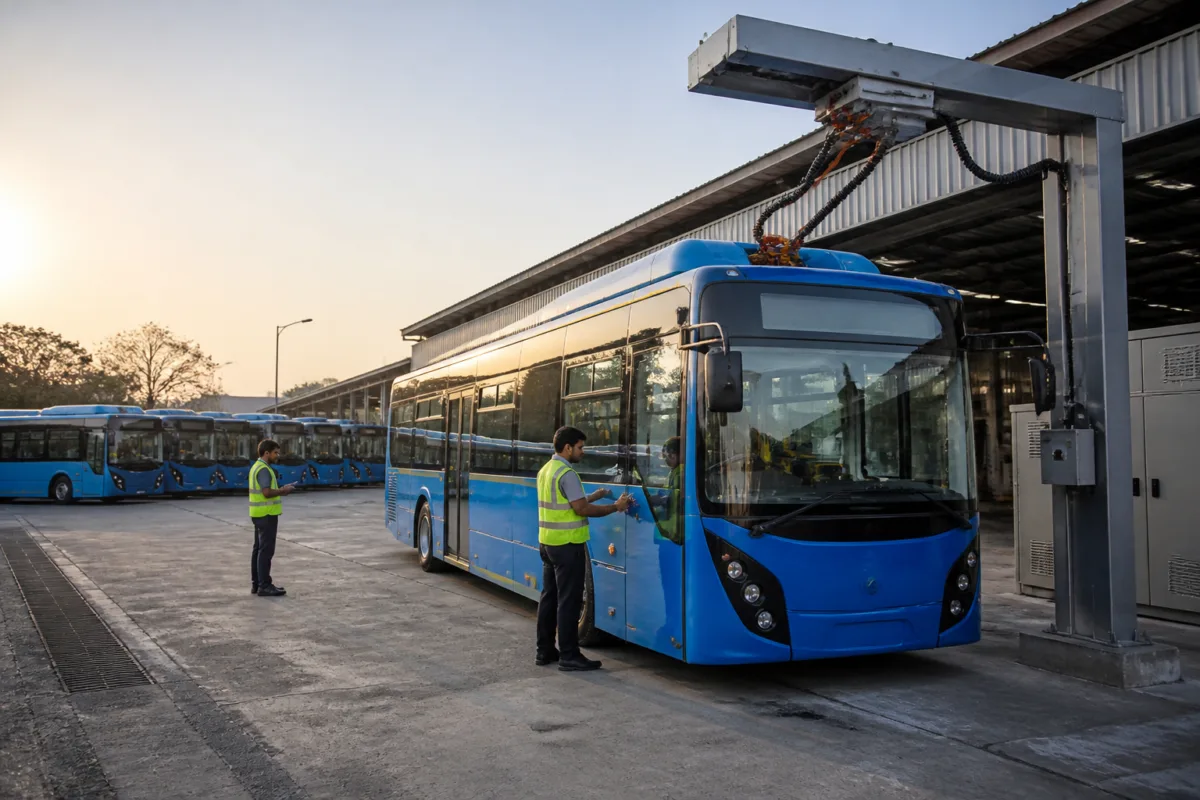
Olectra Greentech’s electric bus expansion plans highlight how depot readiness, supply chains, charging infrastructure and vehicle financing could shape the pace of public and commercial transport electrification in India.
The Hyderabad-based manufacturer is targeting deliveries of 2,000–2,500 electric buses in FY27, according to Managing Director Mahesh Babu, who spoke to The Hindu BusinessLine. The company said it had delivered 759 buses in the first half of the financial year and has an order book of more than 8,000 buses.
Olectra intends to execute the existing order book over two years. Babu said deliveries could exceed 4,000 buses in the next financial year if market conditions, supply chains and depot readiness improve. The company also plans to continue bidding for tenders from state transport undertakings.
The delivery targets indicate that manufacturing capacity is only one part of the deployment challenge. Olectra said shipping availability, supply chain bottlenecks and the readiness of receiving depots have affected execution. For city transport agencies, this places operational preparation alongside vehicle procurement: depots must be capable of supporting charging, maintenance and fleet operations before buses can be added at scale.
Olectra said it plans to invest about ₹1,000 crore over the next 18 months. Around ₹450 crore of this amount is intended for the development of next-generation electric buses and trucks, with product launches planned over the next six quarters, according to the company.
The manufacturer currently has annual capacity for 2,500 buses on a single shift and 5,000 buses on a double-shift basis at its existing facility. In the next financial year, it is targeting capacity for 5,000 buses and 1,200 trucks. By FY30, it aims to raise combined annual bus and truck capacity to 10,000 units. These are company targets and are subject to execution, demand and the availability of supporting infrastructure.
Olectra is also planning to enter the electric truck market. Babu said the trucks are expected to be ready between April and June 2027, beginning with a business-to-business launch and an initial customer order of about 100 vehicles. The company plans six variants in the following financial year, ranging from 28 tonnes to 55 tonnes. It is developing vehicles with a claimed range of 300–400 km and charging times of about 50–60 minutes. The company said future technology could reduce charging time to about 25 minutes.
For longer-distance commercial operations, Olectra identified highway charging infrastructure as a critical requirement. It also said customers need longer-tenure financing: according to Babu, vehicle financing is generally available for three to five years, while electric buses and trucks would require financing over seven years to improve their economic viability. The company said it has begun discussions with leasing companies and banks.
The financing issue extends beyond Olectra’s own sales plans. Private bus operators are a potential growth market, but their ability to adopt electric vehicles will depend on acquisition costs, operating economics, access to credit and the availability of charging facilities. Olectra said it is developing six bus models, including 12-metre and nine-metre city buses, coaches and smaller seven-metre vehicles. It expects electric bus penetration could reach 20–30 per cent by 2030, although it linked the pace of adoption to charging infrastructure and financing solutions.
Olectra is targeting fivefold revenue growth over three years from its stated FY26 revenue of ₹2,312 crore, implying a potential topline of nearly ₹11,600 crore. The company said this ambition would be supported by new products and a broader portfolio based on its own intellectual property, but it is not providing short-term revenue guidance.
The company also reported that EBITDA margin in its bus division improved to around 12.8 per cent in the first half, which it attributed to cost reductions and operational optimisation. It is targeting margins above 16 per cent from the first quarter of FY28, supported by next-generation bus platforms. These projections remain dependent on product development, production, deliveries and market uptake.
For urban transport authorities, the immediate significance of the expansion is not only the number of buses manufacturers can produce. The delivery pipeline will also test whether depots, charging systems, procurement processes and financing arrangements can be brought into alignment. Olectra’s targets therefore point to the infrastructure and institutional conditions that will determine how quickly electric fleets move from orders to regular passenger service.

