


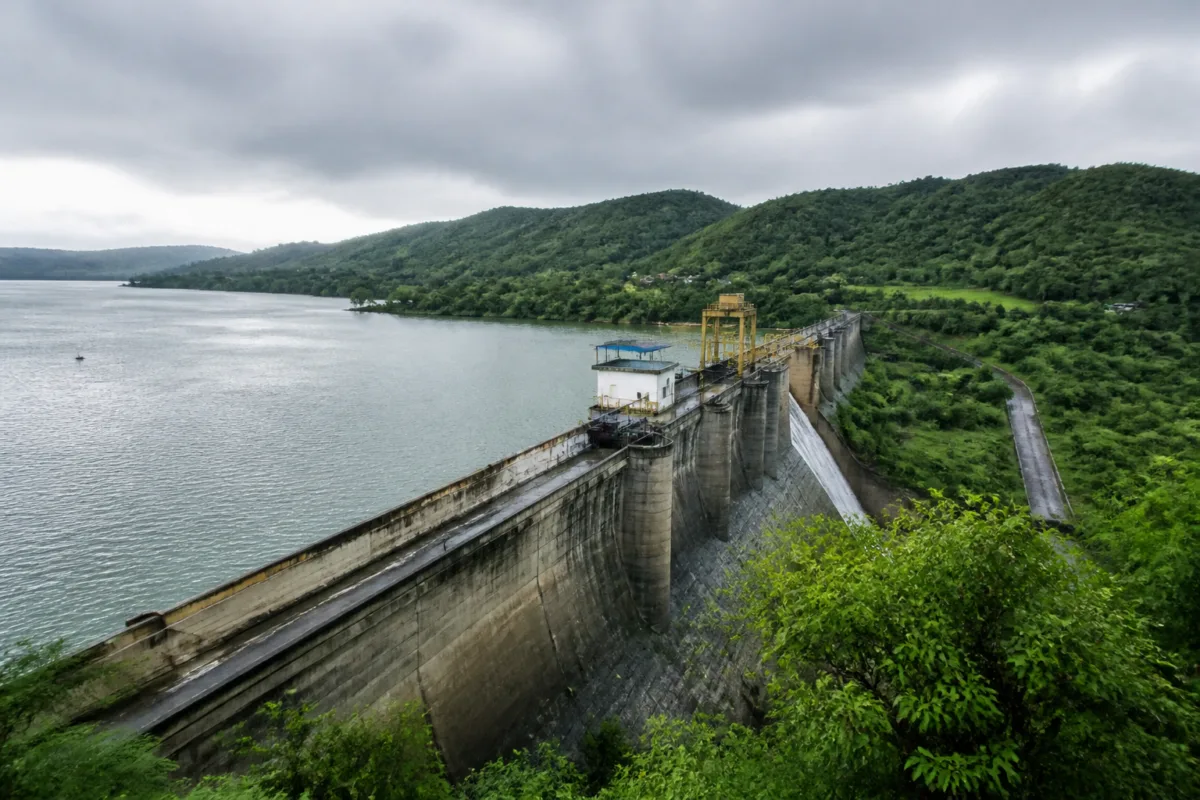
The Khadakwasla dam system supplying Pune has recorded 23.51 thousand million cubic feet (TMC) of water, or 80.65% of its combined capacity, after rainfall across all four reservoirs between Sunday morning and Monday morning. The storage is 4.89 TMC lower than on the same day last year, according to a report by Sakal – Pune.
Rainfall was recorded in the catchment areas of Khadakwasla, Panshet, Varasgaon and Temghar from 6 am on Sunday to 6 am on Monday. Khadakwasla received 8 millimetres of rain during the period, while Panshet recorded 13 mm, Varasgaon 11 mm and Temghar 5 mm.
The four-reservoir system is a key source for Pune’s water supply. The latest combined storage of 23.51 TMC represents 80.65% of its total capacity. On the same day last year, the system held 28.40 TMC, equivalent to 97.41% of capacity.
Among the four reservoirs, Varasgaon currently has the highest storage percentage at 85.63%. It is holding 10.98 TMC of water. Temghar has 84.63% storage, equivalent to 3.14 TMC, while Panshet is at 77.67%, with 8.27 TMC.
Khadakwasla has the lowest storage percentage in the chain at 56.82%, with 1.12 TMC of water. The reservoir recorded 790 mm of cumulative rainfall from June 1, while Panshet received 2,355 mm during the same period. Varasgaon recorded 2,208 mm and Temghar received the highest cumulative rainfall among the four reservoirs at 3,252 mm.
The figures show a wide variation between rainfall received in individual catchments and the volume currently stored in each reservoir. Although Temghar recorded the highest cumulative rainfall, its storage is 3.14 TMC because the reservoir has a different capacity from the larger Panshet and Varasgaon reservoirs. The reported data also indicates that storage across the system remains below last year’s level on the comparable date.
For Pune, the combined figure is more significant than rainfall at any single dam because the four reservoirs operate as an interconnected source system for the city’s water requirements. The latest update therefore provides a snapshot of both the available stock and the gap compared with the previous year. The report does not provide a revised municipal supply schedule or any official announcement of changes to household water distribution.
The next assessment will depend on further rainfall in the catchments, inflows into the reservoirs and withdrawals for the city’s requirements. The latest reported measurements cover rainfall and storage up to 6 am on Monday.

