


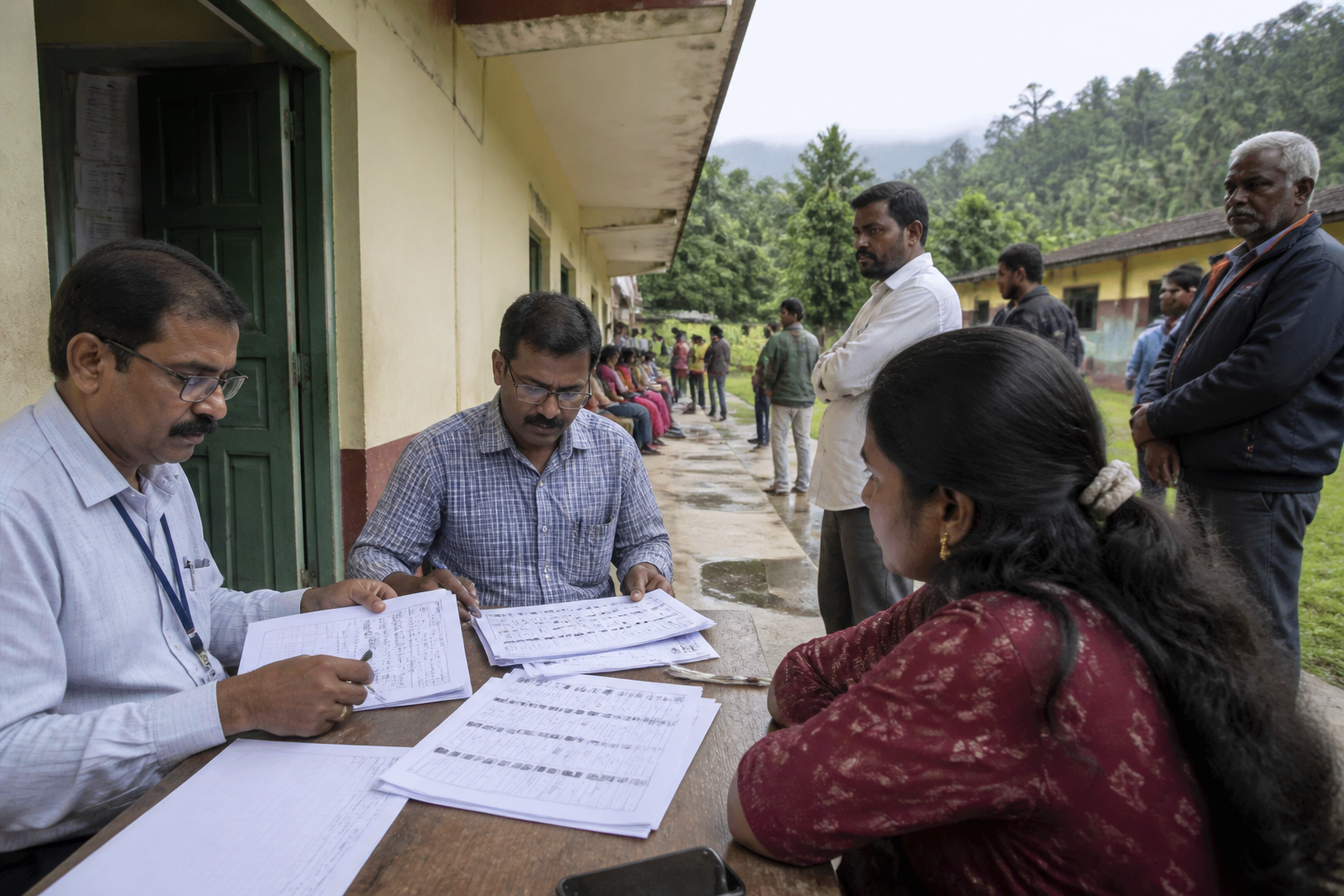
The controversy over pre-filled Form-7 applications in Karnataka is not only about 50 applications filed against Muslim voters at one polling station in Kodagu. It exposes a more consequential question about how electoral-roll objections are generated, submitted and verified when citizens’ names are targeted in bulk.
According to a report by The Hindu, at least 50 applications seeking deletion of Muslim voters’ names were filed at the Government Higher Primary School polling station in Bydagotta, Kodagu district, on September 23. The applications cited “absent” as the reason for deletion. The objectors, however, told the newspaper that they had doubts about duplicate entries and had followed instructions from a party office in Somwarpet.
The distinction matters because Form-7 is being used for a specific administrative purpose: seeking deletion of a name from the electoral roll. The report says the forms already carried the voters’ names and EPIC numbers, while only the objectors’ names were handwritten. That detail suggests that the objection process was not beginning with individually identified concerns recorded by each applicant. Instead, voter information had already been assembled and placed on forms before they reached the people who signed or submitted them.
The reported pattern also raises questions about the quality of the reasons recorded in such applications. Two objectors, B.N. Basavaraju and Rajni, told The Hindu that they had filed 10 applications each. They said they suspected that the voters had duplicate entries. Yet the applications cited “absent” as the ground for deletion. When asked about this mismatch, the objectors said they did not know the details and had followed instructions from the party office in Somwarpet. They declined to name the party.
This is the point at which a routine electoral-roll correction process becomes a governance problem. A deletion application is not merely paperwork. If accepted without adequate verification, it can remove a person from the list of voters and place the burden of correction on the affected citizen. The immediate consequence may be a name missing from the electoral roll. The wider consequence is a loss of confidence in whether the roll reflects residents who are entitled to vote, or whether it reflects organised campaigns to challenge selected groups of voters.
The report places the Kodagu episode within a wider statewide pattern. Between June 16 and September 24, a total of 61,130 Form-7 applications were filed across Karnataka. The report also refers to similar bulk filings across multiple Assembly constituencies, where pre-filled applications were submitted seeking deletion of Muslim voters’ names. The available information does not establish how many of those applications were accepted, rejected or found to be invalid. It does, however, establish the scale of the administrative task facing election officials.
That scale changes the nature of verification. When a small number of voters raise individual objections, election officials can examine each claim through the ordinary process. When tens of thousands of applications are filed over a limited period, the system must identify whether each application reflects an independently formed objection, whether the stated ground is accurate, and whether the concerned voter has been given an opportunity to respond. The report does not provide details of the verification procedure applied to the statewide applications, leaving that central administrative question unanswered.
The Kodagu case contains a further institutional contradiction. The objectors said the applications had come from a “party office”, but officials in Somwarpet told The Hindu that they had not received any of the 50 applications. The report does not resolve whether the forms were submitted through another channel, remained with intermediaries, or were yet to be formally entered into the official process. That uncertainty is important because the status of an application determines whether it is part of the electoral administration record or only a document prepared for possible submission.
The episode therefore needs to be understood across three separate stages: preparation, submission and disposal. Pre-filled voter details point to the preparation stage. The objectors’ accounts and the officials’ statement concern submission. The report provides no final information about whether the applications were accepted for scrutiny or what decision was taken on them. Treating these stages as interchangeable would risk presenting a request for deletion as an actual deletion.
That distinction is especially important in a process involving allegations of targeting. The report attributes the account of targeted filings to objectors and identifies the voters as Muslim. It does not establish that the applications were ultimately successful or that any voter was removed from the roll. The evidence presented is about the manner in which the applications were prepared and the explanations given by those who filed them. Any assessment of final electoral impact would require information on notices issued to voters, hearings conducted, verification findings and changes made to the roll.
The reported use of “absent” as the reason also illustrates how administrative categories can shape citizens’ rights. A reason recorded on a form is not a minor clerical detail. It guides scrutiny and determines what evidence officials may seek. If applicants themselves say they suspected duplicate entries but the form records absence, the mismatch can make it harder to understand the basis of the objection and harder for the affected voter to respond. It also raises a basic question about who filled in the substantive information on the forms.
The institutional responsibility in such a situation lies with the election administration, but the process is experienced at neighbourhood level. The polling station at Bydagotta is a local point in a statewide electoral system. Voters do not encounter the system as a dataset of 61,130 applications. They encounter it through a booth-level officer, a notice, a correction request or the discovery that their name is missing. The reliability of the roll therefore depends not only on central instructions but also on the traceability of each application and the ability of local officials to check claims against residents on the ground.
The information supplied in the report does not show whether election officials have rejected any of the applications, ordered further verification or initiated action over inaccurate reasons. It also does not record a response from the unnamed party allegedly connected to the forms. Those are material gaps in understanding the administrative outcome, although they do not erase the significance of the reported filing pattern.
What the evidence confirms is narrower but still consequential. A large number of Form-7 applications were filed across Karnataka during the period cited. In Kodagu, at least 50 applications at one polling station contained pre-printed voter details. Named objectors said they had followed instructions from a party office, while describing their own concern as possible duplicate entries. The applications, according to the report, cited absence. Local officials said they had not received the forms.
What remains uncertain is whether the applications were formally lodged, how they were verified, whether any names were deleted and whether similar discrepancies were found elsewhere. Those questions should determine the next stage of public scrutiny. The credibility of an electoral roll depends not simply on the number of objections processed, but on whether every objection is attributable, accurately described, independently examined and resolved with due notice to the voter concerned.
