


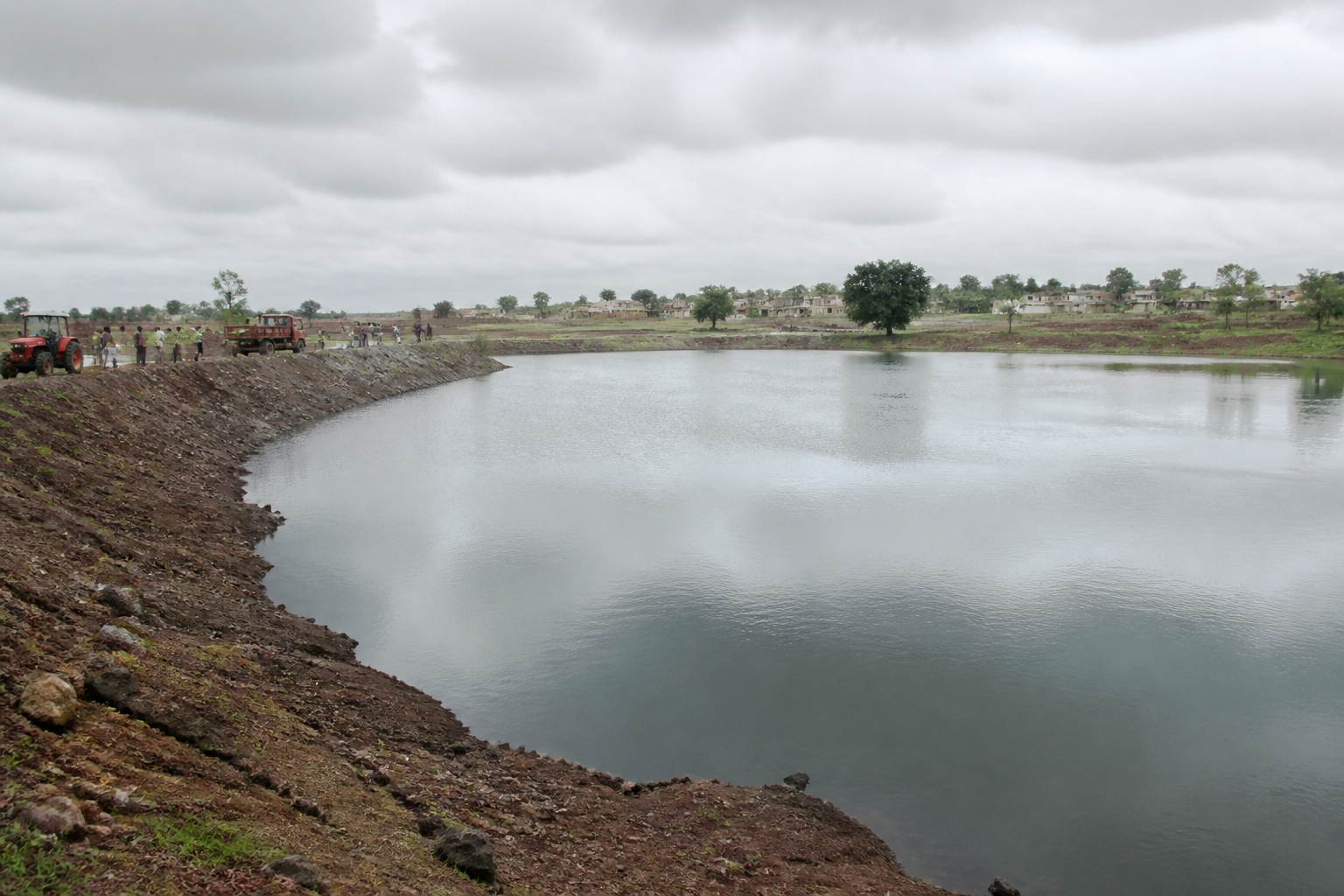
Hirekere lake in Naregal village of Gadag district’s Gajendragad taluk has filled to nearly three-fourths of its capacity after recent rain, offering a significant water-security boost to a drought-prone area where annual rainfall is reported to remain below 500 millimetres.
The lake, spread across about 60 to 70 acres, now holds around 20 feet of water, according to information reported by Prajavani. The lake filled rapidly after rain received the previous day, with villagers reporting that water had reached all three sections and that further inflow was no longer possible at the time of the report.
The result follows a community-led desilting effort that began in 2018. Residents decided to remove the accumulated silt from the centuries-old lake despite having no funds available for the work. The initiative was taken up by the Naregal Land and Water Conservation Committee with the participation of villagers and local farmers.
Instead of waiting for government funding, the community created a simple arrangement that linked lake restoration with farm needs. Farmers paid ₹75 for each tractorload of silt and transported the material to their fields, where it could improve soil fertility. The approach helped turn the cost of excavation and transport into a locally managed resource-sharing system.
At the height of the work, between 300 and 350 tractorloads of soil were transported every day, according to the report. By 2019, the community effort had restored the lake without government assistance, bringing back storage capacity to a water body that had been weakened by the accumulation of silt over several hundred years.
Jagadish Sankangowdar, who informed the report’s author about the lake, said a group of residents had visited Hirekere after the rain and found it nearly full. He described the development as especially meaningful because it came during a period of drought and water stress in the region.
The lake’s revival shows how desilting can improve the performance of existing village water infrastructure when local residents organise around a shared water source. In Hirekere, the restoration was not based on a large public works project but on collective labour, farmer participation and the productive reuse of excavated material.
The latest inflow has now placed the restored lake at the centre of village life once again. Continued water storage and the management of future inflows will determine how long the benefits last, while the community’s restoration model provides a documented example of local action to strengthen water availability in Karnataka’s dryland areas.
