


Karnataka Health Minister U.T. Khader has called for stronger coordination between state and central authorities to prevent counterfeit medicines, food adulteration and other public-health violations affecting Bengaluru and supply chains across state borders.
Speaking at a national conference organised by the Food Safety and Drug Administration Department in Bengaluru on Thursday, Khader said safe food and quality medicines were citizens’ rights and that ensuring them should be a joint responsibility of the Centre and the states.
Food products and medicines move between states, creating regulatory challenges that cannot be addressed by one state alone, he said. Khader called for stronger interstate coordination, real-time information exchange, uniform standards and clear national guidelines to protect public health at every stage of the supply chain.
The minister said action against violations of food and drug regulations was being intensified. He also said an investigation by a Special Investigation Team was under way into a counterfeit-medicine network valued at about ₹5 crore and financial transactions exceeding ₹18 crore. The figures and the status of the investigation were presented in the minister’s remarks at the conference.
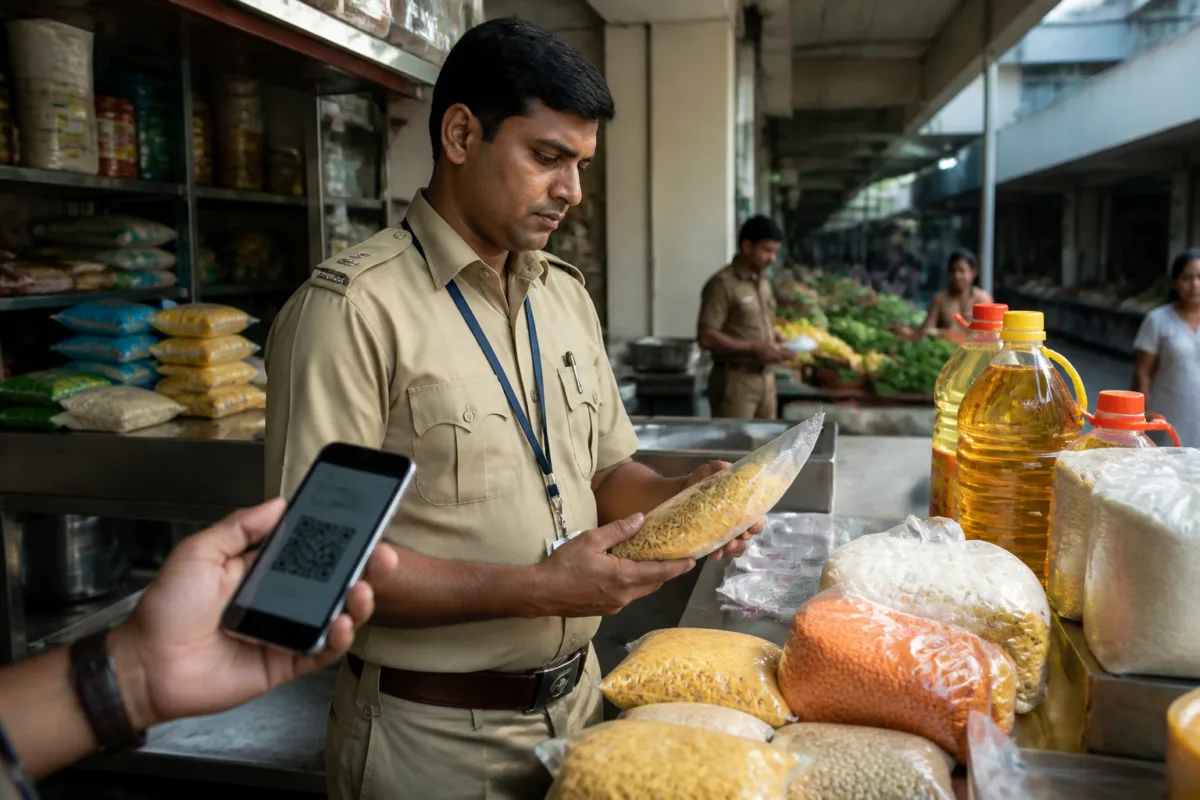
Khader said a QR code-based complaint system allows residents to submit photographs of food-safety violations directly to field officials. According to him, the system is intended to support prompt inspections and follow-up action.
He also sought clearer guidelines and better coordination between state and central authorities on reused cooking oil, food quality, exports and substandard medicines. States should have the necessary powers to act in time when public-health systems face risks, he said.
A handbook on food safety and drug administration was released during the event. Karnataka Chief Secretary Shalini Rajneesh, Health Department Principal Secretary Ritwik Ranjanam Pandey and Food Safety Commissioner K. Srinivas were present, according to the report.
The minister said Karnataka was committed to building a strong, transparent and citizen-oriented food and drug safety regulatory system that could serve as a model for other states. The report did not specify a deadline for implementing the proposed national guidelines or detail how interstate information-sharing arrangements would be structured.

