


Bengaluru’s B-Khata property conversion campaign has generated ₹908 crore for the Greater Bengaluru Authority, while around 43,000 property owners have so far received A-Khata status, according to a report by Prajavani.
The five municipal corporations have received 85,419 applications under the campaign. About half of the applications are still being processed, and the revenue collected is expected to cross ₹1,600 crore, the report said.
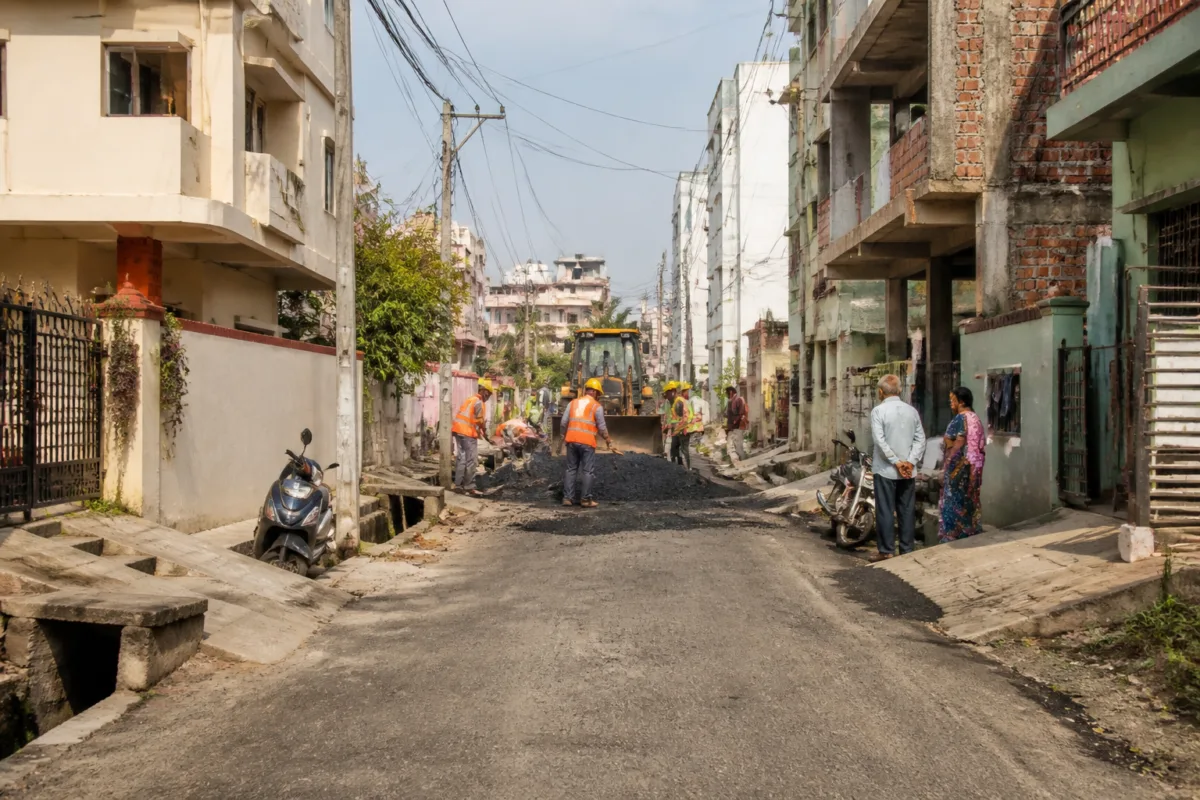
However, the money is not being set aside as a dedicated pool for additional infrastructure in the neighbourhoods covered by the campaign. Most municipal corporations are using the revenue for routine expenditure and general development work, including road asphalting, park maintenance and lake management.
The allocation has particular significance in Bengaluru’s peripheral areas, where a substantial number of residential layouts are reported to have been developed without approval. Such areas commonly have narrow roads and inadequate open spaces, limiting the scope for new parks and civic facilities.
North Bengaluru recorded the highest number of applications, at 24,786, followed by the western zone with 23,841, the southern zone with 18,241 and the eastern zone with 17,705. The central corporation recorded 846 applications.
The distribution reflects the difference between older planned areas and the city’s expanding edges. Bengaluru Development Authority-planned layouts are more concentrated in the central parts of the city, while many peripheral residential sites are located in unapproved layouts, according to the report.
An unnamed official cited by Prajavani said municipal revenue was not sufficient to meet daily expenses, including staff salaries. This made it difficult to reserve large sums for new parks or civic amenity sites. A senior official from the North municipal corporation said about 2% of the amount collected there was being allocated for new infrastructure.
The shortage of land is an additional constraint. Municipal bodies are trying to create parks and other facilities in areas with a high concentration of B-Khata properties, but officials said vacant government land was unavailable in many locations.
Greater Bengaluru Development Minister Krishna Byre Gowda said substantial expenditure had already been incurred over the past 15 to 20 years to provide infrastructure in peripheral areas with large numbers of unapproved layouts. This included Cauvery water connections, drainage systems, roads and other essential services, he said.
The minister also acknowledged that many layouts had emerged on the outskirts without basic infrastructure. New parks could be created where land was available, he said, but the absence of vacant sites remained a major obstacle.
Residents are seeking a more direct link between the revenue raised through the campaign and improvements in the areas where the properties are located. Horamavu resident Kochu Shankar told Prajavani that the money collected from B-Khata applications should be reinvested in the development of the respective layouts.
The figures put the campaign’s urban challenge beyond property documentation alone. Bengaluru’s municipal bodies are receiving substantial revenue from areas that often have infrastructure gaps, but the current spending pattern does not guarantee that the proceeds will be matched to those local deficits. The report leaves unresolved how much of the total revenue will ultimately reach the affected neighbourhoods and whether municipalities will establish a transparent area-wise accounting of the expenditure.

