


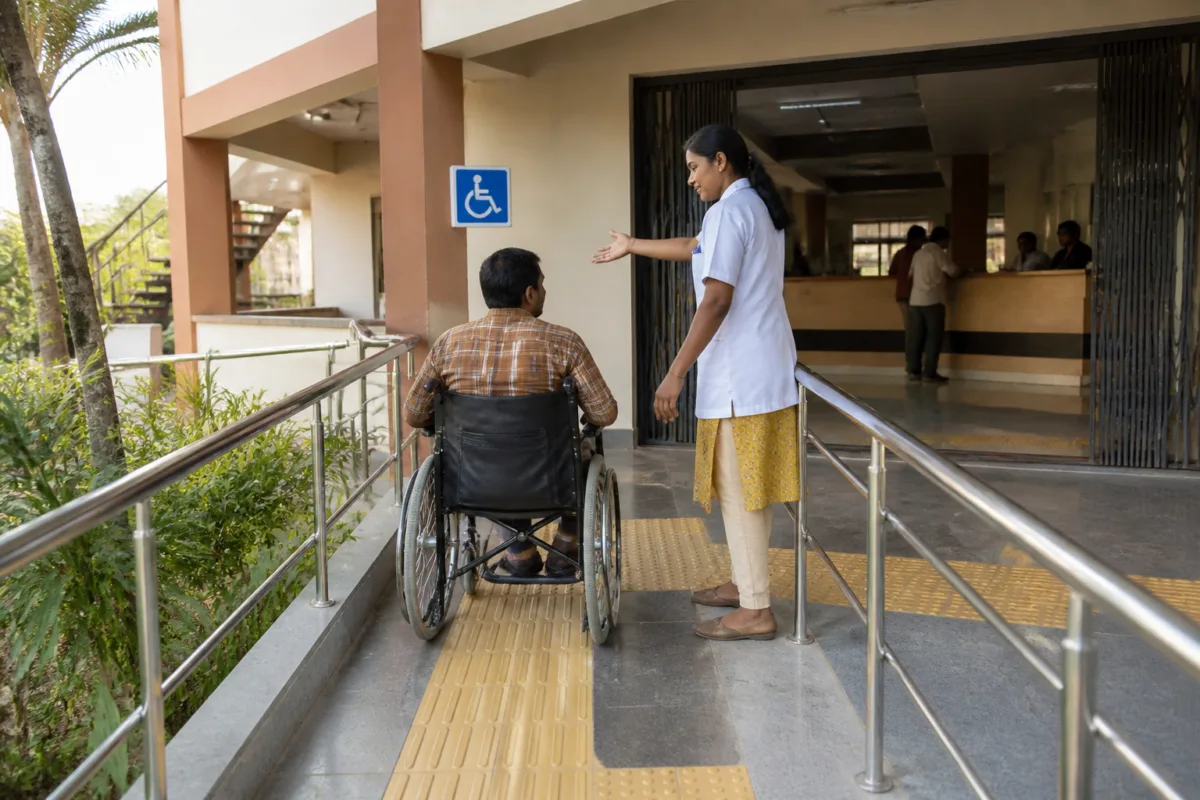
Karnataka has taken significant steps to protect the rights of persons with disabilities and support their empowerment, according to Heba Hagrass, the United Nations Special Rapporteur on the rights of persons with disabilities.
Hagrass reviewed the state’s measures during a visit on Friday and Saturday. Departments of the Karnataka government submitted reports on the steps taken to protect disability rights, according to a report by Prajavani.
The state’s policies were described as disability-friendly, while Hagrass also advised that improvements were still possible in some areas. The review was discussed in the context of the United Nations Convention on the Rights of Persons with Disabilities.
Chief Secretary Shalini Rajneesh briefed Hagrass on the measures and programmes implemented by the state government in line with the convention. Officials from the revenue, health, education, and women and child development departments also attended the meeting.
Karnataka currently operates rehabilitation centres for persons with disabilities in 18 districts. Centres are expected to begin operations in 13 additional districts, the government told Hagrass. The existing centres have provided various services to 2.77 lakh persons with disabilities, according to the information presented during the review.
The expansion is significant for service access because rehabilitation support is often dependent on the availability of local institutional facilities. However, the report does not provide details on the locations of the proposed centres, their staffing, service capacity, funding, or timelines for opening.
It also does not specify how the state is addressing accessibility in public buildings, streets, transport systems, housing, schools and healthcare facilities. These elements are central to translating disability-rights commitments into everyday urban access.
The visit therefore places Karnataka’s disability programmes within a broader governance framework: services must not only be available but also reachable and usable by persons with disabilities. The state’s next challenge will be to demonstrate how the proposed district-level expansion and other department-led measures improve access on the ground.

