


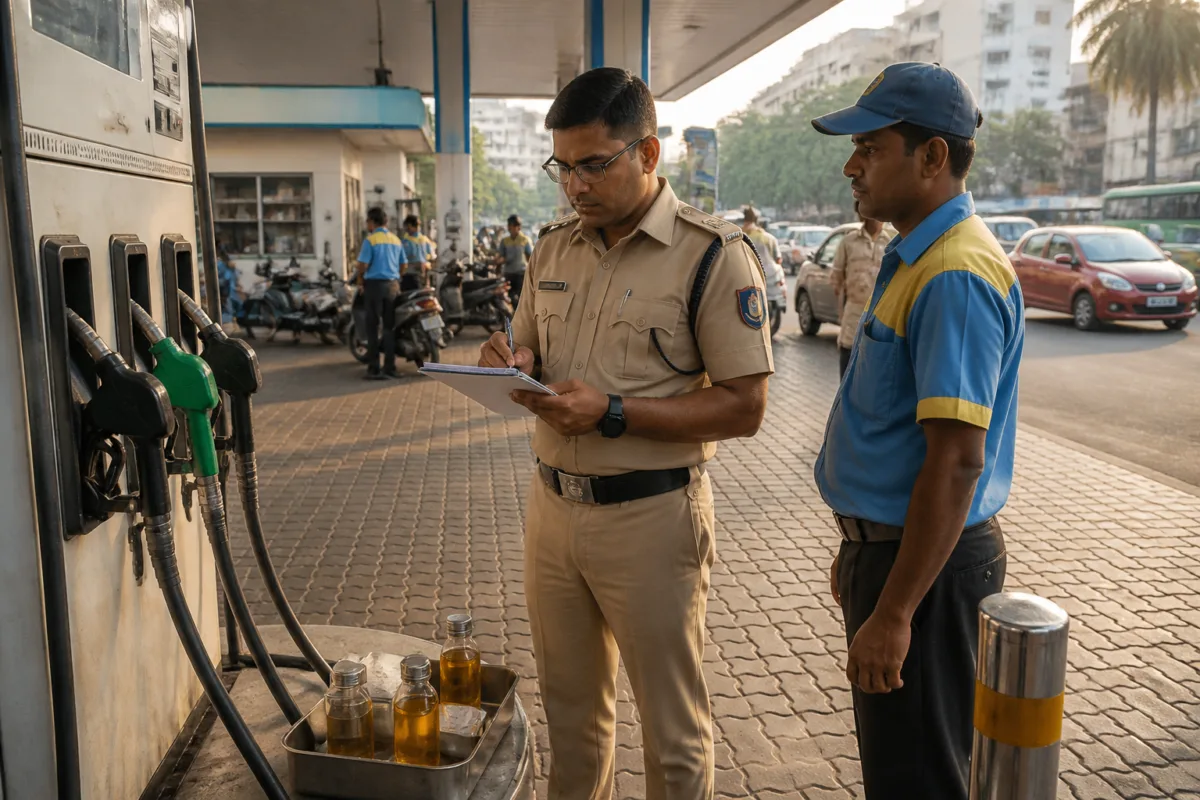
Karnataka has asked the Centre to review the implementation of the E20 petrol programme after independent laboratory tests commissioned by the state reportedly found ethanol content above 20 per cent in 11 of 14 samples collected across the state. One sample recorded 31.2 per cent ethanol, according to a letter from Karnataka Food, Civil Supplies and Legal Metrology Minister Rizwan Arshad to Union Petroleum and Natural Gas Minister Hardeep Singh Puri.
The state’s position, as described in the letter, is not opposition to ethanol blending itself but to what it calls over-blending and inadequate consumer safeguards. Arshad has sought the display of ethanol content at petrol pumps and its inclusion on fuel bills. He has also called for E10 and ethanol-free petrol to remain available alongside E20, independent testing of fuel samples and a compensation fund for consumers whose vehicles are damaged by excess ethanol.
The issue emerged after motorists complained of poor mileage, engine problems, damage to older vehicles and short delivery at petrol pumps, the minister said. Karnataka subsequently ordered inspections to assess fuel quality and quantity.
In September 2026, state officers inspected 63 retail outlets across districts, including outlets operated by Indian Oil Corporation, Bharat Petroleum Corporation, Hindustan Petroleum Corporation and Mangalore Refinery and Petrochemicals. The samples were initially sent through the oil marketing companies’ state-level coordinator to designated laboratories of the three public-sector oil marketing companies. Of 63 samples, 42 reports had been received, but the reports did not state the percentage of ethanol in the fuel, according to the letter. The remaining 21 reports were pending at the time of the letter.
Karnataka then collected fresh samples and sent them to laboratories accredited by the National Accreditation Board for Testing and Calibration Laboratories. The state said 11 of 14 samples contained more than 20 per cent ethanol, with results ranging from 13.5 per cent to 31.2 per cent.
The oil marketing companies questioned the state’s sampling procedure and the density recorded by its officers. Arshad rejected those objections, saying authorised officers had followed the prescribed procedure, sealed counterpart samples and recorded density at the outlets in the presence of dealers and other representatives. He also said the laboratory density readings matched those recorded during sample collection.
The dispute extends beyond fuel composition to the monitoring of dispensing equipment. A statewide Legal Metrology Department survey covered 805 of Karnataka’s 5,946 fuel outlets and checked 3,071 nozzles. The department reported deviations from rated accuracy in 2,618 nozzles and said 768 outlets required recalibration. It booked 101 outlets for dispensing fuel beyond the maximum permissible error and collected fines totalling Rs 6.66 lakh, according to the letter.
Arshad has linked these findings to two changes in the rules governing dispenser verification. A Central notification issued in December 2025 extended the mandatory verification interval for petrol and diesel dispensers from 12 months to 24 months. A notification issued in May 2026 allowed private Government Approved Test Centres to verify dispensers, a function previously performed by government inspectors.
Karnataka has decided to continue annual checks by government inspectors and has separately written to Union Consumer Affairs Minister Pralhad Joshi seeking reconsideration of the two notifications. Arshad said the survey findings indicated that annual verification remained necessary for accurate dispensing.
The minister also raised concerns about premium petrol, which is sold at higher prices. According to the letter, samples of premium high-speed petrol were also found to contain a high percentage of ethanol. The state’s proposed measures would make fuel composition more visible to consumers while retaining alternatives during the transition to higher ethanol blends.
The central questions now concern how ethanol content is measured and disclosed, which testing process will be accepted when state authorities and oil marketing companies disagree, and how dispenser accuracy will be supervised. The available report records Karnataka’s findings and requests; it does not provide a response from the Union petroleum ministry or the oil marketing companies to the state’s latest demands.

