


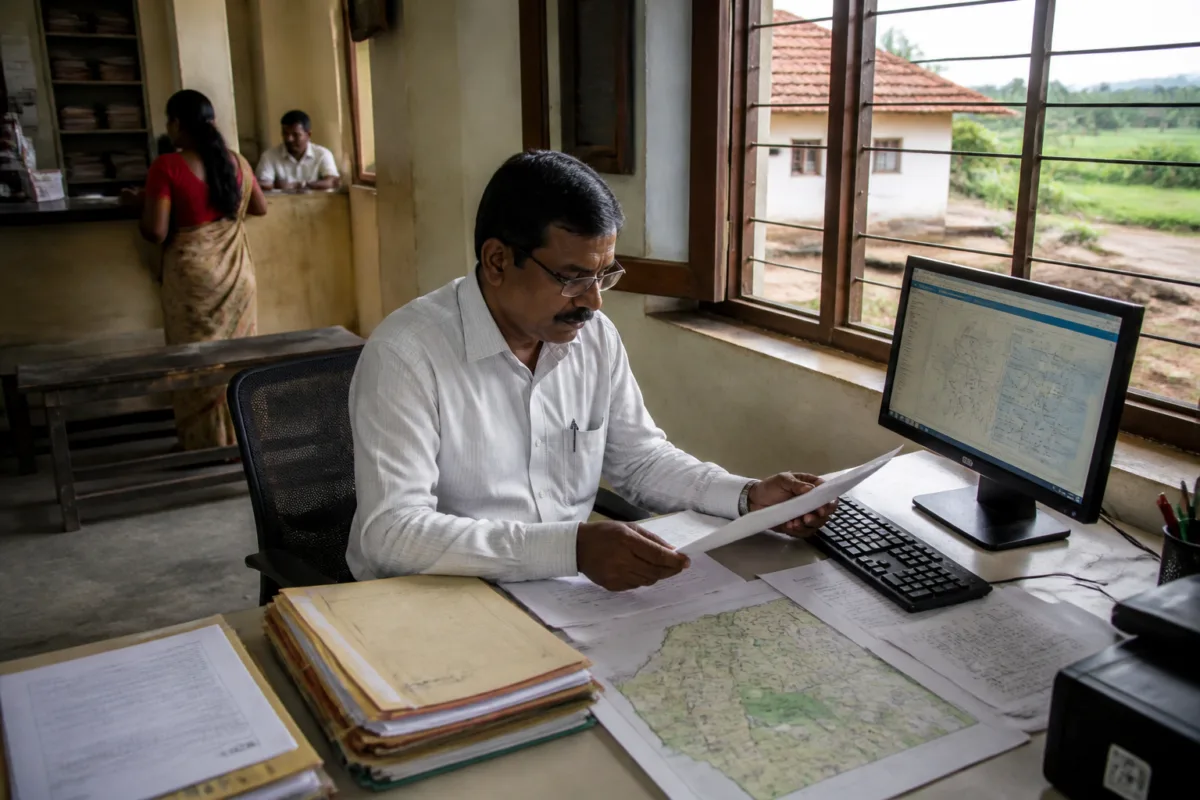
Karnataka has set a December 2027 deadline to issue e-khatas to 88 lakh rural properties, as the state government accelerates its property-record digitisation drive across gram panchayats.
The target includes e-khatas for eight lakh gramathana properties by December 31, 2026, followed by another 80 lakh rural properties by December 31, 2027. Rural Development and Panchayat Raj (RDPR) Minister Eshwar B Khandre announced the targets after a review meeting with officials on Wednesday, according to a report by the Times of India.
The state’s e-Swathu campaign was launched in December 2025 to provide digital property records for more than 97 lakh rural properties. Progress has been slowed by technical glitches and procedural delays. Karnataka has about 1.5 crore rural properties, of which 42.9 lakh have received Form 11A, or A-khata, and 10.2 lakh have received Form B, or B-khata, the report said.
The government has directed all 5,927 gram panchayats to cover 80 lakh dispute-free properties that are not located on government or forest land by the 2027 deadline. Khandre also launched the Bhoo guarantee e-khata campaign and said rules had been amended to speed up issuance.
Under the revised Karnataka Gram Swaraj and Panchayat Raj (Taxes, Rates and Fees of Gram Panchayats) Rules, 2025, families that have lived in gramathana areas for generations but lack property documents may apply using electricity bills issued before April 7, 2025, along with a spot inspection. Applicants will receive 21 days to file objections before an e-khata is issued.
The provision has also been extended to Kanamane and Manadala properties in the Malnad region. Buildings on agricultural land used for residential or agricultural purposes may qualify under prescribed rules even without registered documents. Properties measuring up to 4,000 square feet will be covered.
Initially, the government will extend e-khatas to houses on converted revenue land in survey numbers without B-kharab land. The rules are expected to be amended in the coming months to include non-converted revenue land as well, according to the report.
The department is currently using e-Swathu 2.0 and developing e-Swathu 3.0, which is intended to automatically retrieve data from the revenue department’s servers. The proposed system is aimed at improving verification and preventing e-khatas from being issued for government properties and B-kharab land.
The department is also planning a separate survey wing to address difficulties in measuring rural properties. The proposal, which includes training personnel to conduct surveys using rovers, will be placed before the state cabinet for approval.

