


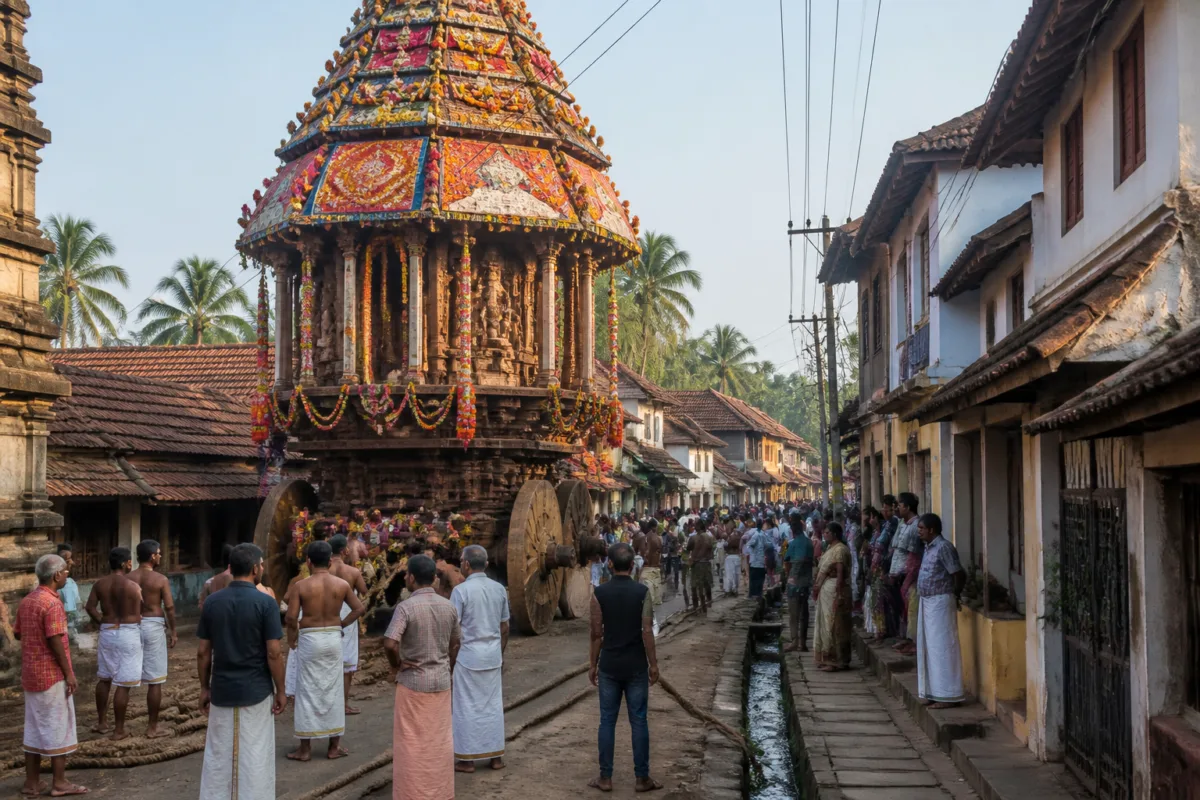
The Kalpathy Ratholsavam began in Palakkad on Saturday, launching an 11-day festival that will bring thousands of devotees and visitors into the heritage agraharams while authorities coordinate traffic, safety, emergency access and basic services along the chariot routes.
The festival will conclude on November 17. Its main event, the Devaratha Sangamam, is scheduled for the evening of November 16. Six decorated chariots will be taken out in procession on November 14, 15 and 16, while the Pallakku-Ratha Sangamam is scheduled for November 12.
The ceremonial flag-hoisting at four temples will take place on Sunday morning. Other scheduled observances include chaturveda recitation by Vedic scholars, special prayers, homams, abhishekams and processions of festival deities through the traditional agraharam streets.
The district administration has increased preparations for the festival following a review meeting chaired by district collector K Sudheer. Officials were directed to prohibit the use of LPG cylinders in the temple festival area as a safety measure. Vendors will also be required to register, while the police will supervise traffic regulation, parking, security and emergency evacuation arrangements.
The public works department will inspect the fitness of the chariots before the major processions. Special medical teams will be deployed on November 14, 15 and 16. The administration has also planned arrangements for drinking water, uninterrupted power supply, bio-toilets and compliance with the green protocol during the festival.
The preparations come as temple committees have raised concerns over incomplete road works and damaged drainage slabs along parts of the chariot route. They have sought urgent repairs to ensure the safe movement of the massive wooden chariots through the heritage neighbourhoods. The condition of these routes is therefore a key operational issue as the festival moves towards its largest processions.
The arrangements place the festival within the wider challenge of managing large public gatherings in established urban neighbourhoods, where narrow streets, drainage infrastructure, traffic movement and emergency access must operate alongside religious and cultural activity. The district administration’s stated next steps include route and chariot inspections, vendor registration, police deployment and the provision of essential public services through the main festival dates.

