


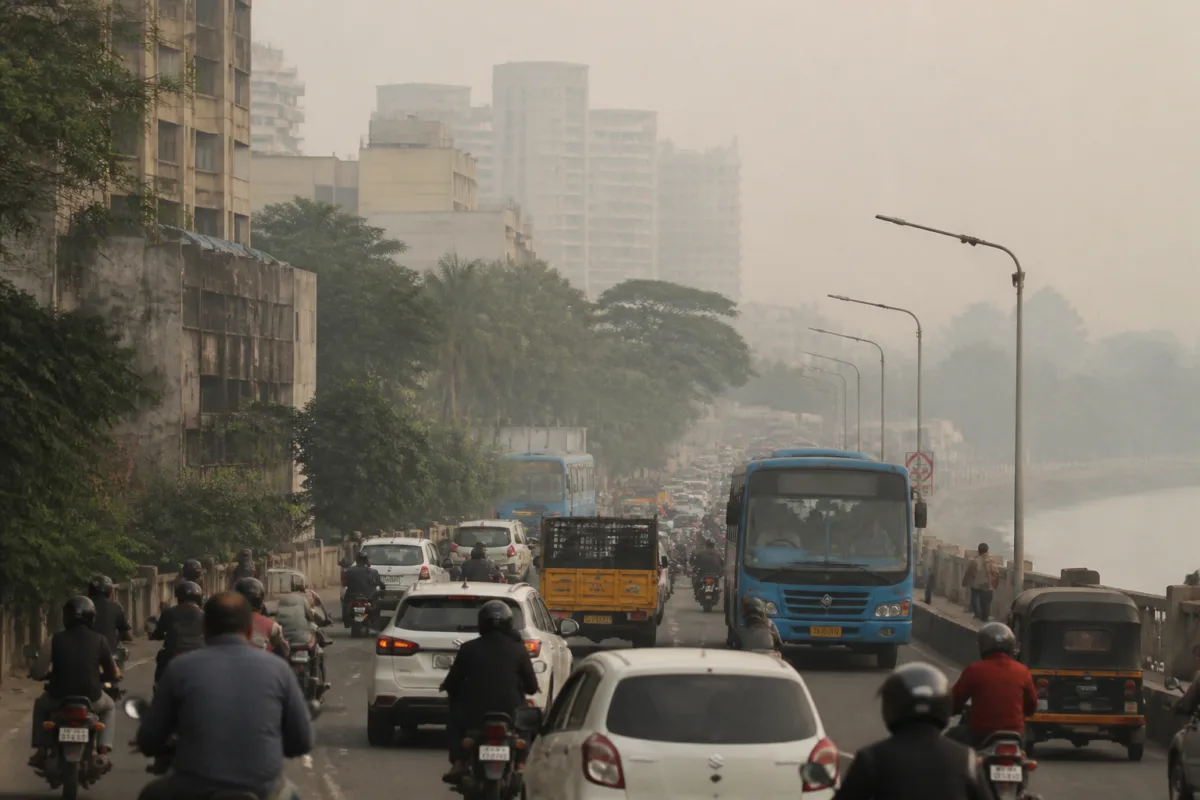
Kochi air pollution has become the immediate test of Kerala’s promise to pursue development without damaging its environment. Chief minister V D Satheesan said the state would constitute an expert committee to study the city’s deteriorating air quality and identify measures to reduce pollution, while also declaring that projects threatening the environment would not be permitted.
The announcement brings two policy questions together. The first is how Kochi should respond to an air-quality problem that the chief minister described as extremely serious. The second is whether environmental protection will be treated as an approval-stage requirement or as a continuing principle shaping transport, land use, infrastructure and urban growth. The supplied account does not establish the committee’s membership, terms of reference or reporting deadline, but its proposed creation indicates that the government sees the need for a structured assessment rather than an isolated response to daily pollution readings.
Satheesan made the remarks at the P V Thampy memorial endowment award ceremony in Kochi. He said no project, including large projects, that poses a threat to the environment would be allowed in Kerala. Projects would have to avoid environmental harm as assessed through environmental impact assessment reports, he said, adding that the state could not afford natural disasters and would not compromise on environmental protection.
That position places environmental impact assessment at the centre of the state’s development framework. In the account of the speech, however, no specific project was identified and no new approval, rejection or regulatory order was announced. The statement is therefore a policy assertion rather than a decision on an individual proposal. Its practical significance will depend on how environmental findings are translated into approvals, conditions, monitoring and enforcement.
Kochi’s air pollution announcement gives that broader position a concrete urban focus. Satheesan said the city recorded an air quality index of 188 on the previous day, compared with an index of two in London. The figures were cited by the chief minister to underline the severity of Kochi’s pollution, although the supplied report does not provide the monitoring station, pollutant composition, averaging period or comparative methodology behind the two readings. Those details will matter when the proposed committee identifies causes and recommends action.
The chief minister associated the city’s pollution problem with transport and urban form. He called for effective public transportation systems, measures to control vehicular pollution and fewer private vehicles entering the city. He also said Kochi needed proper urban planning, including the protection and development of its rivers. This places the issue beyond vehicle exhaust alone. The government’s own stated approach links air quality with how people travel, where vehicles concentrate, how the city is planned and whether natural systems are protected within the urban area.
Ernakulam MLA T J Vinod had written to the chief minister a week earlier requesting a study of air pollution in the city. Satheesan said the first step should be to identify the causes of pollution and submit the findings to an expert committee. The sequence is important: the government has not, in the supplied material, assigned responsibility to a single source or announced a final remedy. Instead, it has framed diagnosis as the immediate administrative task.
That diagnosis will need to distinguish among the possible contributors identified or implied in the statement. Vehicular pollution is one concern. The reference to fewer private vehicles entering the city points towards traffic volumes and transport choices. Urban planning is another concern, particularly because the chief minister connected pollution control with river protection and development. The report does not provide measurements that establish the relative contribution of vehicles, construction, industry, waste, road dust or other sources. Any policy response will therefore depend on the evidence gathered by the committee rather than on assumptions about a single cause.
The proposed committee also exposes a recurring governance challenge: air pollution crosses administrative boundaries even when responsibility is divided among agencies. A city’s transport system, roads, traffic management, land-use decisions and environmental monitoring may involve different authorities. The source report does not specify which departments or agencies will participate in the Kochi study. Until that institutional structure is clear, it is difficult to assess how findings will move from an expert report into enforceable action.
Satheesan’s emphasis on public transport suggests that the state views mobility as a central part of the solution. The statement does not announce a new route, fleet, funding package, parking rule or access restriction. It does, however, identify a direction: reduce dependence on private vehicles entering the city by developing more effective public transportation. For that approach to be assessed, the committee will need to examine the relationship between travel demand and available alternatives. The supplied material contains no figures on public transport capacity, vehicle registrations, traffic volumes or commuting patterns, so the scale of the intervention remains undefined.
The same caution applies to the environmental clearance position. Environmental impact assessment reports can identify risks associated with individual projects, but the speech does not explain how cumulative effects across multiple projects will be considered. That question is particularly relevant to an urban region where transport infrastructure, construction and land development interact. A project may meet its individual conditions while contributing to a wider pattern of traffic, land-cover change or pressure on water systems. The account does not say whether the proposed policy will introduce a new cumulative assessment mechanism or change existing approval procedures.
The chief minister also referred to Kerala’s wider ecological condition. He said the state must preserve the Western Ghats and protect its green landscapes, warning that plantations had expanded, natural forests had been cleared and ecological balance had been disturbed. He linked human intervention in wildlife habitats to human-animal conflict. These remarks broaden the policy frame from Kochi’s air to the relationship between development and ecological systems across the state.
The event’s award recipient, K R Jayan of Irinjalakuda, was recognised for planting nearly one lakh jackfruit trees in Kerala and Tamil Nadu. That detail illustrates the government’s emphasis on landscape protection and individual environmental action, but tree planting alone is not presented as a substitute for pollution control. The chief minister’s comments place such efforts alongside transport reform, river protection, environmental assessment and the preservation of natural forests.
For Kochi, the next significant step is not another general commitment but the production of an evidence-based assessment. The proposed committee will need to establish what the reported air-quality reading represents, identify the main sources affecting residents, map the relevant administrative responsibilities and set out measures that can be monitored. The source material does not state when the committee will submit its report or whether its recommendations will be binding.
The central urban question is therefore one of implementation. Kerala’s stated policy is that development must not threaten the environment, while Kochi’s pollution problem shows that existing urban systems are already producing environmental costs. The government has announced a study and outlined public transport, vehicle control, river protection and improved planning as areas of concern. What remains unresolved is how those principles will be converted into measurable standards, coordinated decisions and sustained enforcement. The committee’s constitution and subsequent report will show whether Kochi’s air pollution is treated as a temporary crisis or as evidence of a deeper planning and governance problem.

