


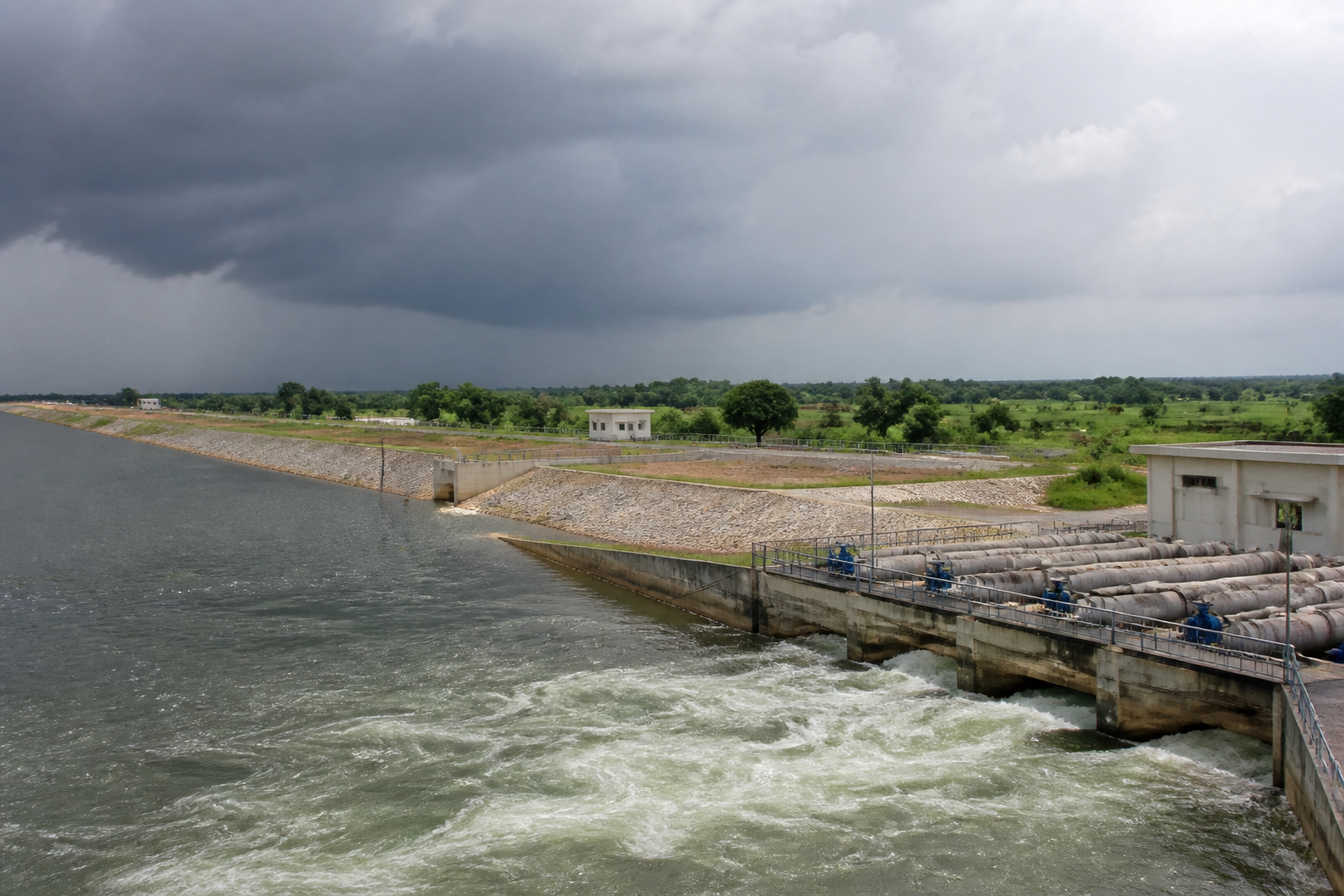
BRS leader T Harish Rao has urged the Telangana government to operate the Kaleshwaram project’s pumps around the clock and use continuing Godavari floodwaters to fill reservoirs, saying the move could strengthen irrigation and drinking water supplies across several districts.
In a letter to irrigation minister Uttam Kumar Reddy on Friday, Harish asked the government to begin lifting water from the Godavari at Yellampalli and transfer it to reservoirs connected to the Kaleshwaram network. He alleged that the state was failing to use an available flow of river water despite drought-like conditions in parts of Telangana.
The demand comes as heavy flood flows continue in the Godavari at Yellampalli. Harish said water could be moved to Mid Manair, Annapurna, Ranganayaka Sagar, Mallanna Sagar, Kondapochamma Sagar, Gandhamalla and Baswapur reservoirs. According to his statement, the operation could benefit nearly five lakh acres of agricultural land.
Harish cited storage levels at several reservoirs to underline the gap between installed capacity and available water. He said Annapurna and Ranganayaka Sagar were at dead-storage levels, while Mallanna Sagar, which has a storage capacity of 50 TMC, held about 13 TMC. Kondapochamma Sagar, with a capacity of 15 TMC, held around 6 TMC, he said.
He also said Lower Manair Dam had about 11 TMC of water. Supplying the reservoir, according to Harish, would support irrigation and drinking water requirements in Karimnagar, Warangal and surrounding areas. His statement identified potential beneficiaries in Peddapalli, Rajanna Sircilla, Siddipet, Medak, Yadadri Bhuvanagiri, Medchal-Malkajgiri and Hyderabad districts.
The Kaleshwaram network, Harish said, has reservoirs with a combined storage capacity of 141 TMC. He credited the previous government led by former chief minister K Chandrasekhar Rao with developing the network to use Godavari water for irrigation and other requirements.
The appeal also brings the operation of large water infrastructure into focus: reservoir capacity alone does not secure water unless pumping, conveyance and storage decisions are aligned with river flows and local demand. In this case, the immediate issue raised by Harish is whether available floodwater should be lifted and stored now for later irrigation and drinking-water use.
Harish rejected the use of El Niño conditions as an explanation for inaction and asked the government to prioritise farmers’ needs. The supplied report does not include a response from the irrigation department or details of any decision on operating the pumps. The next step will depend on the government’s response to the request and the operational assessment of flows at Yellampalli.
