


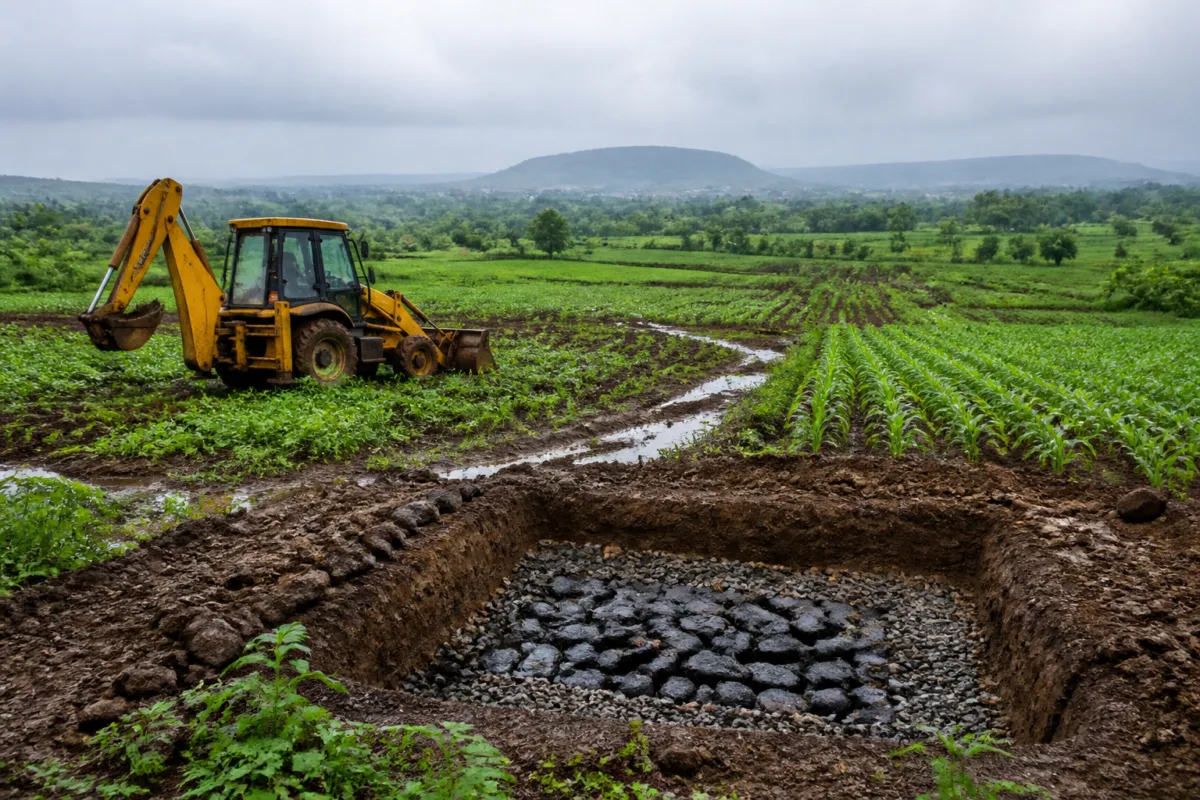
The Pune Zilla Parishad is considering a district-wide Jaltara water conservation initiative to divert rainwater from fields into the ground, reduce waterlogging during heavy rainfall and improve groundwater availability for rabi-season irrigation.
Under the proposal, stone-filled recharge pits would be constructed at natural low points and slopes within farms. The initiative is intended to address two linked problems: rainwater accumulating in agricultural fields during intense downpours and wells drying up during the summer months.
The Zilla Parishad is examining whether the model can be implemented across Pune district, drawing on work carried out in villages in the Mantha and Partur talukas of Jalna district. Those projects were implemented with public participation, support from non-governmental organisations and corporate social responsibility funding.
Pune Zilla Parishad president Veerdhaval Jagdale and chief executive officer Gajanan Patil have expressed support for exploring the initiative. However, no final decision has been taken on the areas to be covered, the number of works or the timeline for implementation.
The proposed Jaltara method involves digging pits at locations where water naturally collects according to the slope of a farm. The pits would generally be about five feet long, five feet wide and six feet deep, with excavation continuing until murum, or weathered rock material, is reached. They would then be filled with black stone and rounded gravel to allow rainwater to percolate into the soil.
Additional pits could be created in areas where water remains stagnant for longer periods, with the aim of accelerating drainage. The proposed arrangement would therefore combine field-level drainage with groundwater recharge rather than allowing runoff to leave the farm without being captured.
The Zilla Parishad said the idea is being considered alongside conventional water-conservation works because increasing groundwater extraction and the rapid movement of rainwater away from agricultural land have created challenges for water security. Capturing water within individual farms could provide a direct benefit to cultivators, particularly after the monsoon when irrigation demand rises during the rabi season.
Jagdale said the district currently needs works of this nature and that implementing them across all talukas could make the initiative successful. He said the Zilla Parishad is examining whether funds from the Sixteenth Finance Commission could be allocated for the work. Demands for such projects are expected to be collected from Zilla Parishad members as part of that process.
The proposal is still at the planning stage. Its eventual scale will depend on the identification of suitable sites, the availability of funds, local participation and decisions on how the works are to be executed across Pune district.

