


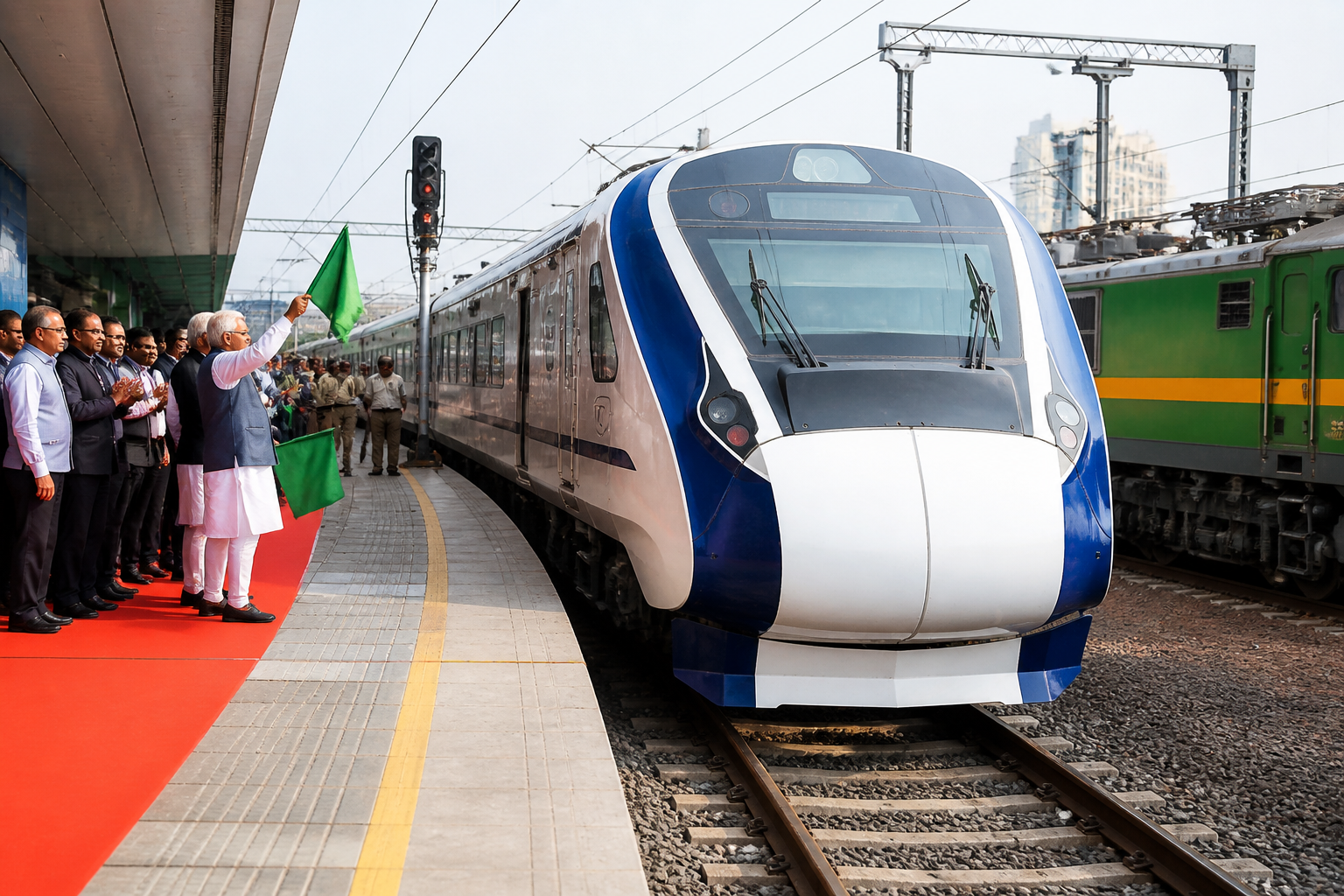
India’s first LNG-powered train was flagged off from Sabarmati railway station in Gujarat on Sunday, alongside the inauguration and foundation-laying of railway projects valued at more than Rs 1,500 crore. The projects include line doubling, the Kavach train protection system, automatic signalling and a maintenance shed for WAG-12 electric locomotives.
Union home minister Amit Shah flagged off the LNG-powered train at an event in Sabarmati and also launched a WAG-12 electric locomotive. The initiatives come as Indian Railways continues to expand electrification, increase network capacity and reduce its dependence on diesel.
According to statements reported by the Times News Network, Shah said railway modernisation since 2014 had included the dedicated freight corridor, the rapid rail system and premium railway stations. He also referred to the development of hydrogen-powered train technology, although the event covered the flag-off of an LNG-powered train.
The railway works announced in Gujarat combine capacity expansion with operational and safety upgrades. Line doubling is intended to provide additional track capacity on busy routes, while automatic signalling can support train movements across sections where traffic volumes are increasing. The projects also include the Kavach train protection system, which is designed to support railway safety operations, and a dedicated maintenance shed for WAG-12 electric locomotives.
Shah said an 11,000-kilometre rail corridor was being converted into a four-track network to improve traffic movement and operational efficiency. The statement did not specify the sections included in this conversion or provide a completion timeline for the entire programme.
The LNG train launch also comes against the backdrop of a broader shift in railway fuel use. Shah said Indian Railways consumed 293 crore litres of diesel in 2015-16, compared with 108 crore litres in 2024-25. He said diesel consumption was expected to reach zero by 2030, which would reduce foreign-exchange expenditure. The figures and target were presented at the event and were not accompanied in the report by a separate project-wise implementation plan.
Railway electrification has reached 99.6%, according to Shah, with the remaining network expected to be electrified soon. He compared India’s reported electrification level with figures cited for China, Spain, France and the United Kingdom, saying India was on course to achieve full electrification.
The shift away from diesel has implications for how Indian Railways plans its traction systems, maintenance facilities and fuel procurement. LNG-powered trains can form part of that transition, but the report does not specify the route, operating frequency, fuel capacity or long-term deployment plan for the train flagged off from Sabarmati.
Gujarat’s railway allocation has also increased sharply, Shah said, from Rs 589 crore during 2009-14 to Rs 17,366 crore in 2026-27. The report does not provide a project-wise breakdown of the latest allocation. The next stages for the announced works will depend on construction, signalling, safety-system installation and commissioning schedules issued by the railway authorities.
