


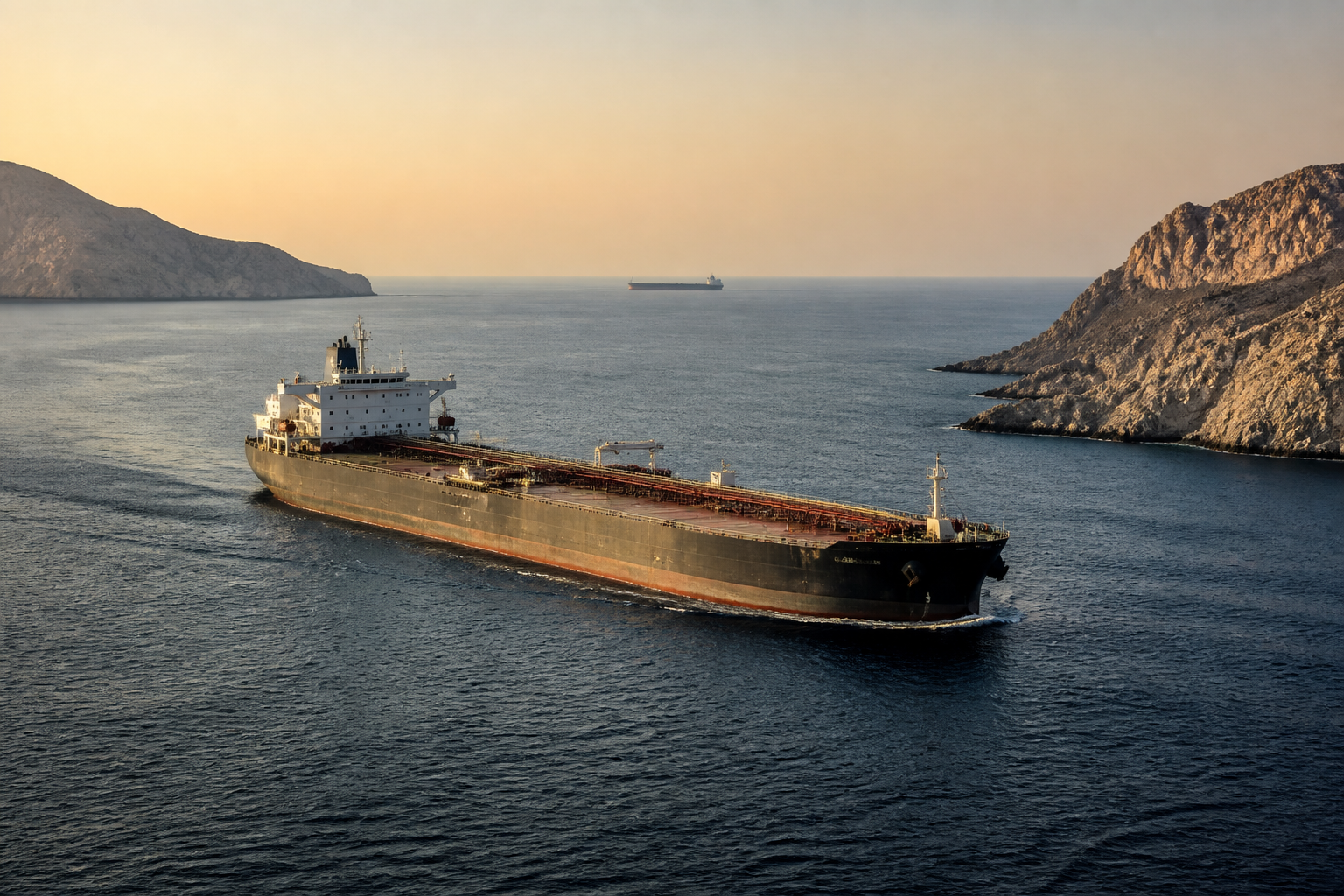
Indian oil refiners are hiring tankers to collect crude from inside the Persian Gulf and transport it through the Strait of Hormuz, changing a wartime shipping strategy that had left Gulf producers and international traders to manage the route’s security risks.
Indian Oil Corp., Reliance Industries, Bharat Petroleum Corp. and HPCL-Mittal Energy have issued tenders and are negotiating with shipping companies, according to people familiar with the effort cited in the report. Sinokor Group and Dynacom Tankers Management have been awarded tenders, while bids from Shipping Corp. of India and Lila Global were cancelled, the people said.
The shift follows the refiners’ recent purchases of Iraqi crude on a free-on-board basis. Under such contracts, the buyer is responsible for arranging the vessel, loading the cargo and delivering it to the destination. That gives refiners greater control over logistics and can reduce the premium attached to cost-and-freight shipments, in which suppliers or traders arrange transportation and price in the risk of sailing through Hormuz.
Indian refiners had previously avoided sending their own vessels through the strait since the start of the US-Iran war because of the risk of attacks. They instead relied on Gulf producers and international traders to undertake the voyage. The arrangement provided access to crude but increased the cost of delivery.
The change has become more feasible as shipping flows through Hormuz have recovered. Crude shipments from the Middle East were at 98% of pre-war levels, according to a JPMorgan Chase note cited in the report. Oil flows through the strait towards India averaged about 1.3 million barrels a day in September, the highest level since February, before the war began, according to Kpler.
The restoration of Saudi Arabia’s East-West pipeline has also supported the recovery in regional oil movements. Overall, Indian crude imports from the Middle East were about 2.8 million barrels a day, including Saudi supplies sent through the Red Sea, the report said.
Regulatory conditions for Indian crews have also changed. Picking up crude inside the Gulf had been difficult because ships making the voyage were not permitted to use Indian crew. In August, however, the Directorate General of Shipping softened its advisory. Shipowners and placement agencies were asked to obtain the consent of Indian seafarers before sending them through Hormuz rather than being subject to a blanket ban.
The economics of Iraqi supplies are another factor behind the shift. Iraq’s state-owned oil marketer, SOMO, has offered discounts of up to $37 a barrel below regional benchmarks for contracted supplies for October, according to the report. At the same time, India has become more reluctant to accept Russian cargoes amid rising political pressure from the United States.
The companies and shipping firms named in the report did not immediately respond to emails seeking comment. The immediate next step is the deployment of the tankers awarded under the tenders and the continued negotiation of shipping arrangements for crude purchases made on a free-on-board basis.
