


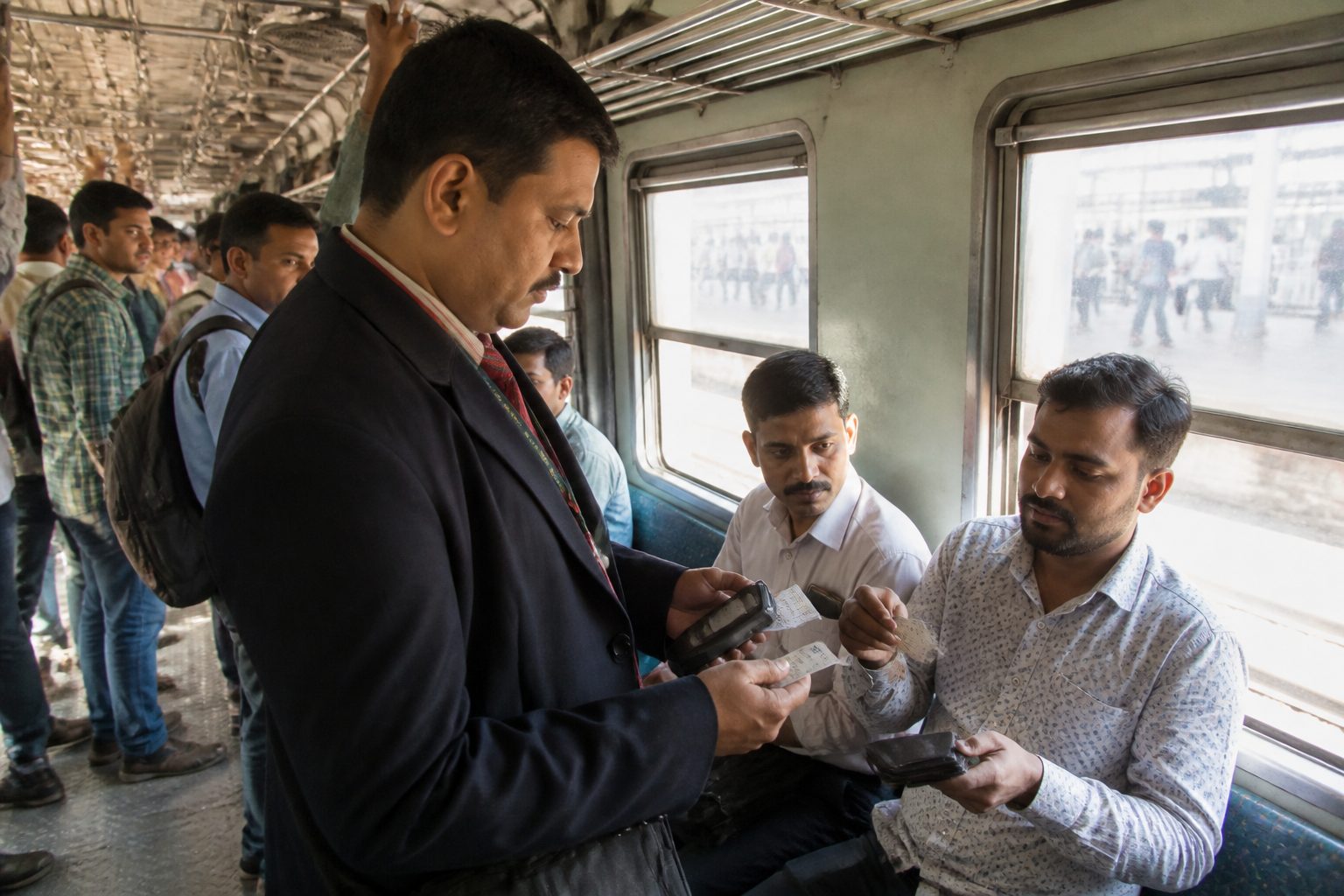
Central Railway has begun a month-long ticket checking drive across trains and stations, with passengers travelling on concession, quota, e-pass and PTO tickets required to carry documents supporting their eligibility. The campaign will run from 1 October to 31 October 2026 and is intended to prevent misuse of reservations and concessions and reduce revenue loss for the railway.
According to details reported by Aaj Tak Business, the checking will cover both reserved and unreserved tickets. Railway staff will examine not only the validity of the ticket but also the documents linked to the benefit or booking arrangement used by the passenger. The campaign will be conducted on trains as well as at railway stations across the Central Railway network.
Passengers travelling together on a single Passenger Name Record, or PNR, will need to pay particular attention to identification requirements. When more than one passenger is travelling on the same ticket, at least one traveller must carry a valid identity proof during the ticket check. The requirement applies to both ordinary and concessional tickets.
If the passengers are unable to produce valid identity proof, all travellers booked on that ticket may be treated as travelling without a valid ticket, according to the report. They could then face action or a penalty under railway rules. A single PNR can cover multiple passengers travelling together, with separate fares and seats recorded against the same booking reference.
Passengers using fixed concession or reserved quota tickets may also be asked to establish their eligibility. Carrying the ticket alone may not be sufficient where the booking depends on a specific concession or quota. Travellers using such facilities have been advised to carry the documents required to support their entitlement.
The checking drive also covers railway employees and eligible family members travelling on e-Pass and Privilege Ticket Order, or PTO, arrangements. An e-Pass enables eligible passengers to travel without paying the regular fare, while a PTO allows travel at a concessional rate. Passengers using either facility must carry their original identity proof throughout the journey.
They must also confirm before travelling that the e-Pass or PTO has been converted into an Authority to Travel. If the required process has not been completed, the passenger may face a penalty similar to that imposed for travelling without a valid ticket, according to the information reported by Aaj Tak Business.
Unreserved tickets will also fall within the scope of the campaign. Where ticket validity or related information is unclear, ticket checking staff may verify the details through the Travelling Ticket Examiner application. This means passengers travelling during October will need to ensure that their ticket information is accurate and that supporting documents are available when required.
The campaign places documentation at the centre of railway ticket enforcement. For passengers travelling under ordinary bookings, the key requirement is to carry valid identity proof when sharing a PNR. Those using concessions, reserved quotas, e-Passes or PTOs must additionally carry the documents that establish their eligibility and complete the required travel-authorisation process before boarding.
