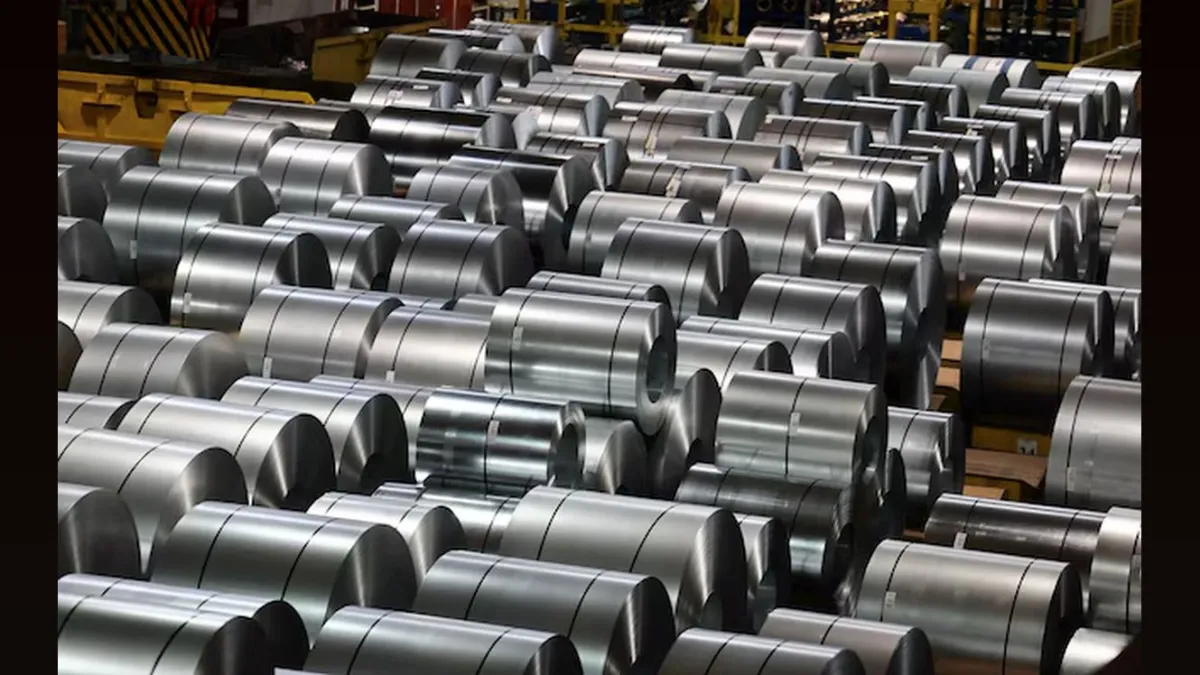
India Steel Sector Gains From Price And Demand Surge
India’s steel industry is poised for a strong earnings rebound in the March quarter of FY26, driven by higher prices, improved demand, and favourable trade policies—signalling renewed momentum in sectors linked to infrastructure and urban development.
Industry estimates suggest that steel producers will report a sharp sequential improvement in performance, supported by a combination of policy intervention and seasonal demand during the January–March period. A safeguard duty introduced in late 2025 has helped curb imports, allowing domestic manufacturers to raise prices and improve realisations. Average steel prices, particularly hot-rolled coils, rose between 12% and 15% during the quarter, reflecting stronger pricing power across the sector. At the same time, production volumes are estimated to have increased by around 7%, further supporting revenue growth and operational efficiency.This combination of price and volume growth is expected to offset rising input costs, particularly for coking coal and iron ore. Raw material prices have increased during the quarter, but analysts note that improved margins per tonne—estimated to rise by ₹2,000–3,000—are likely to sustain profitability across major producers. The performance also reflects broader structural shifts in India’s steel ecosystem. Domestic production has grown by over 10% in the current fiscal period, while consumption has increased steadily, indicating sustained demand from construction, infrastructure, and manufacturing sectors.
Trade dynamics have further reinforced this trend. Steel imports declined by roughly 25% year-on-year, while exports surged by nearly 40%, positioning India as a net exporter during the period. This shift underscores improving competitiveness and capacity utilisation within domestic steel plants.From an urban development perspective, the sector’s recovery has significant implications. Steel is a foundational material for infrastructure—used extensively in transport systems, housing, industrial corridors, and renewable energy installations. Stronger financial performance among producers typically translates into higher capacity utilisation, faster project execution, and improved supply stability for construction activity.Experts note that the current upswing aligns with rising infrastructure investment and real estate activity across India. Demand from highways, rail networks, and urban housing projects continues to support steel consumption, particularly in Tier II and Tier III cities where development is accelerating.However, the growth trajectory is not without challenges. Rising input costs and global commodity volatility remain key risks, while environmental pressures are increasing. India’s steel sector accounts for a significant share of industrial emissions, and future expansion will need to align with low-carbon production pathways, including increased use of scrap, cleaner fuels, and energy-efficient technologies.
The March quarter performance may therefore mark more than a cyclical recovery. It reflects a sector adapting to a new equilibrium—balancing domestic demand, trade protection, and sustainability pressures in a rapidly evolving economic landscape.As India scales up its infrastructure ambitions, the resilience and efficiency of the steel industry will remain central to delivering cost-effective and climate-conscious urban growth in the years ahead.