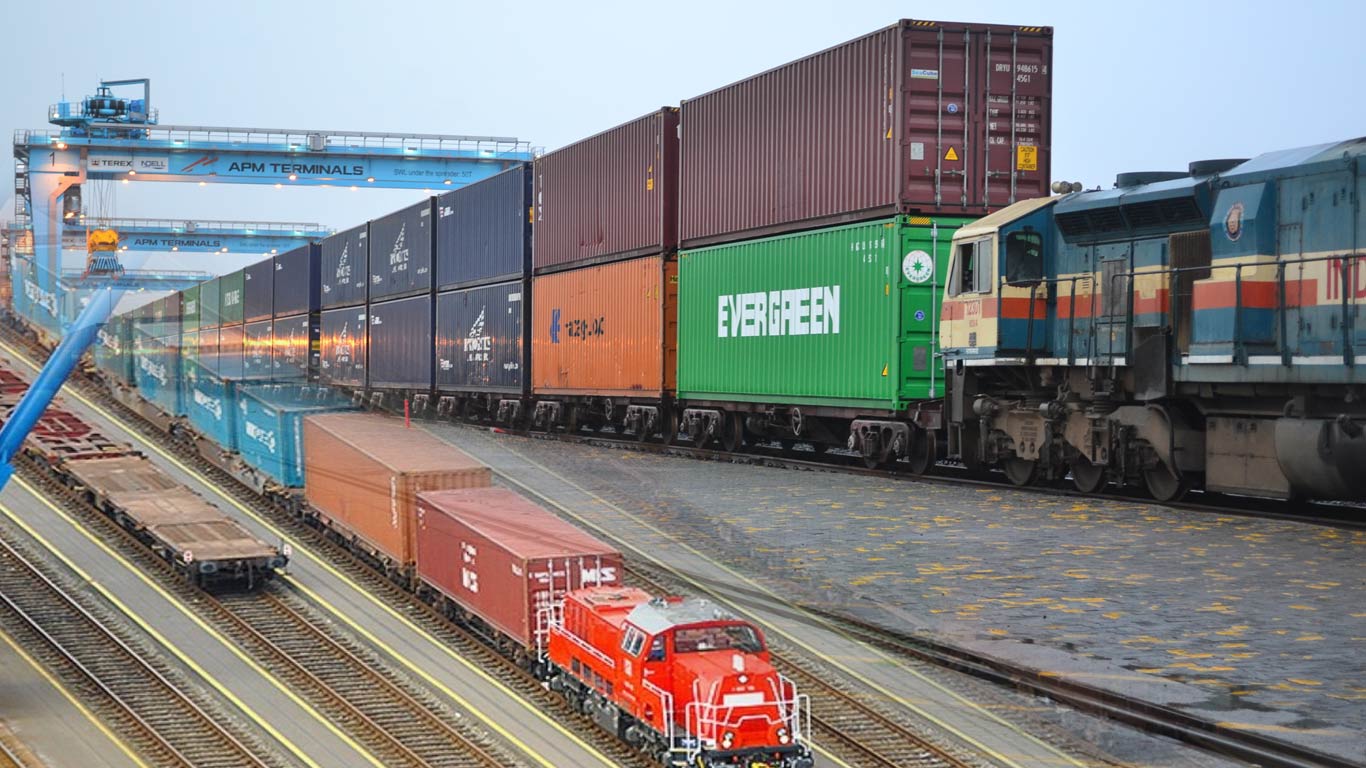
India Plans 200 Gati Shakti Cargo Terminals to Boost Rail Freight Growth
India’s logistics backbone is set for a major expansion with the government planning to establish 200 Gati Shakti Cargo Terminals (GCTs) along the country’s dedicated rail freight corridors. These terminals, developed through public-private partnerships, aim to transform multimodal cargo connectivity, reduce road congestion, and shift freight share towards greener rail transport. With just 77 GCTs currently in operation, the move marks a significant leap in infrastructure capacity aligned with the PM Gati Shakti National Master Plan.
The upcoming Gati Shakti terminals are planned along both the Eastern and Western Dedicated Freight Corridors (DFCs), which are strategically positioned to handle up to 480 freight trains per day. Authorities state that of the 115 stations across the DFCs, nearly half have been deemed suitable for terminal development. The target of 200 GCTs marks a major upgrade from the current count of 77, with an average terminal cost pegged at ₹70 crore. This PPP-driven model is attracting significant private sector interest, as tenders continue to roll out in phases. The newly commissioned terminals are expected to enhance freight loading, reduce turnaround times, and improve supply chain efficiency for critical sectors such as manufacturing, steel, cement, and agriculture. With increasing volumes projected, this infrastructure is also expected to ease pressure on passenger services by allowing railways to reallocate shared network capacity and cross-subsidise lower passenger fares.
Experts believe that once fully commissioned, the dedicated corridors will not only boost the operational efficiency of Indian Railways but also make rail a more attractive mode for long-haul cargo transport. Currently, road transport dominates India’s logistics sector with a 46% share, while rail accounts for only 26%. The planned expansion of GCTs seeks to reverse this ratio by improving first-mile and last-mile rail connectivity, especially near industrial hubs and ports. The final section of the Western DFC, which links Vaitarna to Jawaharlal Nehru Port Trust (JNPT), is expected to be a game changer once operational. While the corridors themselves are capital-intensive, experts argue that the long-term savings from energy-efficient rail movement and reduced road congestion justify the investment. Additionally, the environmental and cost benefits of shifting bulk goods from diesel-powered trucks to electric freight trains align closely with India’s sustainability and zero-carbon mobility goals.
The government’s push to add 200 Gati Shakti terminals marks a decisive shift towards integrated, multimodal freight systems that prioritise speed, sustainability, and scalability. By leveraging public-private partnerships, authorities aim to modernise India’s rail freight ecosystem while easing road congestion and supporting climate-friendly logistics. As more terminals become operational along the DFCs, the initiative is expected to bridge infrastructure gaps, attract new investments, and reinforce India’s ambition of becoming a global logistics powerhouse. The success of this expansion will rest on coordinated planning, efficient execution, and the ability to balance freight and passenger rail demands.