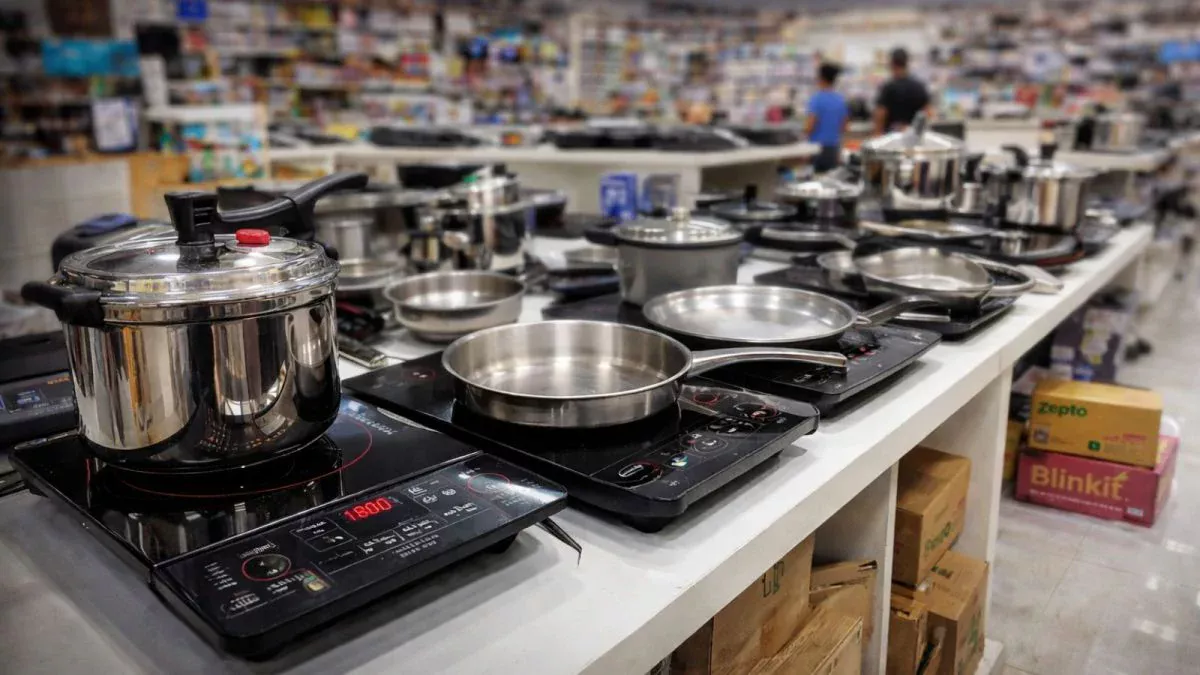
India’s ongoing cooking gas supply concerns are accelerating a rapid shift toward electric cooking appliances, with policymakers and industry stakeholders exploring ways to scale up domestic production of induction cooktops. The development reflects how energy disruptions are beginning to reshape household consumption patterns, infrastructure demand, and urban energy planning.
The India LPG crisis has intensified following global supply disruptions linked to geopolitical tensions in West Asia, particularly around the Strait of Hormuz—a critical route for energy imports. With nearly 90% of India’s LPG imports routed through this corridor, supply uncertainties have triggered both price volatility and availability concerns across urban and semi-urban regions. In response, demand for electric cooking alternatives has surged sharply. Retailers across major cities have reported unprecedented spikes in induction cooktop sales, with daily demand jumping from a few thousand units to as high as one to two lakh units during peak periods. This surge has led to widespread stock shortages, with both online platforms and physical stores struggling to keep up with consumer demand. The India LPG crisis is not only influencing consumer behaviour but also prompting policy-level interventions. Government discussions are underway to expand domestic manufacturing capacity for induction appliances, particularly to support commercial kitchens, institutional users, and urban households that rely heavily on LPG. However, the shift toward electric cooking brings its own set of infrastructure implications. Experts estimate that large-scale adoption of induction cooking could add between 13 GW and 27 GW to India’s electricity demand, depending on usage patterns and regional uptake. This places additional pressure on power generation and distribution systems, particularly during peak summer months when electricity consumption is already elevated.
From an urban development perspective, the India LPG crisis highlights the interconnected nature of energy systems and city planning. Reliable access to cooking fuel is a fundamental urban service, and disruptions can have cascading effects on households, small businesses, and institutional operations such as hostels and canteens. In several cities, restaurants have already begun adapting menus or shifting partially to electric cooking solutions to manage fuel constraints.The transition also underscores broader questions around energy resilience and sustainability. While induction cooking reduces dependence on fossil fuel imports at the household level, it shifts the burden to the electricity grid, which still relies significantly on coal-based generation. This creates a complex trade-off between energy security and environmental impact.At the same time, the shift presents opportunities for cleaner, more efficient cooking systems. Electric appliances, particularly when powered by renewable energy, can contribute to lower emissions and improved indoor air quality—an increasingly important consideration in dense urban environments.Industry experts suggest that scaling domestic manufacturing of induction appliances could support both economic growth and supply stability. It may also reduce dependence on imported components, which currently pose risks to production continuity.
Looking ahead, the India LPG crisis may act as a catalyst for a broader transformation in how energy is consumed within households. The convergence of policy support, market demand, and infrastructure upgrades will determine whether electric cooking becomes a long-term structural shift or remains a temporary response to supply disruptions.