


EQT AB’s plan to invest $50 billion in India by 2030 is more than a private-equity expansion announcement. It is a signal that the country’s next phase of digital infrastructure will be shaped by the combined demands of data centres, artificial intelligence computing and the energy systems needed to keep those facilities running.
According to The Hindu BusinessLine, which reported Bloomberg’s account of remarks by EQT chair Jean Salata in Mumbai, around $30 billion of EQT’s planned spending will go into data centres and another $5 billion into renewable energy to power them. The remaining $15 billion to $20 billion is expected to be directed towards venture and buyout private equity investments in India.
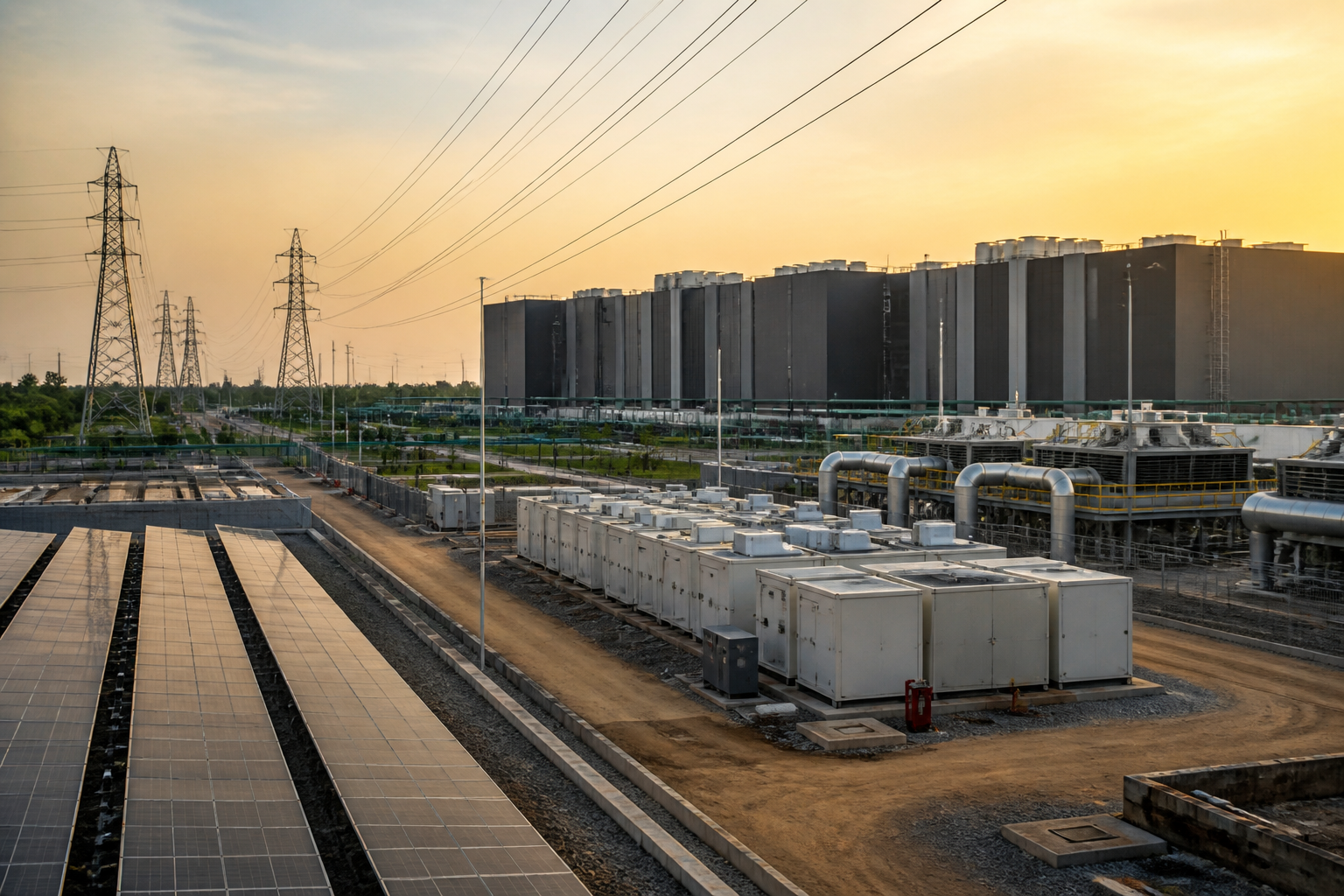
The scale of the plan places data centres at the centre of India’s infrastructure investment story. These facilities are often discussed as technology assets, but their operation depends on land, electricity transmission, cooling systems, water management, fibre connectivity and reliable access to renewable power. As more computing capacity is built, the question for cities and infrastructure agencies is not only how many facilities can be added, but how their physical and energy requirements will be accommodated.
## India data centre investment is becoming an infrastructure story
EQT plans to route its data-centre investments through EdgeConnex, its portfolio company. EdgeConnex formed a 50-50 joint venture with Adani Enterprises in 2021 to create AdaniConnex. The proposed investment therefore connects a global investment platform, an international data-centre operator and one of India’s largest infrastructure groups.
Adani Group said in February that it planned to invest $100 billion by 2035 to develop green-powered, artificial-intelligence-ready data centres. EQT’s announcement adds another large pool of capital to the same broad expansion cycle. The source report also identifies Blackstone, Brookfield Asset Management, Warburg Pincus and Bain Capital among global investors increasing their presence in India’s data-centre capabilities.
The investment pattern reflects a change in what data centres represent within the urban economy. They are not simply secure buildings filled with servers. They are large and continuously operating electricity loads, usually requiring high-capacity grid connections, backup systems and substantial cooling infrastructure. Their location and power arrangements can influence industrial land demand, transmission planning and the development of new renewable-energy and storage assets.
EQT’s decision to pair data centres with renewable energy and battery energy storage solutions is significant because it treats computing capacity and electricity supply as a linked investment proposition. The report does not specify the locations, capacity or construction timelines of the proposed facilities. It does, however, make clear that EQT’s infrastructure strategy will combine data-centre investment with green-energy assets.
## The AI demand behind the capital surge
Salata told reporters that EdgeConnex would be used to meet rising demand for artificial-intelligence computing. AI systems require large amounts of computing capacity, and the investment plans described in the report suggest that companies and financial investors expect this demand to grow substantially in India.
Amazon.com plans to invest $12.7 billion in cloud infrastructure in India through 2030, according to the report. Alphabet is spending about $15 billion on an AI infrastructure hub in Visakhapatnam. These commitments sit alongside the plans announced by Adani Group and EQT, creating a broader picture of competing and overlapping investments in digital infrastructure.
The figures should not be read as a single national construction programme. They represent separate corporate plans, with different business models, ownership structures and delivery schedules. The report does not establish how much of the announced capital has already been committed, how much will be deployed in physical construction or how the proposed projects will be distributed across Indian cities and states.
That distinction matters for public planning. Announced investment can indicate demand, but actual urban effects depend on land acquisition or leasing, approvals, grid availability, fibre networks, equipment supply and the ability of local and state institutions to support construction. Until project locations and implementation schedules are disclosed, the scale of the eventual impact on individual cities remains unclear.
## Renewable power is becoming part of the data-centre business model
EQT’s proposed $5 billion allocation to renewable energy shows how data-centre investment is increasingly being designed around the power system rather than treated as a standalone real-estate transaction. The company also plans to invest in battery energy storage solutions, according to Salata.
For data-centre operators, renewable energy can support emissions goals and help address the electricity requirements of facilities that need uninterrupted power. Storage can add flexibility, although the supplied report does not provide details on the technologies, capacities or locations under consideration. It also does not say whether the renewable assets would be located next to data centres, connected through the grid or contracted through other arrangements.
The institutional implication is that data-centre growth will involve multiple authorities and infrastructure systems. Developers and investors will need access to land and construction permissions. Power utilities and transmission agencies will need to manage new loads. Renewable-energy projects will require their own approvals and connections. Municipal bodies will remain relevant to local roads, water, drainage and building permissions, even when the core investment is led by global financial and technology companies.
The source material does not provide details on water consumption, cooling systems or local environmental clearances. Those questions cannot be answered from the announcement alone. They are nevertheless part of the infrastructure chain that determines whether a data-centre expansion can be integrated into a city without placing unexamined pressure on local utilities.
## India’s place in EQT’s wider strategy
India currently represents less than 5% of EQT’s global infrastructure investments, Salata said, leaving room for the country to grow within the firm’s portfolio. EQT has invested $26 billion in India since 1998 across 30 investments, including around $7 billion since 2023.
The firm manages €341 billion, or $393 billion, in assets globally as of June 2026. Its existing Indian private-equity investments include Indira IVF Hospital, Credila Financial Services and several information-technology services companies. The planned expansion therefore extends an established investment presence rather than marking EQT’s first entry into the country.
The structure of the proposed strategy also matters. In the previous quarter, EQT transferred part of its stake in EdgeConnex into an AI infrastructure fund through an evergreen vehicle. According to the report, the vehicle will hold assets in perpetuity while allowing investors to buy and sell shares in the entity. This could provide a longer-term funding structure for infrastructure assets, although the report does not state how much capital the vehicle will deploy in India or which projects it will own.
This model separates data-centre infrastructure from the shorter investment cycles associated with individual projects. It can allow capital to remain invested in operating assets, but the practical consequences for project delivery, ownership and accountability in India will depend on the final structure of each investment.
## The urban question is capacity, not only capital
India’s data-centre investment pipeline is being built around a strong narrative of AI and digital growth. The evidence supplied in the report supports a clear conclusion: global investors, technology companies and infrastructure groups are assigning increasingly large sums to computing capacity and the renewable-energy systems associated with it.
The same evidence also shows what remains unresolved. The announcements do not identify all project locations, construction milestones, power arrangements, storage capacities or city-level utility requirements. They therefore establish the direction of investment more clearly than its immediate physical consequences.
For urban policymakers, the central issue will be whether digital infrastructure is planned as part of the wider city and regional system. Data centres require dependable electricity, connectivity and transport access, but they may generate fewer direct jobs than other large industrial developments. Their value and demands will therefore need to be assessed through the infrastructure they consume, the services they support and the energy systems built around them.
EQT’s announcement confirms that India is becoming a major destination for data-centre and AI infrastructure capital. The next meaningful milestones will be the disclosure of project locations, investment commitments, renewable-energy arrangements and implementation timelines. Those details will show how much of the proposed $50 billion becomes operational urban infrastructure and how its costs and benefits are distributed across India’s cities and utility networks.
