


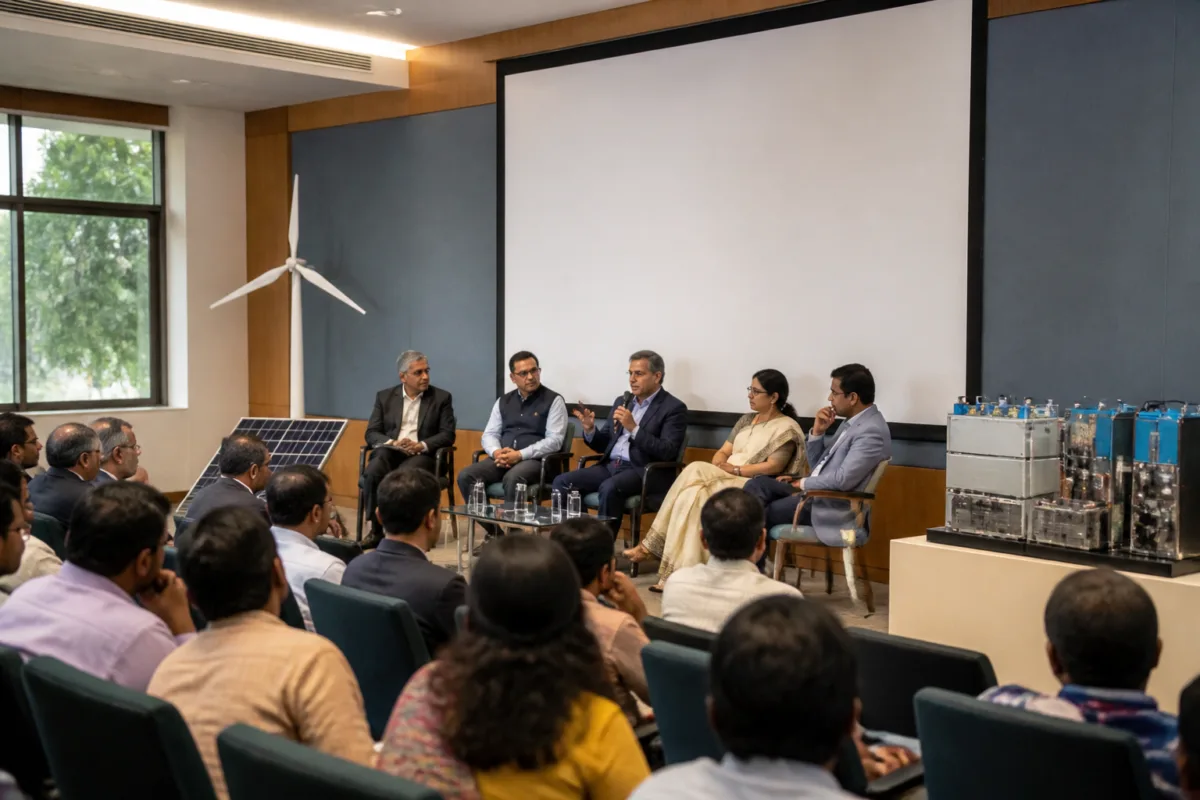
India’s energy transition is facing a storage challenge that could limit the wider use of renewable power, according to speakers at the fifth Energy Summit 2026 organised by the Indian Institute of Technology Madras in Chennai.
The summit, being held from November 17 to 21, has brought together stakeholders from industry, academia and government to discuss advanced batteries, hydrogen systems, renewable-energy distribution and digital technologies in energy systems.
Rajya Sabha MP Praveen Chakravarthy said developing energy-storage technologies and reducing dependence on imported lithium-ion batteries were key priorities. He said India imported lithium-ion batteries worth USD 5 billion last year, with 80 per cent of those imports coming from China. The figures were cited by Chakravarthy in his address at the summit.
Chakravarthy said Tamil Nadu could emerge as an alternative energy hub for South Asia because of its wind- and solar-power generation capacity. However, he identified energy storage as a major gap in converting that generation potential into a more dependable power system.
He also suggested examining the possibility of exporting renewable electricity to South Asian countries through undersea cables along Tamil Nadu’s coastline. The report does not specify a project proposal, feasibility study, investment plan or implementation timeline for such cables.
The storage issue is significant for renewable-energy systems because wind and solar generation vary over time, while electricity demand and grid requirements continue through the day. Storage can help balance supply and demand, but the summit discussions, as reported, do not set out a specific technology, capacity target or deployment plan for Tamil Nadu.
IIT Madras director V. Kamakoti said research and development in renewable-energy generation, storage and distribution were crucial as energy demand becomes increasingly important across sectors, including artificial intelligence, agriculture and advanced manufacturing.
Sessions on November 18 focused on advanced batteries, hydrogen systems, and the use of artificial intelligence and digital technologies in energy systems. The Energy Consortium at IIT Madras is organising the five-day summit.
The discussions place domestic battery development within a broader infrastructure question: how India can expand renewable generation while building the storage, distribution and industrial capabilities needed to use that power reliably. The report provides no details on government commitments or specific projects arising from the summit.

