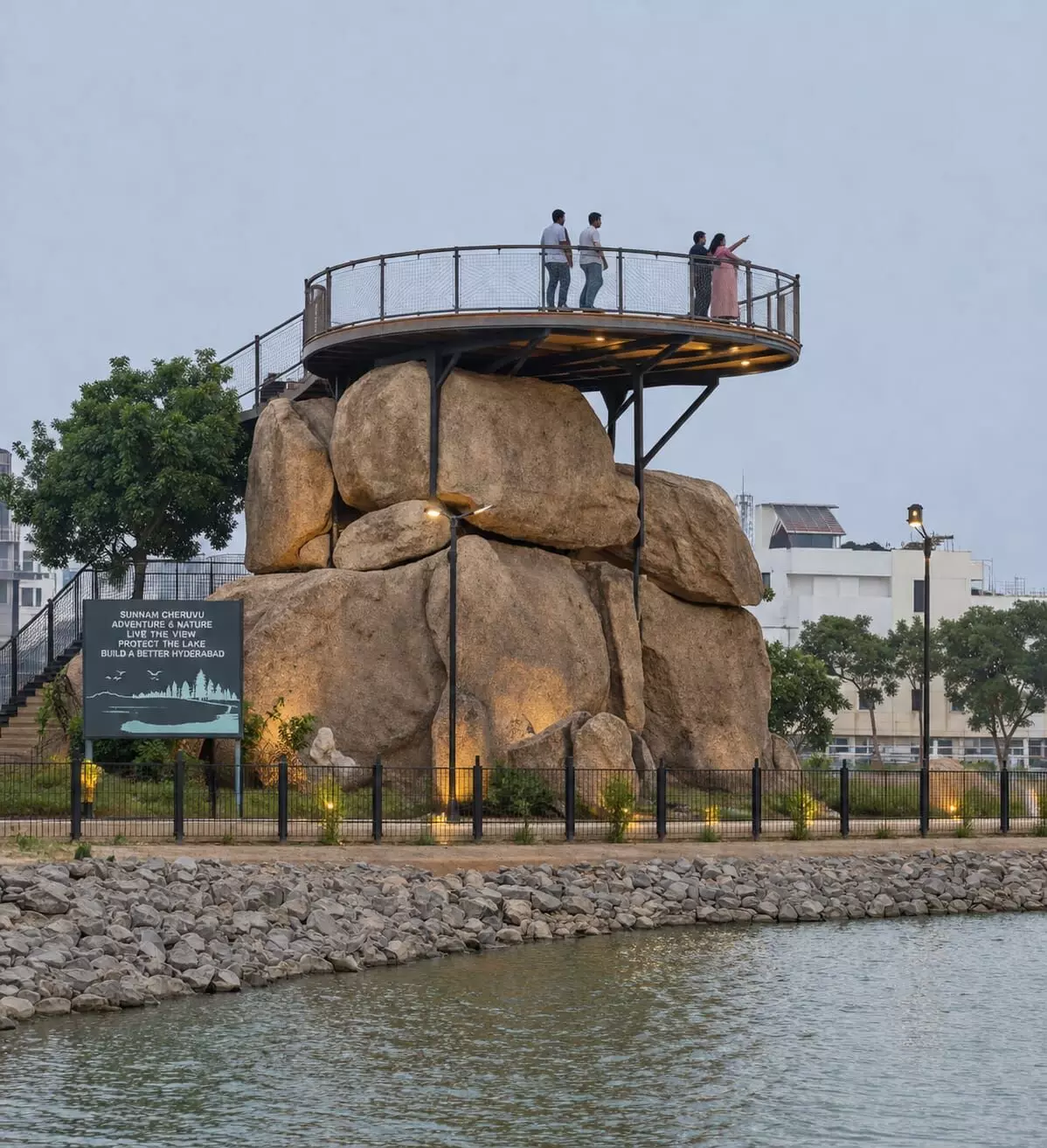
Hyderabad Turns Former Dump Yard Into Freshwater Lake
HYDERABAD: A former 13-acre sewage and garbage dump at Sunnam Cheruvu has been transformed into a nearly 30-acre freshwater lake, marking a major waterbody restoration effort by HYDRAA. The project, which involved clearing encroachments and overcoming legal challenges, is nearing completion. The rejuvenated lake could provide environmental benefits and additional open space for residents of Guttala Begumpet, Ayyappa Society and nearby neighbourhoods.
The restoration began after HYDRAA cleared encroachments from the lake bed in September 2024. The process reportedly faced resistance from some residents and several legal challenges. Despite these difficulties, restoration work has now reached its final stage. The scale of the transformation is significant. An area that had become a sewage and waste dumping site has been converted into a freshwater waterbody spread across almost 30 acres. The change could strengthen local water management while restoring ecological value to an area that had previously been degraded. The Sunnam Cheruvu lake restoration also has a direct neighbourhood impact. The surrounding area includes affluent residential communities, bastis and middle-class colonies. A restored waterbody can provide shared public space across these different communities, particularly where access to open recreational areas is limited.
Residents are already using parts of the rejuvenated lake area even before its formal inauguration. Walking and other recreational activities have reportedly attracted thousands of people, including women and children. This early use indicates demand for accessible open spaces within rapidly developing parts of western Hyderabad. Water quality and groundwater management remain important considerations, however. Concerns were raised over alleged borewater extraction from the lake bed by private water tanker operators. The extracted water was reportedly supplied to PG hostels, schools and colleges around Madhapur. HYDRAA officials said samples tested by the Telangana Pollution Control Board showed lead levels around 12 times the permissible limit and nickel levels around seven times the permitted level. If confirmed through regulatory assessment, such contamination would raise serious questions about the safety of groundwater being supplied to local institutions.
The project also demonstrates why lake restoration requires more than removing waste and encroachments. Long-term protection depends on preventing renewed dumping, controlling unauthorised extraction, maintaining water quality and protecting the lake boundary from future development pressure. The rejuvenated waterbody is expected to be formally inaugurated by the end of September. Its future value will depend not only on the completed restoration but also on continued monitoring and responsible management. For Hyderabad, the Sunnam Cheruvu project highlights the potential of reclaiming degraded urban water assets. Protecting restored lakes alongside planned public access could help the city build stronger climate resilience, improve neighbourhood environments and preserve valuable natural infrastructure as urbanisation continues.