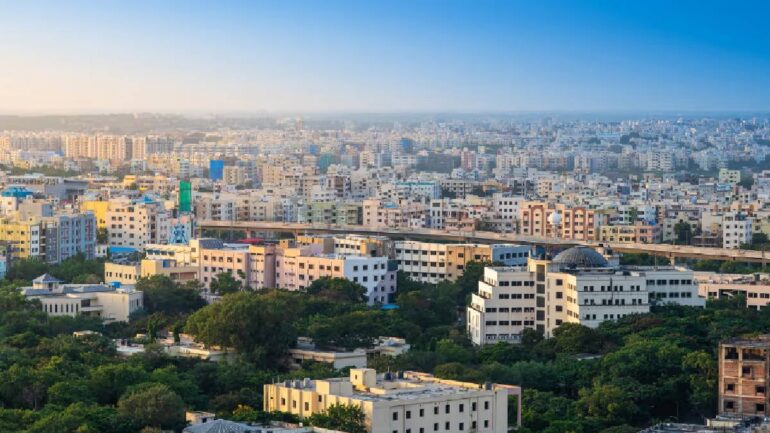
HYDERABAD, August 31: Rising demand for homes near Hyderabad’s major employment centres is putting increasing pressure on the city’s rental market. The strongest impact is being reported across the western IT corridor, where returning office workers and new Global Capability Centre employees are competing for limited housing close to workplaces.
Areas such as HITEC City, Gachibowli, Kondapur, Financial District, Nanakramguda and Tellapur have seen particularly strong rental demand. Market reports indicate that two-bedroom apartments that previously rented for around ₹25,000 to ₹30,000 a month are now crossing ₹40,000 in some locations. Three-bedroom homes in established gated communities are also commanding higher rents. Reported monthly rents range from around ₹60,000 to more than ₹1 lakh in some premium communities. The pressure is closely linked to employment growth. Technology companies are increasing office attendance, while new GCC operations are bringing additional professionals into Hyderabad. This has strengthened demand for housing within convenient commuting distance of major business districts. The rental impact is spreading beyond the core IT corridor. Locations such as Miyapur, Kukatpally, Manikonda, Malkajgiri, Uppal and LB Nagar are also experiencing increased demand, particularly where Metro connectivity provides access to employment hubs.
For tenants, the financial burden extends beyond monthly rent. Security deposits can significantly increase the initial cost of moving into a home. Reports of landlords seeking deposits equivalent to several months of rent add another challenge for middle-income households. Higher housing costs are also changing where employees choose to live. Some workers are opting for shared accommodation to reduce expenses. Others are moving towards peripheral locations where rents remain comparatively lower. Shamshabad, Patancheru and Kompally are among the outer areas attracting residents seeking more affordable housing. The trade-off, however, can be longer commutes and higher daily transport costs. This creates an important urban planning issue. Affordable housing cannot be considered separately from employment and transport. When workers are priced out of locations near jobs, they often move farther away, increasing travel distances and placing additional pressure on roads and public transport.
For Hyderabad, this could become more significant as the city expands its employment base. New commercial development can generate jobs and investment, but housing supply needs to grow alongside it. Greater availability of rental homes near mass transit could help reduce both housing and mobility pressures. Transit-linked residential development can give households more options without forcing them to depend entirely on private vehicles. The rental surge also has implications for the city’s broader real estate market. Strong rents can encourage new residential construction and attract investors, but sustained affordability pressure may make it harder for lower- and middle-income workers to remain close to employment centres. Hyderabad’s rental market is therefore entering an important phase. The challenge is not simply controlling rising rents, but ensuring that housing supply, transport infrastructure and employment growth develop together. A balanced approach could help the city retain its economic momentum while keeping housing accessible to the workforce that supports its expanding business districts