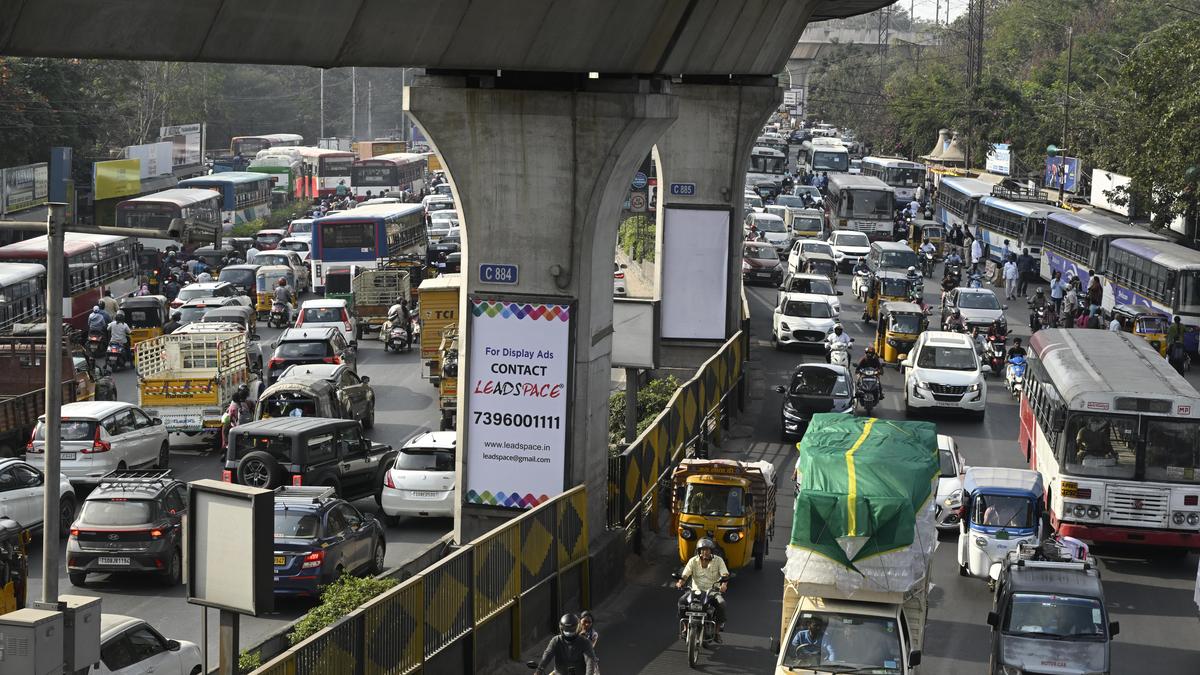
Hyderabad Highway Traffic Builds As Commuters Return
HYDERABAD, August 31: Traffic movement on the Hyderabad–Vijayawada National Highway slowed as large numbers of travellers returned to the city after several days of holidays. The increase in vehicles highlights the pressure placed on key entry corridors when residential, educational and employment activity resumes at the same time.
The return movement followed a series of holidays that encouraged many residents to travel to their hometowns. With offices and other institutions expected to resume normal activity, vehicles began moving towards Hyderabad in larger numbers. Traffic was particularly noticeable on the Hyderabad-bound side of the highway. Vehicles were moving slowly, while additional toll gates were opened to handle the increased flow at toll plazas. The situation is a familiar feature of Hyderabad’s regional mobility network. Highways connecting the city with surrounding districts and neighbouring states carry both daily commuters and long-distance traffic. During holiday periods, these two streams can overlap and create sudden increases in traffic volumes.
For commuters, such congestion can mean longer journey times and higher fuel consumption. For businesses, delays on major corridors can also affect employee travel, freight movement and delivery schedules. The pressure is not limited to the highway itself. Traffic entering the city can spill onto connecting roads, increasing congestion at junctions and urban approaches. This can make travel less predictable for residents who depend on these corridors for work and other daily activities. Urban planners have increasingly stressed the importance of managing travel demand alongside road capacity. Expanding road infrastructure alone may not be sufficient if vehicle ownership and travel volumes continue to rise faster than available capacity. Better public transport connectivity between Hyderabad and surrounding growth centres could provide an alternative during peak periods. Reliable rail and bus services can help shift some passenger demand away from private vehicles and reduce pressure on major road corridors.
The episode also underlines the importance of real-time traffic management during predictable travel peaks. Authorities can use traffic monitoring, coordinated toll operations and timely diversions to keep vehicles moving and reduce prolonged bottlenecks. As Hyderabad continues to expand towards its peripheral areas, regional connectivity will become increasingly important. Residential development along highway corridors can bring new housing opportunities, but it also increases the need for transport planning that links homes with jobs and essential services. The current slowdown is linked to a temporary return surge rather than a permanent change in traffic conditions. However, recurring holiday congestion offers a useful indicator of how much pressure the city’s regional road network faces during peak travel periods. For Hyderabad, the longer-term challenge is to ensure that growing mobility demand is met through a balanced network of roads, public transport and efficient traffic management rather than continued dependence on private vehicles alone.