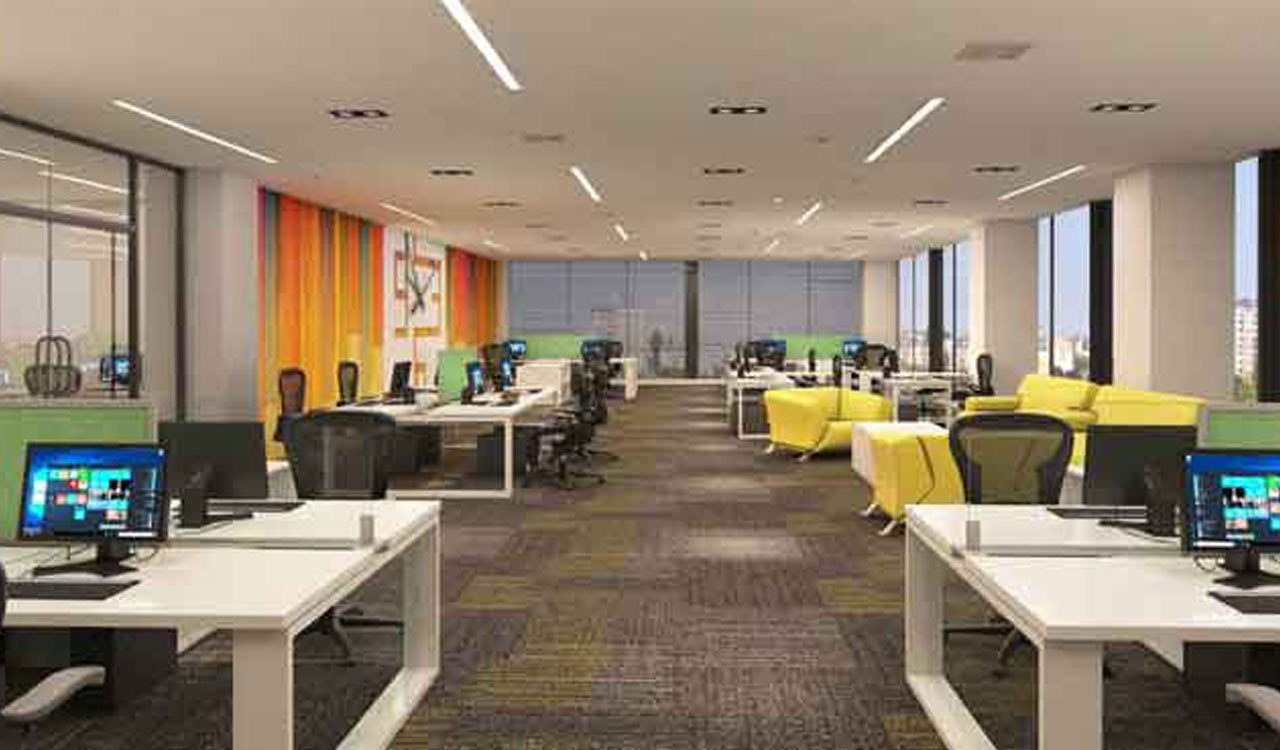
Hyderabad Flexible Offices See Sharp Leasing Growth
HYDERABAD, August 31: Hyderabad’s flexible workspace market recorded a sharp rise in leasing activity during the first half of 2026, reflecting stronger demand from Global Capability Centres and technology companies. The city recorded 40,451 flexible workspace seats leased during the period, according to a recent market report cited in local business coverage.
Across India’s eight major office markets, flexible workspace operators leased 1,91,306 seats in the first six months of 2026. This represented a 68.4% increase compared with the corresponding period a year earlier. Bengaluru remained the largest market, with 57,487 seats leased during the period. Hyderabad followed, while Mumbai and Delhi-NCR also recorded substantial growth in flexible workspace demand. Hyderabad’s reported 170.8% increase is particularly notable because it comes as the city’s office market continues to attract technology companies and GCC operations. Flexible workspaces can allow companies to expand teams without committing immediately to large conventional office leases.
For businesses, flexibility has become an important consideration in workplace strategy. Companies can add or reduce seats based on workforce requirements, enter new markets with lower upfront commitments and provide employees with professionally managed office facilities. The trend also has implications for Hyderabad’s commercial real estate market. Traditional office buildings are increasingly competing with managed and flexible workspace providers for occupiers. This could influence how landlords design buildings, structure leases and provide amenities. The rise of flexible offices is closely linked to the changing nature of corporate expansion. GCCs, technology businesses and other service companies often need to scale operations quickly. Flexible workspace can provide an intermediate option between conventional leasing and maintaining fully owned office infrastructure. However, strong leasing growth does not automatically translate into uniform demand across the city. Location, connectivity, building quality, amenities and proximity to established employment clusters remain important factors for workspace operators and corporate occupiers.
The concentration of demand also has urban implications. Flexible offices located near mass transit and major employment districts can reduce long daily commutes and make office access easier for a wider workforce. Better integration with public transport could therefore support more efficient urban mobility as employment centres expand. For commercial property owners, the growing market may create opportunities to reposition underused or ageing office stock. Buildings capable of offering reliable connectivity, efficient floor layouts and modern workplace facilities may be better placed to capture changing occupier preferences. Hyderabad’s strong first-half performance suggests that flexible workspaces are becoming a more significant part of its office ecosystem. Whether this momentum continues will depend on corporate expansion, GCC growth, employee workplace preferences and the city’s ability to provide efficient transport and supporting infrastructure. The shift ultimately points to a broader transformation in commercial real estate, where flexibility is increasingly becoming a core requirement rather than an optional workplace feature.