Hyderabad Metro Expansion Push Targets Urban Growth
Hyderabad’s long-delayed transport and river restoration ambitions have moved back into focus after Telangana leaders sought stronger central support for Metro Rail expansion, Musi River rejuvenation and key urban infrastructure projects during Prime Minister Narendra Modi’s visit to the city on Sunday. The renewed push reflects growing pressure on Hyderabad’s mobility systems, water infrastructure and environmental resilience as the metropolitan region continues to expand rapidly.
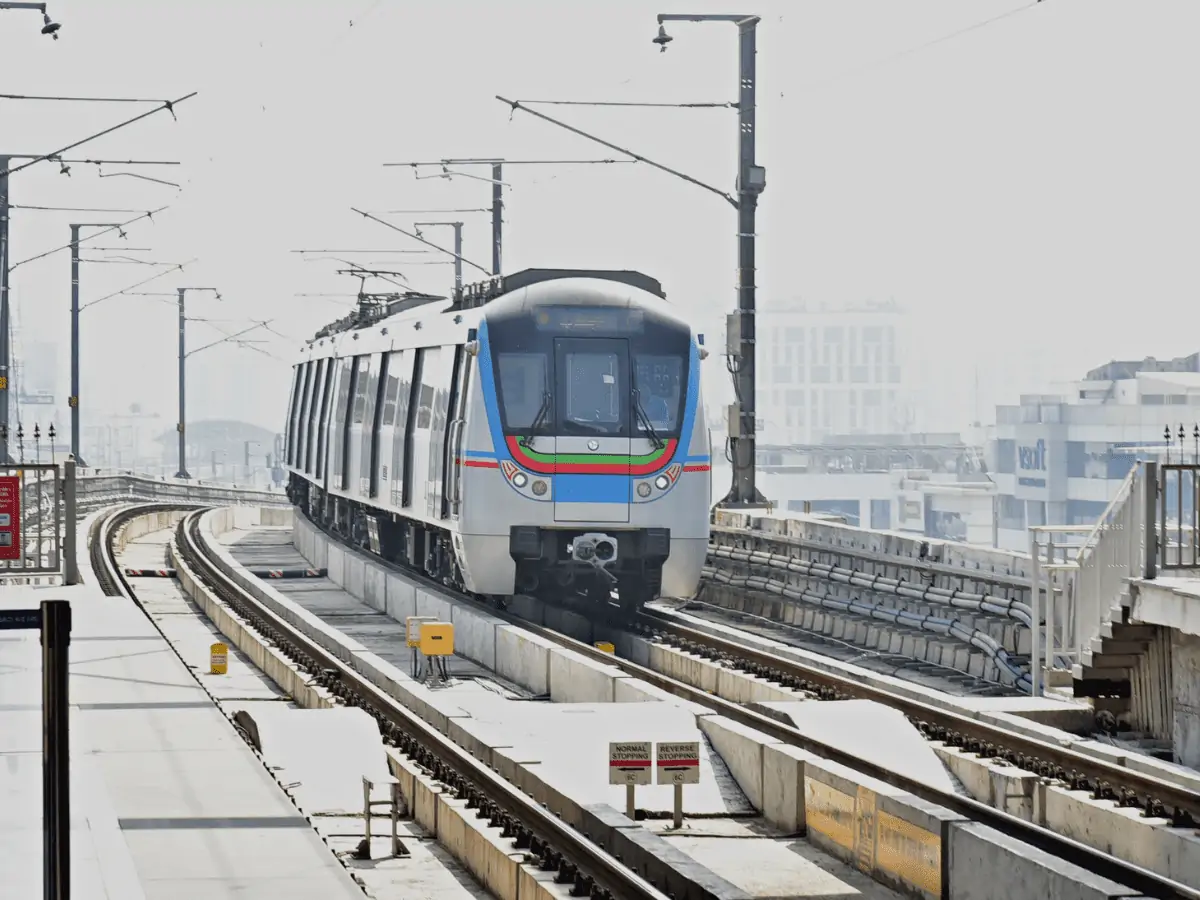
Among the key demands placed before the Centre was expedited approval for Hyderabad Metro Rail Phases II and III, including new corridors intended to improve connectivity between emerging residential clusters, business districts and the airport region. Officials said the proposed expansion is essential to address rising commuter demand and worsening traffic congestion across the city. The Hyderabad Metro expansion proposal covers more than 122 kilometres across seven corridors with an estimated investment of ₹38,595 crore. Urban transport planners say the expansion could significantly alter commuting patterns in one of India’s fastest-growing metropolitan regions, where private vehicle dependence has intensified pressure on roads, air quality and travel times. The state government also pushed for financial and administrative support for the Musi River rejuvenation project, a large-scale urban renewal initiative aimed at improving flood management, sewage treatment, riverfront infrastructure and ecological restoration along the heavily polluted river corridor. Authorities have proposed beginning major works later this year with completion targeted by the end of 2027.
Urban environmental experts note that the Musi rejuvenation plan carries implications far beyond beautification. Hyderabad has faced repeated episodes of urban flooding, declining lake ecosystems and untreated wastewater discharge over the past decade due to unplanned urbanisation and encroachment along natural drainage channels.Planners argue that restoring the Musi River could improve climate resilience, reduce flood vulnerability and create opportunities for more inclusive public spaces if implemented with strong environmental safeguards and community rehabilitation measures. However, sections of residents and civic groups have raised concerns around land acquisition, rehabilitation and the social impact of redevelopment along densely populated stretches of the river. The discussions also included requests for faster approvals for the Regional Ring Road and other strategic mobility corridors intended to support Hyderabad’s outward urban growth. Analysts say these projects collectively indicate a broader shift toward integrated regional planning, where transport infrastructure, industrial expansion and urban redevelopment are increasingly interconnected. Infrastructure experts believe Hyderabad now stands at a critical stage in its urban transition. While large-scale investments can improve mobility and attract economic activity, long-term success will depend on whether future development remains equitable, environmentally resilient and accessible to lower-income communities.
The Hyderabad Metro expansion and Musi restoration plans are also being viewed as tests of how Indian cities adapt to rapid growth while confronting climate stress, infrastructure inequality and rising demand for affordable public transport. For Hyderabad, the challenge ahead may not simply be building faster, but building in ways that improve liveability for a population expected to grow sharply over the next decade.