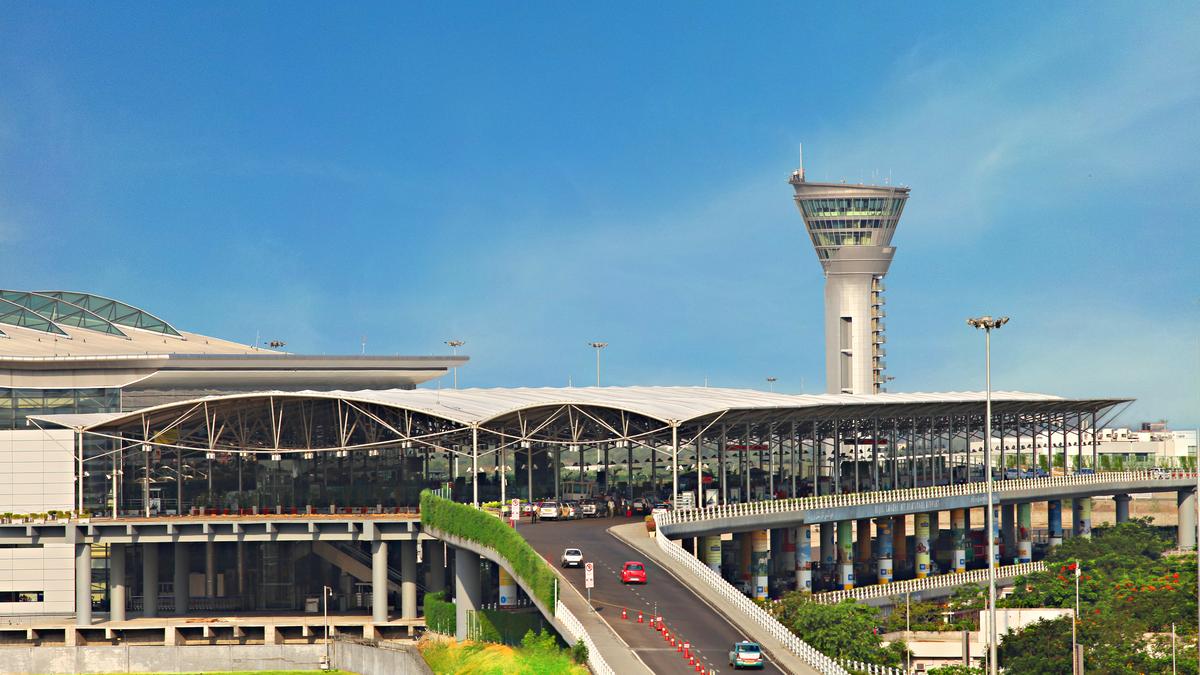
A long-pending proposal to extend Hyderabad’s suburban rail network to the city’s international airport has resurfaced amid growing concerns over traffic congestion, rising transport costs and uneven public transit access across the metropolitan region. Urban mobility advocates and commuter groups are once again urging authorities to revive the Hyderabad airport MMTS link, arguing that rail-based connectivity has become increasingly necessary as passenger volumes and urban expansion accelerate.
The proposal centres on extending the existing Multi-Modal Transport System (MMTS) network from Umdanagar to Rajiv Gandhi International Airport in Shamshabad through a short rail connection that transport planners describe as relatively low-cost compared to large metro or high-speed rail projects. Supporters of the extension say the link could significantly improve affordable airport access for workers, travellers and residents from different parts of Hyderabad. At present, Hyderabad airport remains accessible almost entirely through road-based transport, forcing passengers and airport employees to depend on private vehicles, app-based taxis and buses. Urban transport experts warn that this dependence is contributing to rising congestion along the southern growth corridor while increasing emissions and travel uncertainty during peak hours.The renewed discussion around the Hyderabad airport MMTS link comes as the city’s aviation infrastructure enters another phase of expansion. Passenger traffic at the airport has continued to rise steadily, with future plans aimed at significantly increasing terminal and cargo handling capacity over the coming years. Commuter associations argue that rail connectivity should evolve alongside airport expansion to avoid long-term mobility stress. According to transport planners, suburban rail systems remain among the most energy-efficient and cost-effective solutions for rapidly growing urban regions, particularly when integrated with metro systems and bus networks.
The MMTS proposal had earlier stalled because of land-related and alignment concerns involving railway authorities and airport operators. Rail officials reportedly maintained that any extension should directly connect with the airport terminal for seamless passenger movement, while unresolved land issues delayed implementation. Urban analysts note that the debate also reflects Hyderabad’s wider struggle to balance infrastructure growth with sustainable mobility planning. While the city has expanded road networks and metro corridors over the past decade, suburban rail services have remained underutilised due to inconsistent schedules, reduced frequency and limited network coverage. Recent discussions around free MMTS travel have further revived public attention on the future of the system. Mobility experts say improving suburban rail connectivity could reduce dependence on private transport while offering lower-income workers and airport staff more equitable access to employment hubs. Affordable transit links are increasingly being viewed as essential infrastructure in fast-growing cities where peripheral development often outpaces public transport planning.The Hyderabad airport MMTS link is also being seen as part of a broader conversation around climate-sensitive urban mobility. Rail-based transit produces significantly lower per-passenger emissions than road transport and can help cities reduce congestion-related pollution if supported through integrated planning and reliable service frequency.
For Hyderabad, the challenge now lies not only in expanding transport infrastructure but in ensuring that future connectivity investments remain accessible, affordable and resilient enough to support the city’s next phase of urban growth.