


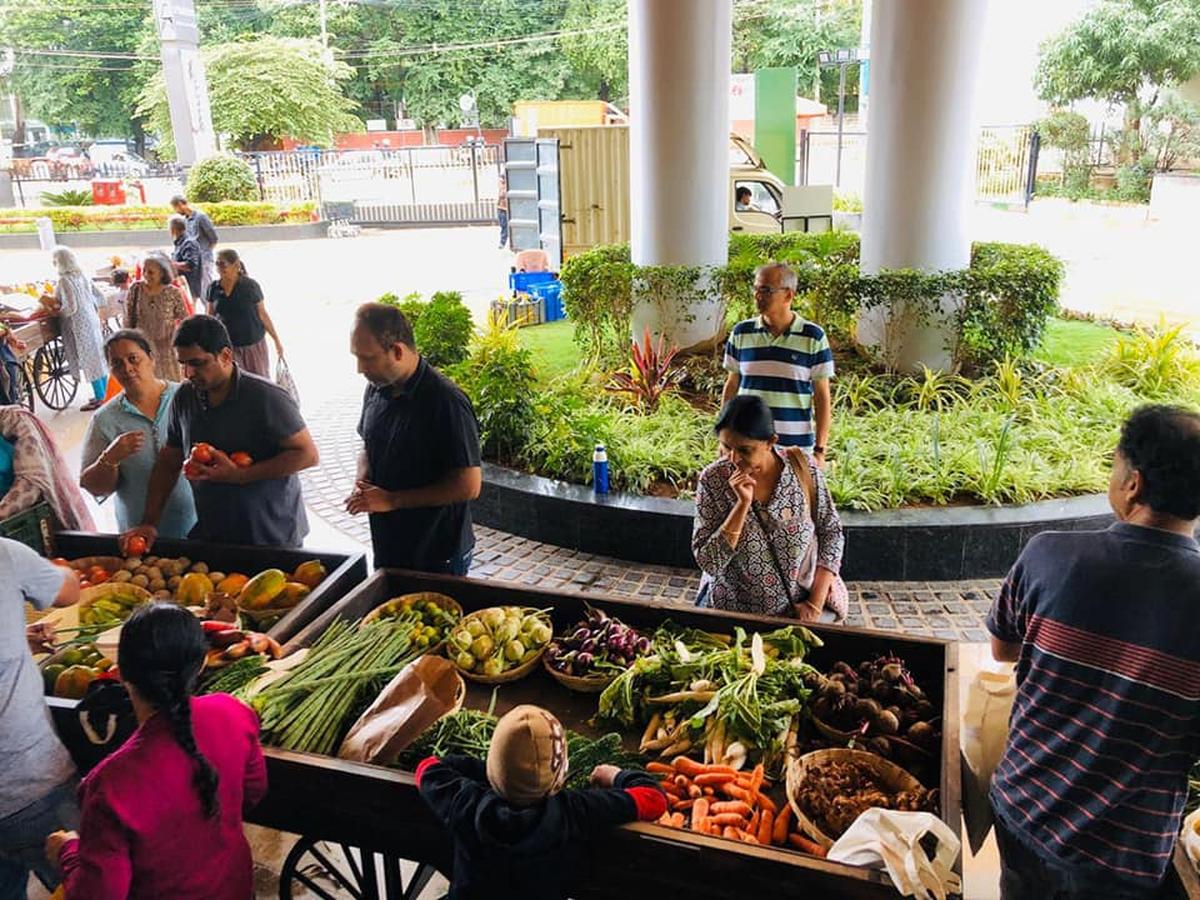
A growing number of residents in Bengaluru are turning to local farm and artisanal markets for fresh produce, spices, and traditional food products, signalling rising urban interest in regional supply chains and sustainable consumption practices.The recent public response to a rural-themed marketplace organised by University of Horticultural Sciences has highlighted how direct farmer-to-consumer platforms are gaining popularity among urban households seeking locally sourced and seasonal products.
Urban food researchers say such markets are becoming increasingly relevant in metropolitan regions where industrialised supply systems often distance consumers from agricultural producers. By enabling direct sales, these platforms can improve income opportunities for small growers while reducing dependence on intermediaries and long-distance logistics chains.The Bengaluru local produce market trend also reflects changing consumer preferences linked to health awareness, food quality concerns, and environmental sustainability.Demand for chemical-free produce, regional food varieties, and minimally processed agricultural products has risen steadily across urban centres over recent years.Agricultural economists note that localised food markets can strengthen rural-urban economic relationships while supporting smaller farming communities facing pressure from volatile commodity pricing and climate-related disruptions. Karnataka’s horticulture and spice-producing regions remain economically significant to Bengaluru’s food ecosystem, supplying fruits, vegetables, condiments, and specialty crops to the city’s growing population.The popularity of these markets has also revived interest in traditional food cultures and regional agricultural diversity. Urban sociologists argue that such events help reconnect city residents with rural livelihoods and indigenous food systems increasingly overshadowed by large-scale retail distribution networks.
Environmental planners further point out that shorter food supply chains can contribute to lower transportation emissions and reduced packaging waste when compared to heavily industrialised distribution models. Supporting regional food systems is increasingly viewed as part of broader urban sustainability strategies aimed at improving resilience and resource efficiency.The Bengaluru local produce market movement arrives at a time when Indian cities are facing growing questions around food security, ecological degradation, and sustainable consumption. Climate variability, water scarcity, and soil stress are already affecting agricultural productivity across several regions, increasing the importance of resilient and diversified food networks.Experts caution, however, that small-scale agricultural markets require consistent institutional support, infrastructure access, and fair pricing systems to remain viable over the long term. Cold storage, transport connectivity, and waste management remain major operational challenges for many local producers.Urban development specialists also see these marketplaces as important community spaces within rapidly urbanising environments where commercial interactions are increasingly shifting toward digital and large-format retail ecosystems.
For Bengaluru residents, the appeal of locally sourced produce and rural-themed markets appears to extend beyond shopping alone. It reflects a growing interest in healthier food systems, regional identity, and more sustainable patterns of urban consumption.As cities continue expanding, experts say strengthening direct rural-urban economic linkages may become increasingly important for balancing food resilience, environmental sustainability, and inclusive economic growth.
Also Read:Bengaluru Park Access Discussion Raises Civic Questions
