Hyderabad Road Restrictions Renew Public Transport Debate
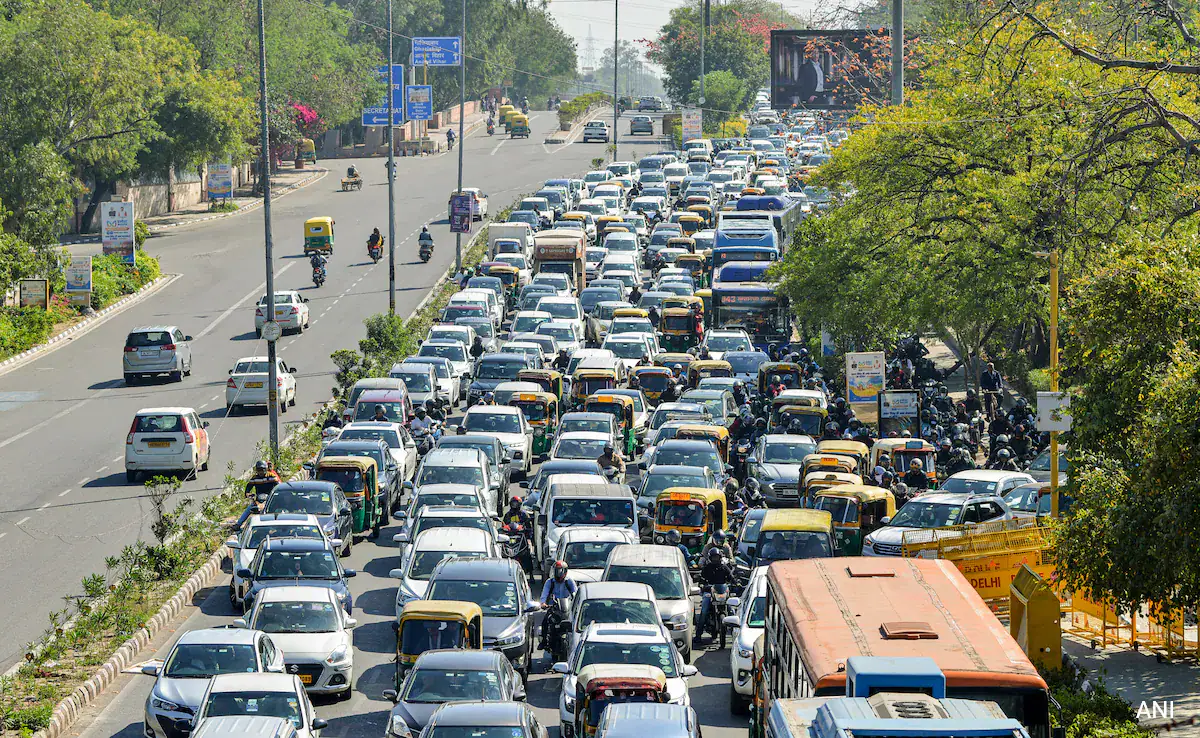
Large-scale traffic restrictions imposed across Hyderabad during Prime Minister Narendra Modi’s visit on Sunday once again exposed the mounting mobility pressures facing one of India’s fastest-growing metropolitan regions. Major road diversions, security cordons and temporary movement restrictions around Secunderabad, Begumpet and Hitec City disrupted commuter movement for several hours, prompting renewed discussion around Hyderabad’s dependence on road-based transport infrastructure.
Authorities enforced traffic curbs between afternoon and late evening in connection with official programmes and a public meeting at Parade Grounds in Secunderabad. Key stretches including Paradise, Patny, Clock Tower, Begumpet, Tank Bund and Bowenpally witnessed diversions and restricted access amid heightened security deployment and anticipated public turnout. More than 2,000 police personnel and specialised security units were reportedly mobilised for crowd management and route monitoring. While such restrictions are common during high-profile political visits, urban mobility experts say recurring disruptions reveal deeper structural weaknesses in Hyderabad’s transport systems. The city’s growing reliance on private vehicles, combined with uneven public transit coverage and rapid peripheral expansion, has increased vulnerability to congestion during major public events and VVIP movement.Police advisories urged residents to depend on Metro Rail services and avoid key arterial roads, underscoring the increasing role of mass transit systems in maintaining urban mobility during periods of traffic stress. However, transport planners note that Hyderabad’s Metro network still does not fully cover several densely populated residential and employment corridors, limiting the system’s ability to absorb sudden commuter surges. The disruptions were particularly significant around Secunderabad Railway Station and the northern transport corridor, where commuters travelling for work, railway access and airport movement faced delays and route uncertainty.
Authorities advised passengers to begin journeys earlier to avoid missing train schedules, highlighting the ripple effect large-scale traffic controls can have on daily urban activity. Urban development analysts say Hyderabad’s mobility challenges are becoming increasingly complex as the metropolitan region expands outward through new residential zones, industrial corridors and commercial districts. Over the past decade, the city has witnessed rapid growth in vehicle registrations while road infrastructure and suburban transit integration have struggled to keep pace.Environmental planners also point to the climate implications of prolonged congestion and traffic diversions. Heavy dependence on private vehicles contributes to rising emissions, fuel consumption and deteriorating air quality, especially during peak movement periods and security lockdowns. Experts argue that expanding multimodal public transport systems, including suburban rail and electric mobility networks, will be essential if Hyderabad aims to become a more climate-resilient and commuter-friendly city.The latest traffic restrictions also renewed debate around event-oriented urban planning. Civic groups have increasingly called for better coordination between security management and public mobility systems to reduce disruption during large political gatherings, rallies and official visits.
As Hyderabad continues to position itself as a major economic and infrastructure hub, urban policy specialists say the city’s long-term competitiveness may depend not only on new investments but also on how efficiently people can move across it. Managing growth in a way that prioritises reliable public transport, pedestrian access and low-carbon mobility is likely to become central to the city’s next phase of urban development.