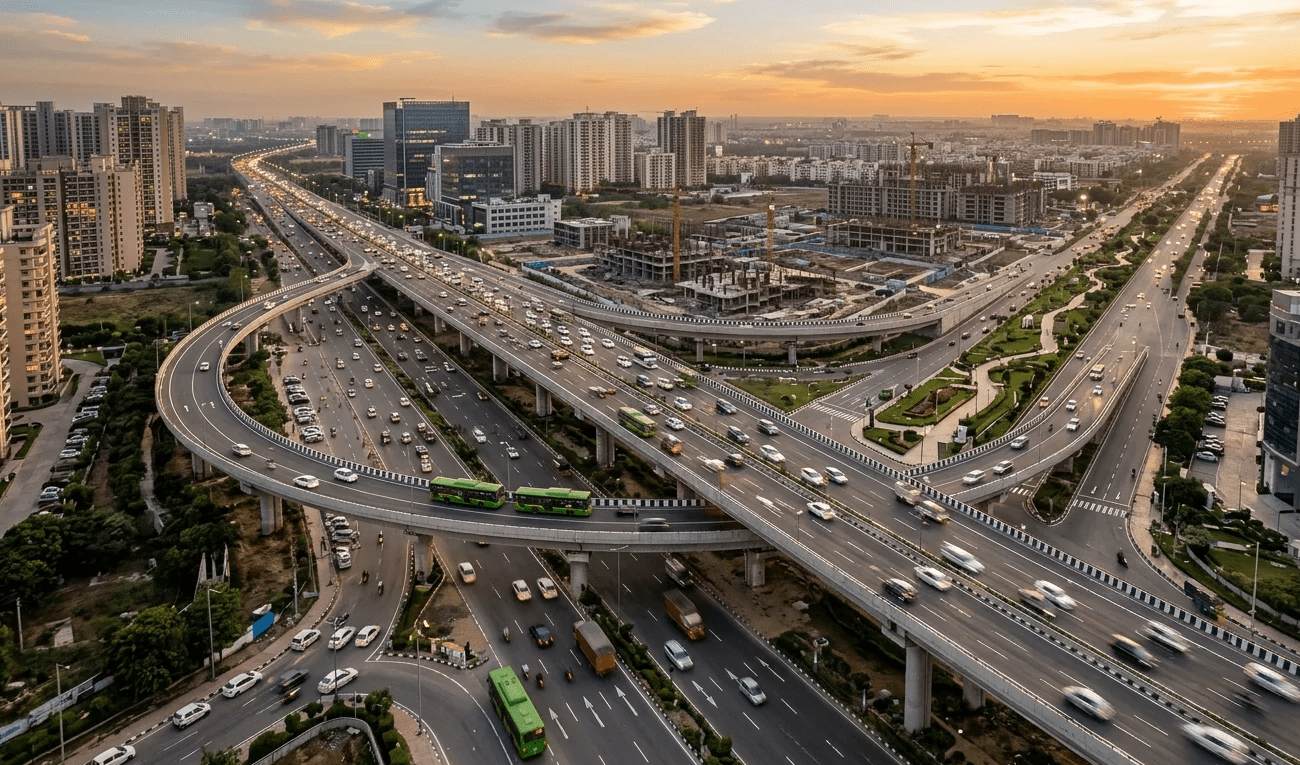
Gurugram Traffic Plan Targets Metro Construction Congestion
Gurugram authorities have initiated a targeted infrastructure intervention to manage rising congestion linked to ongoing metro expansion works, approving a multi-crore plan focused on service roads and corridor upgrades. The move comes as construction activity intensifies across key routes, often narrowing carriageways and disrupting daily commuting patterns in one of the National Capital Region’s busiest urban centres. At the centre of the Gurugram traffic plan is the development and rehabilitation of parallel service lanes designed to absorb local traffic and reduce pressure on primary roads affected by metro construction. These auxiliary routes are expected to function as alternative pathways for short-distance travel, particularly in mixed-use neighbourhoods where residential and commercial traffic overlap during peak hours.
Urban mobility experts note that such interventions can offer immediate relief but must be integrated with long-term transport planning. The Gurugram traffic plan includes new and upgraded stretches across multiple zones, including areas connecting major junctions, residential sectors and employment hubs. By redistributing traffic flows, officials aim to maintain mobility while large-scale transit infrastructure is built. One of the critical corridors identified for improvement is along the Southern Peripheral Road, where a section is being redeveloped under a “model road” framework. This approach combines road engineering with environmental and pedestrian considerations, including improved drainage systems to address seasonal flooding, upgraded footpaths, and measures to control dust emissions. These elements reflect a growing recognition that road infrastructure must serve both mobility and public health objectives. Additional works are planned in neighbourhood clusters such as Palam Vihar and sectors in the city’s older grid, where internal connectivity gaps often exacerbate congestion on arterial roads.
By strengthening secondary networks, planners aim to reduce dependence on a few overburdened corridors—a recurring challenge in Gurugram’s decentralised urban layout. The Gurugram traffic plan also highlights the complexities of managing infrastructure transitions in rapidly growing cities. While metro expansion is expected to provide long-term relief by offering a mass transit alternative, the construction phase can strain existing systems if not carefully managed. Short-term measures like service roads, traffic diversions and improved junction design are therefore critical to sustaining economic activity and commuter productivity during this period. However, urban planners caution that road-based solutions alone cannot resolve congestion sustainably. Without parallel investment in public transport integration, non-motorised mobility, and land-use coordination, cities risk perpetuating car-dependent growth patterns. The current intervention, while necessary, underscores the need for a broader mobility strategy that prioritises accessibility over vehicle throughput.
Implementation timelines suggest that most of the planned works will be completed within a year, offering near-term improvements for commuters. The longer-term impact will depend on how effectively these upgrades align with the city’s evolving transport network and environmental goals, particularly as Gurugram positions itself as a key economic hub within the NCR.