Jaipur Road Project Raises Concerns Over Urban Greens
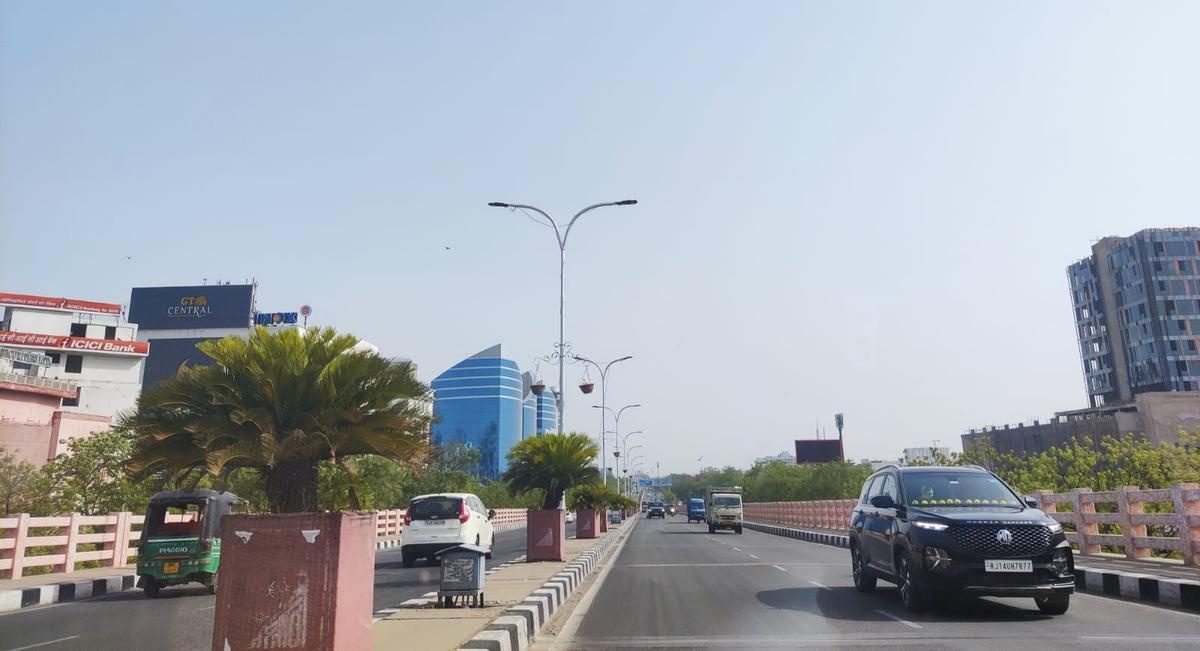
Jaipur’s latest attempt to ease traffic congestion along Sahakar Marg has triggered a growing debate over the trade-off between mobility upgrades and the preservation of urban green cover. The proposed plan by city authorities to carve out a slip lane through an 800-metre stretch of landscaped land highlights the tensions shaping infrastructure decisions in rapidly expanding cities. The corridor, already known for heavy congestion due to multiple intersections, railway crossings and closely spaced junctions, has been identified for intervention after recent site assessments by planning officials. The proposed redesign involves partial removal of an existing green strip to create an additional traffic channel aimed at easing bottlenecks along the route.
However, early assessments suggest that while the intervention may marginally improve flow at select points, it is unlikely to eliminate congestion entirely. Urban mobility experts point out that without addressing the underlying network complexity—such as closely spaced junctions and rail crossings—the gains from such road expansions could remain limited. The plan has also drawn strong responses from local residents, who have raised concerns about the loss of established vegetation. The affected stretch, developed over decades as part of a designated green belt, now supports a mix of mature and young trees and functions as a neighbourhood public space. Residents say the park is used daily by hundreds for walking and recreation, reflecting the critical role of accessible green spaces in dense urban environments. Initial markings on-site indicate that a significant number of trees could be impacted, including native species that contribute to local biodiversity and microclimate regulation.
Environmental planners warn that reducing urban green cover in favour of road expansion can intensify heat stress, worsen air quality, and undermine long-term climate resilience—especially in cities already grappling with rising temperatures. Authorities, meanwhile, have indicated that the intervention would not involve complete removal of the park and would be limited to specific sections. Yet, this partial approach has not fully addressed public concerns, particularly around cumulative green loss in the area. Previous infrastructure modifications along nearby corridors have already altered the landscape, adding to apprehensions about incremental environmental degradation. The broader context reflects a recurring challenge in Indian cities—balancing immediate traffic relief with sustainable urban planning. While road-widening and slip lanes offer short-term solutions, planners increasingly advocate for integrated approaches that prioritise public transport, intersection redesign, and demand management rather than expanding vehicular capacity.
The Sahakar Marg proposal underscores the need for evidence-based planning that weighs ecological value alongside traffic efficiency. As Jaipur continues to modernise its transport network, the outcome of this debate may shape how future projects reconcile infrastructure growth with the preservation of urban green cover.