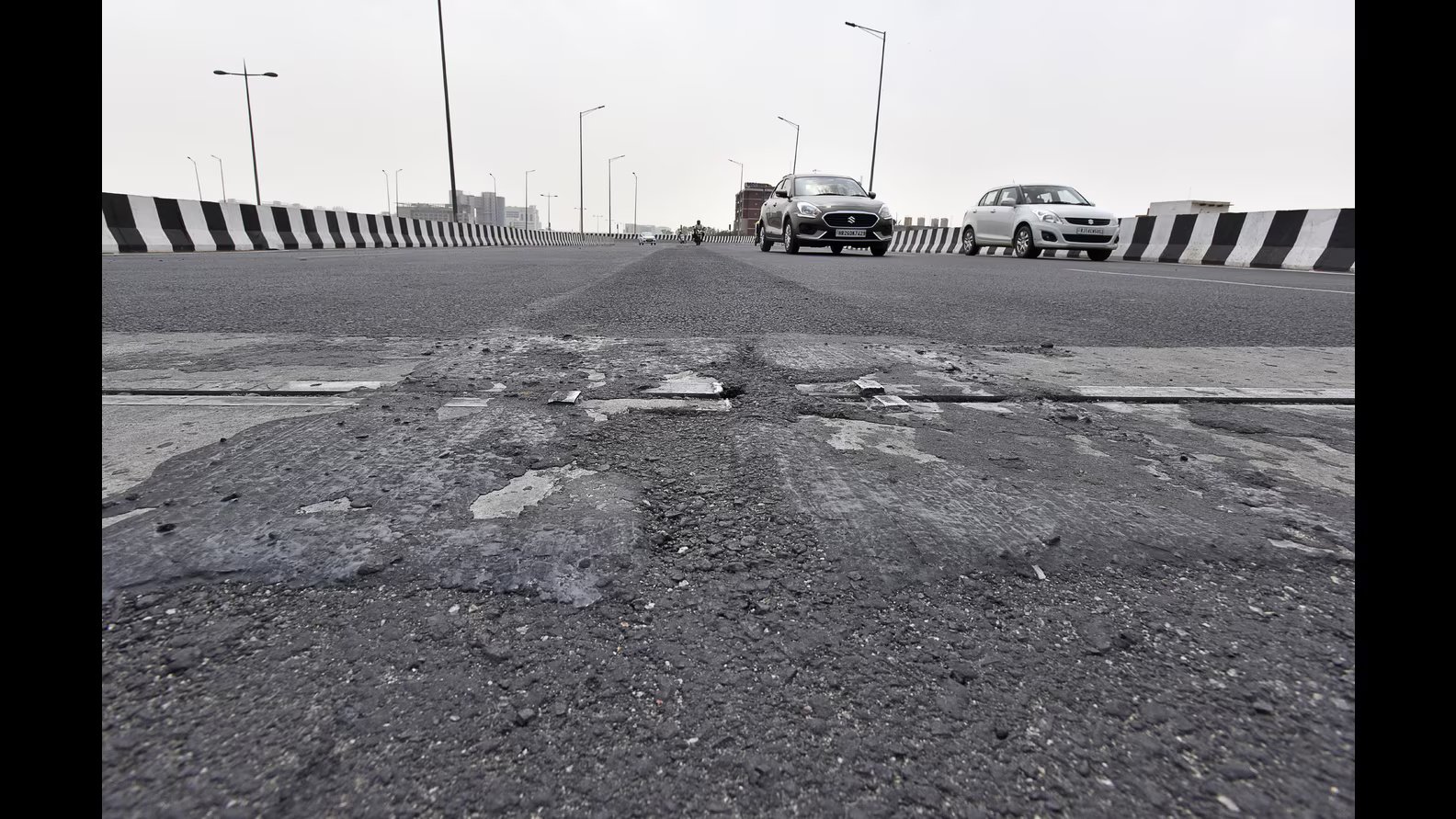
Gurugram is witnessing an unexpected slowdown in urban infrastructure development as multiple Gurugram road projects remain stalled due to a sharp shortage of bitumen, the petroleum-based material essential for road construction. The disruption has halted several civic works planned by the city’s municipal authorities, raising concerns about project timelines, air quality and traffic conditions ahead of the monsoon season. Officials familiar with municipal infrastructure planning say that tenders worth roughly ₹75 crore linked to road construction and repair have seen little to no progress in recent weeks. Among the projects affected is a major initiative to upgrade nearly 100 kilometres of key arterial and internal roads intended to improve mobility in one of the country’s fastest-growing urban centres.
The immediate cause of the delay lies in disruptions in global petroleum supply chains, which have sharply affected the availability and pricing of bitumen. As a by-product of crude oil refining, bitumen prices closely track fluctuations in international crude markets. Recent geopolitical instability in West Asia has pushed up crude costs and reduced refinery output availability for downstream products, including road-grade bitumen. Contractors executing civic works say the sudden spike in material costs has made it financially difficult to proceed with contracts that were finalised months earlier. Infrastructure specialists note that bitumen prices have risen significantly within a short period, forcing many contractors to reconsider project viability under previously agreed tender rates. The shortage has also impacted the functioning of hot mix plants — specialised facilities where bitumen and aggregates are combined to produce asphalt for road surfacing. Several plants supplying materials for Gurugram road projects are operating at limited capacity, while some have temporarily halted production due to insufficient stock.
Urban planners warn that delays in completing road upgrades could have cascading effects once the monsoon arrives. Excavated or partially repaired roads may deteriorate rapidly during heavy rainfall, creating conditions that increase the risk of waterlogging, traffic congestion and vehicle accidents. For residents of Gurugram, a city already grappling with seasonal flooding and mobility challenges, the unfinished works could add to daily commuting stress. Environmental concerns are also emerging as a secondary impact of the stalled projects. Open road surfaces and unfinished construction stretches expose loose soil and debris, which can contribute to rising dust levels in the air. In rapidly urbanising cities like Gurugram, such conditions can worsen local air quality and increase particulate pollution during dry weather. Urban infrastructure analysts point out that the situation highlights how global supply shocks can influence local urban development projects. As cities expand and invest heavily in transport infrastructure, their construction timelines often depend on international commodity markets.
Officials and industry experts suggest that stabilising bitumen supply through alternative procurement channels or pricing adjustments may be necessary to restore momentum to the stalled Gurugram road projects. Ensuring continuity in infrastructure works remains critical not only for traffic mobility but also for maintaining air quality and climate-resilient urban planning in the rapidly growing National Capital Region.