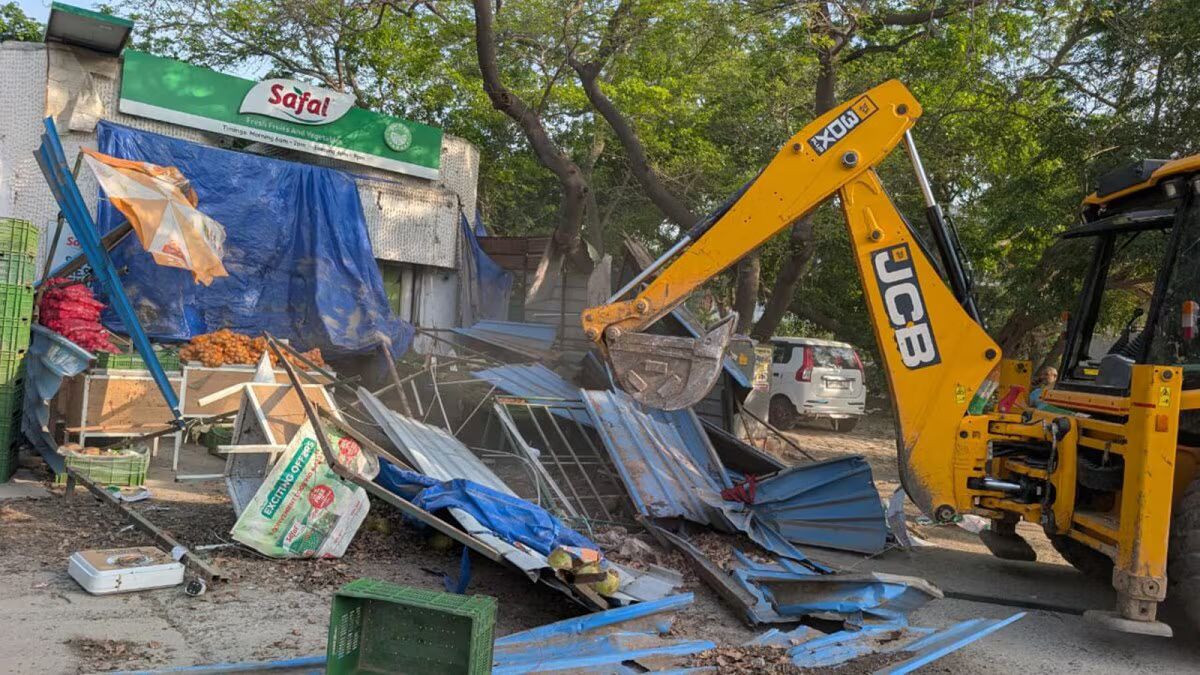
Gurugram Anti Encroachment Drive Raises Civic Concerns
A large-scale anti-encroachment operation across Gurugram’s upscale residential areas has triggered backlash from residents, who allege inadequate notice and disruption to essential neighbourhood infrastructure. The weekend drive, concentrated along Golf Course Road and nearby colonies, reflects an intensifying push by authorities to reclaim public land—but also exposes growing tensions between enforcement-led planning and citizen participation.
The campaign targeted structures built on public land, including road margins, green belts, and common areas. Officials say the action is part of a broader compliance effort following recent judicial directions to enforce building norms and remove unauthorised extensions. Across multiple colonies, hundreds of installations—ranging from temporary sheds to boundary structures—were dismantled in a coordinated operation. However, the pace and timing of the exercise have drawn criticism. Residents across affected neighbourhoods argue that the demolition drive was carried out with limited prior communication, leaving little time to respond or remove structures voluntarily. Complaints also point to the removal of guard rooms and utility-linked installations, raising concerns about safety and basic services within gated communities. Urban governance experts suggest that while reclaiming public space is essential, the process often lacks procedural clarity and citizen engagement. In rapidly urbanising cities like Gurugram, where private developments frequently intersect with public infrastructure, enforcement actions without transparent timelines can deepen mistrust between authorities and residents.
The Gurugram anti encroachment drive is rooted in a broader policy shift aimed at tightening land-use compliance. The action follows regulatory scrutiny around residential developments, particularly after concerns over building practices such as stilt-plus-four constructions. Authorities have been directed to ensure that public right-of-way areas remain unobstructed and that residential zones are not repurposed for commercial activity. Yet, the episode highlights a recurring challenge in Indian cities: balancing enforcement with liveability. Residents claim that some removals have affected water systems, landscaping, and access points, pointing to unintended consequences of rapid demolition. In dense neighbourhoods, such interventions can disrupt not just physical structures but also social and environmental systems that have evolved over time. From a sustainability perspective, the Gurugram anti encroachment drive raises critical questions about how cities manage shared spaces. While reclaiming green belts and public land aligns with long-term urban resilience goals, inconsistent planning oversight often leads to encroachments in the first place. Experts argue that preventive regulation—through better design, monitoring, and community engagement—may be more effective than periodic large-scale crackdowns.
The situation also underscores the need for clearer urban design standards in private developments, where informal additions often emerge due to gaps in infrastructure provisioning. Without addressing these underlying issues, enforcement risks becoming cyclical rather than transformative. As the drive is expected to continue across other parts of the city, the focus now shifts to how authorities balance regulatory compliance with citizen trust. For Gurugram, the challenge lies not only in reclaiming space but in rethinking how urban growth can remain both orderly and inclusive in the face of rapid expansion.