


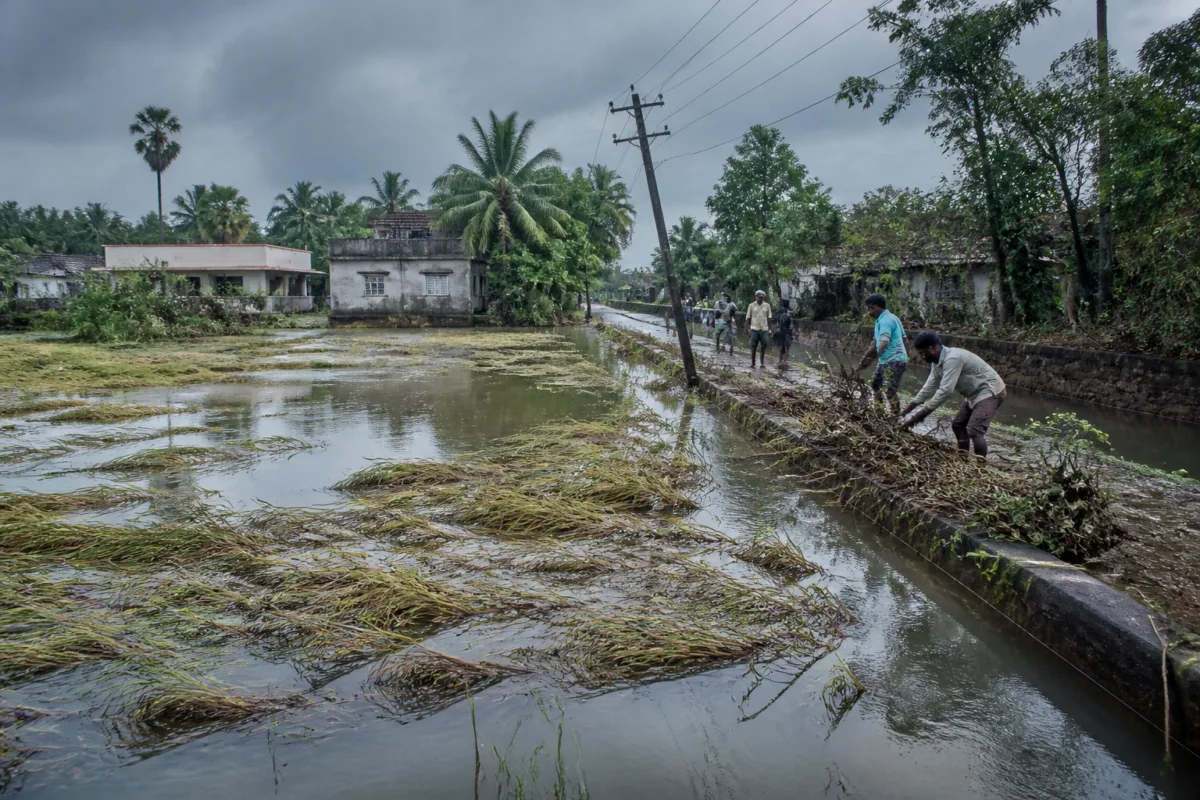
Godavari crop losses have deepened after heavy rainfall linked to cyclone Murasu damaged fields that farmers had been trying to recover from earlier inundation, while fallen electricity poles and blocked drains disrupted several rural villages across Andhra Pradesh.
Farmers in Kakinada, Konaseema, East Godavari, Eluru and West Godavari districts were already dealing with losses attributed to cyclone Arnab when the latest rainfall hit. The fresh rain damaged crops after some farmers had drained stagnant water from their fields and attempted to save the remaining produce, according to a report by Deccan Chronicle.
The impact is particularly severe for tenant farmers, who face demands from landowners to pay lease amounts despite substantial crop losses. Farmers have sought an official assessment of the damage, timely compensation and relief measures specifically covering tenant cultivators. They have also urged the government to speed up electricity restoration in affected villages.
Heavy rain has affected Kakinada and surrounding areas, inundating low-lying localities and bringing down electricity poles. Several rural villages, particularly in Konaseema, Kakinada and the Godavari districts, have been left without power. Continuing rainfall has hampered restoration work, according to the report.
Rainfall recorded by Monday morning included 529.8 mm in East Godavari, 421.4 mm in Kakinada and 73.6 mm in Eluru. Bikkavolu recorded 50.6 mm, while readings included 47.4 mm in Kadiyam, 46.2 mm in Kapileswarapuram and Rayavaram, 46 mm in Naparthi and Mandapeta, and 31.6 mm in both Rajamahendravaram Urban and Rural. Korukonda recorded 3.4 mm.
Within Kakinada district, Tuni received the highest reported rainfall at 34.4 mm and Prathipadu the lowest at 5.4 mm. The figures indicate the uneven distribution of rainfall across the affected region, but the reported consequences have extended beyond farms to local roads, electricity networks and drainage systems in low-lying settlements.
In Konaseema, district collector R. Mahesh Kumar directed irrigation officials to remove trees, branches, silt and other debris from the district’s main canals and drains. The objective is to prevent blockages from obstructing the flow of water after the cyclone and strong winds.
Reviewing the cyclone’s impact with officials at Amalapuram on Monday, the collector ordered that the cleaning of all canals and drains be completed within 15 to 20 days. He also directed officials to involve presidents and members of water users’ associations in assessing silt accumulation, canal and drain obstructions, and cyclone damage.
The collector said local farmers and water-users’ representatives had a detailed understanding of ground conditions. Their participation, he said, would help make the damage assessment transparent and ensure that the reported situation reflects conditions in the affected villages. The next stated steps are drainage and canal clearance, field-level damage assessment and continued restoration of electricity in the affected rural areas.

