


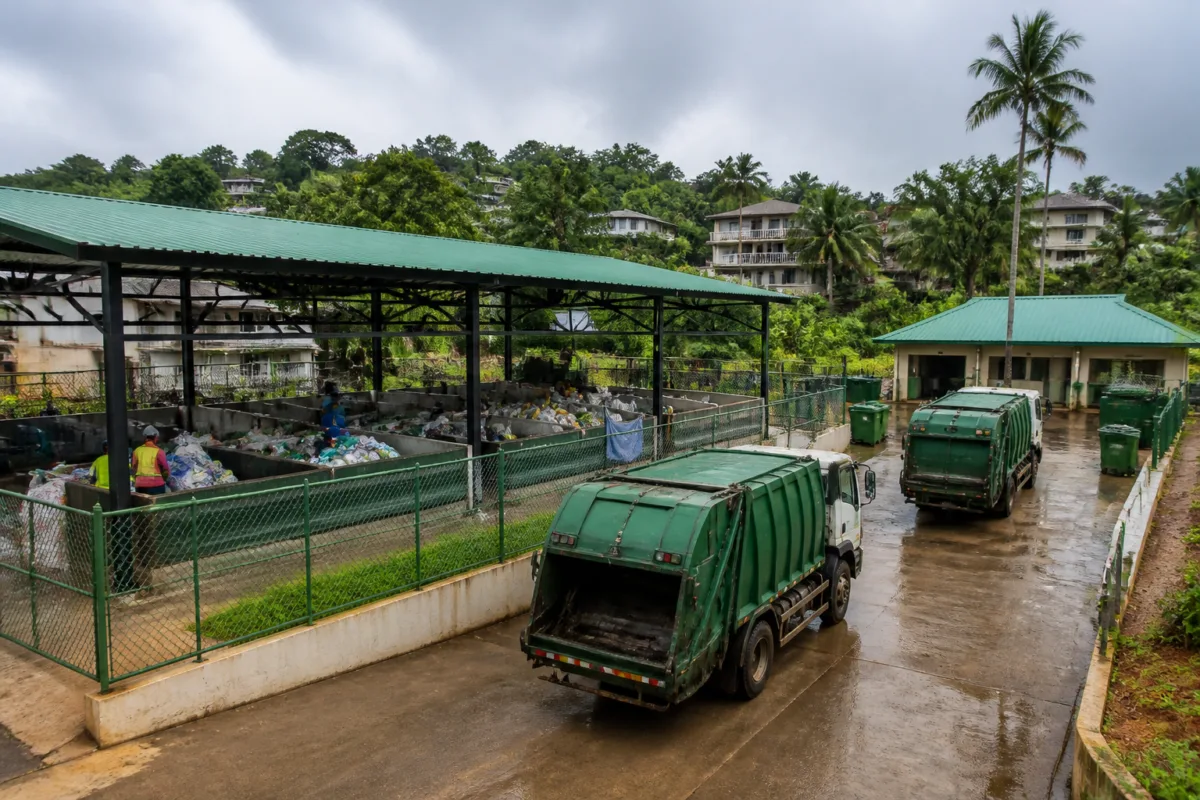
Goa’s Digital Waste Monitoring System is designed to bring bulk waste generators, collectors, transporters, storage facilities, recyclers and non-biodegradable waste traders into one regulatory framework. The Goa State Pollution Control Board (GSPCB) has framed guidelines that would require these participants to register online, submit operational information and pay fees linked partly to the quantity and category of waste handled. The proposal is therefore more than a new registration form: it is an attempt to make the movement of waste visible across the chain from generation to disposal, recovery or processing.
The framework comes as the state formalises obligations under the Solid Waste Management Rules, 2026 and an amendment to the Goa Non-Biodegradable Garbage (Control) Act, 1996. According to the Times of India report, the GSPCB took note of the amendment at its meeting in June. The amendment mandates online registration for bulk waste generators, waste collectors, recyclers and co-processors involved in waste disposal. The board subsequently decided to formulate a standardised procedure.
That sequence is important because waste management often involves several organisations with different responsibilities. Municipal and panchayat bodies may engage collectors and transporters, while private operators, storage facilities, recyclers, co-processors and traders handle other parts of the system. Without a common registration and reporting structure, information about who is handling waste, which vehicles are being used, where waste is being stored and what happens after collection can remain distributed across separate administrative and commercial arrangements.
The proposed portal, to be developed by the GSPCB under a revenue-sharing model, is intended to provide that common administrative layer. The guidelines apply to bulk waste generators; collectors and transporters working for local bodies; collectors and transporters serving other entities; waste storage facilities; recyclers and co-processors; and traders dealing in non-biodegradable waste. Each category has different documentation requirements, reflecting the different points at which waste enters, moves through or leaves the system.
For bulk waste generators, the application must include details of the waste generated and land ownership. Collectors and transporters for local bodies must provide vehicle registration numbers and transportation and disposal routes, among other information. Recyclers must submit a flowchart describing their recycling and co-processing steps. These requirements indicate that the GSPCB is seeking operational information rather than only the names and addresses of regulated entities.
The distinction matters for local administration. A list of registered operators can establish who is authorised to perform a function, but route information and process details can help connect that authorisation to actual operations. The guidelines, as reported, do not establish how frequently the information will be updated, how inspections will be triggered or how violations will be published. Those implementation details will determine whether the portal becomes a live monitoring system or remains primarily a compliance database.
The facility standards in the framework address another persistent part of the urban waste problem: the conditions under which waste is stored and sorted. Waste storage facilities and material recovery facilities must have concrete working areas, covered premises, fencing and access for fire-safety operations. The guidelines also prescribe minimum setback distances from residential areas, water bodies and institutions, based on the overall area of the facility in square metres.
These provisions connect waste regulation with land-use planning and public safety. A material recovery facility is not simply a place where waste is temporarily kept. It is a working site where vehicles arrive, material is handled and recoverable waste may be sorted or transferred. Its location, surface, enclosure and access can affect nearby residents, workers, water bodies and emergency response. By specifying infrastructure and siting requirements, the GSPCB is treating waste facilities as part of the built environment rather than as invisible back-end services.
The framework also creates a financial structure for participation. It introduces a one-time registration fee, an annual portal fee and a transaction fee based on the quantum and category of waste handled. This makes the proposed system partly dependent on recurring interaction with the portal rather than a single registration event. The fee design, however, raises practical questions that are not answered in the supplied report, including how waste quantities will be measured, how categories will be verified and how the revenue-sharing model will operate.
Those questions are central to the credibility of a digital monitoring system. If the transaction fee depends on the amount of waste handled, the system requires a consistent method for recording and validating quantities. If different categories attract different charges, operators need clear definitions and a predictable process for classification. The supplied guidelines establish the existence of a structured fee mechanism but do not provide the rates or explain the audit arrangements.
The proposed registration categories create a basic map of the waste economy. Bulk waste generators sit at the point of production. Collectors and transporters connect generators to local bodies, facilities and disposal or processing destinations. Storage facilities and material recovery facilities provide an intermediate location. Recyclers and co-processors represent recovery and processing functions, while non-biodegradable waste traders operate within the market for such materials. Bringing all six groups into the same system could help the regulator understand the chain as a set of linked activities rather than as isolated licences.
The framework is also significant for municipal and panchayat bodies. Collectors and transporters working for local bodies will have to submit vehicle registration numbers and routes. That places operational details associated with public waste services within the GSPCB’s proposed portal. The arrangement could create a clearer record of contracted or authorised movement, although the source does not specify how the board’s portal will interact with municipal records, panchayat systems or existing contracts.
The governance challenge is therefore one of coordination. The GSPCB is framing the registration and monitoring procedure, but waste collection and transport may involve local bodies and their contractors, while facilities, recyclers and traders may be privately operated. The system’s effectiveness will depend on whether information submitted for regulatory registration is connected to enforcement, facility approvals and day-to-day municipal operations. The report confirms the proposed requirements but does not establish the institutional protocol for sharing or acting on the data.
The use of minimum setbacks based on facility area adds a spatial dimension to the framework. It suggests that the regulatory treatment of a facility will be related not only to what it handles but also to its physical scale and location. Residential areas, water bodies and institutions are specifically identified as sensitive surroundings. The guidelines therefore place waste infrastructure within a broader planning question: where can essential but potentially disruptive urban services be located, and what physical safeguards must surround them?
At the same time, registration alone cannot demonstrate that waste has been safely processed or recovered. The required flowchart for recyclers and co-processors records the proposed sequence of activities, but the supplied material does not say whether the board will verify actual process performance through inspections, digital evidence or periodic reporting. Similarly, transport routes can show an intended path without necessarily proving that waste reached the stated destination. The difference between declared operations and verified operations will be a key test for the system.
What the available evidence confirms is that Goa is moving towards a more standardised regulatory architecture for waste handling. The GSPCB has identified the participants who must register, the documents different categories must submit, the basic infrastructure expected at storage and recovery facilities, and the fees attached to the portal. What remains unclear is the timetable for the portal’s launch, the precise fee schedule, the enforcement process and the way data will be used after registration.
The larger urban question is whether digital oversight can close the gaps between waste generation, collection, transport, storage and processing. Goa’s proposed system addresses that chain administratively by requiring multiple actors to appear in one framework. Its eventual significance will depend on the quality of the information submitted, the physical compliance of facilities, the coordination between the GSPCB and local bodies, and the regulator’s ability to act on what the system records. The next milestones are the development of the portal and the implementation of the standardised registration procedure.

