


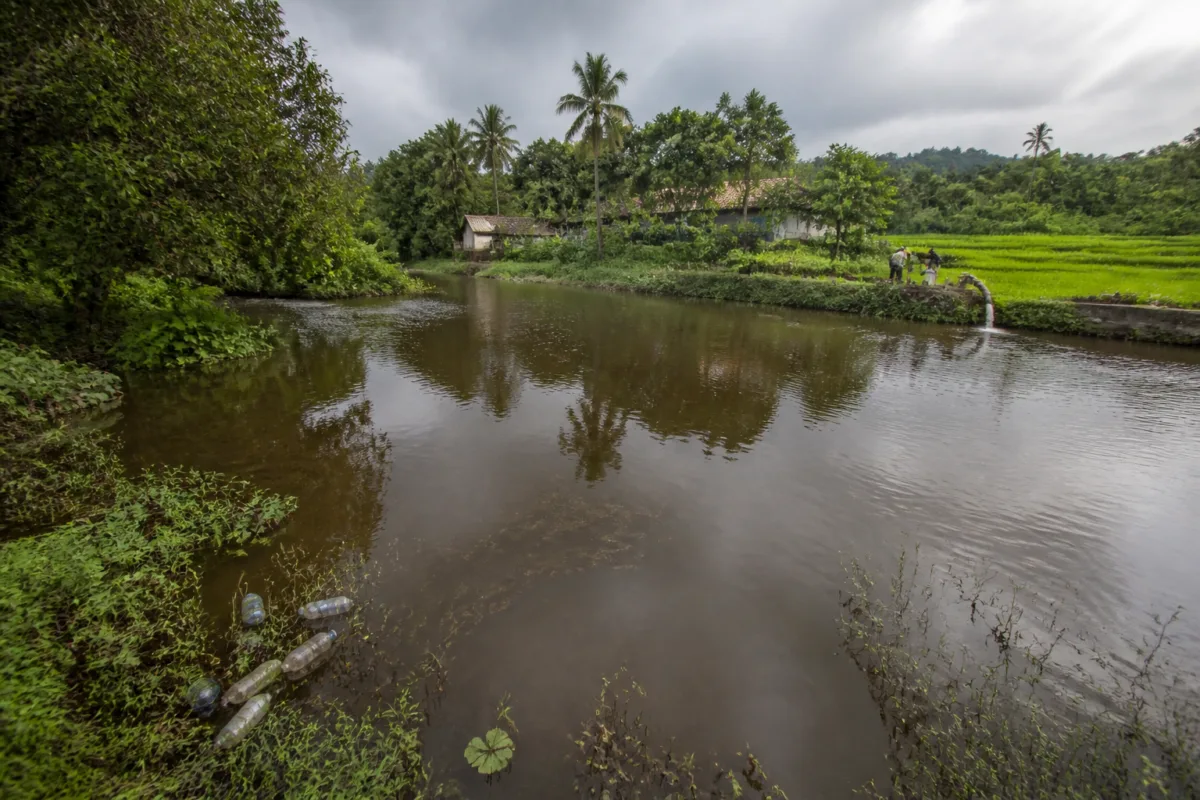
The Goa State Pollution Control Board has collected water samples from the Arla-Keri wetland lake after residents complained that the water had turned dark brown, developed a strong stench and was damaging crops downstream. The testing is expected to help establish the cause and extent of the pollution affecting the lake and surrounding horticultural fields.
A GSPCB team led by junior engineer Aradhya Deshpande collected the samples on Thursday and will examine them in the board’s laboratory. Residents have urged the authorities to take urgent action, saying the lake is the only natural source of irrigation water for the area and that several Kulaagar crops downstream have dried up.
Villagers said the water appeared toxic and that an unbearable smell was coming from the lake. They suspect that nearby commercial establishments may be releasing large quantities of waste and sewage into the waterbody. The suspected discharge has not been confirmed, and the laboratory examination will determine the nature of the contamination.
Residents have also attempted to remove plastic and discarded drinking water bottles floating on the surface. Their complaints point to both visible solid waste and possible untreated wastewater entering or accumulating in the wetland. The lake has been described by residents as centuries old and remains connected to local irrigation and horticultural activity.
The pollution complaints have also revived concerns about repeated deterioration despite earlier official attention. Locals told the officials that a similar inspection was carried out in 2012, but alleged that the lake was allowed to deteriorate again. Activist Sandeep Parkar from Khandepar said the lake was highly polluted and that no effective action had followed its declaration as a wetland in 2023.
The wetland status carries regulatory significance. Under the Centre’s Wetlands (Conservation and Management) Rules, 2017, notified wetlands and their zones of influence are subject to regulation of developmental activities. The rules prohibit activities including the disposal of construction and solid waste and the discharge of untreated waste. The Arla-Keri lake’s pollution therefore raises questions about enforcement around the waterbody as well as the protection of its irrigation function.
The immediate next step is the GSPCB’s laboratory testing of the collected samples. The results will indicate what pollutants are present and will help authorities determine the response required, including action on any identified source of waste or sewage discharge.

