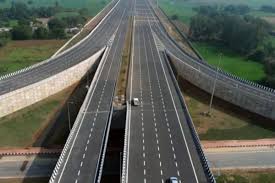
Ganga Expressway Opening Signals Regional Growth Shift
Uttar Pradesh is set to operationalise one of India’s longest road infrastructure projects, with the 594-km Ganga Expressway scheduled for inauguration on April 29. The corridor, stretching from Meerut to Prayagraj, is expected to significantly reduce travel time across the state while unlocking new economic and logistics opportunities along its route.
Designed as a six-lane, access-controlled highway expandable to eight lanes, the Ganga Expressway connects 12 districts, linking western and eastern Uttar Pradesh through a continuous high-speed corridor. This east–west connectivity is seen as a structural upgrade for a state where inter-regional travel has historically been slow and fragmented. The Ganga Expressway impact is likely to be most visible in travel efficiency and freight movement. Current journeys between Meerut and Prayagraj, which can take up to 12 hours, are expected to reduce significantly once the corridor becomes fully operational. Faster connectivity is expected to improve supply chains, reduce logistics costs, and enhance access to markets for both urban and rural regions. Beyond mobility, the project is positioned as a catalyst for regional economic development. Infrastructure corridors of this scale often trigger industrial clusters, warehousing hubs, and real estate growth along their alignment. Districts that previously remained outside major economic networks may see increased investment and employment opportunities as accessibility improves.
However, urban development experts caution that such growth must be carefully managed. Expressway-led expansion can accelerate peri-urban sprawl, particularly in areas lacking strong land-use planning frameworks. Without coordinated zoning, infrastructure provisioning, and environmental safeguards, rapid development risks creating uneven urbanisation patterns. The Ganga Expressway impact also intersects with sustainability concerns. Large-scale highway projects influence land use, agricultural patterns, and ecological systems. While access-controlled design improves efficiency and safety, long-term resilience will depend on how development along the corridor integrates green infrastructure, water management systems, and climate-responsive planning. The project, developed at an estimated cost exceeding ₹36,000 crore, reflects a broader national emphasis on infrastructure-led growth as a driver of economic transformation. Uttar Pradesh, in particular, has expanded its expressway network significantly over the past decade, positioning itself as a key logistics and manufacturing hub within northern India.
Yet, the success of the Ganga Expressway will depend on more than its physical completion. Ensuring last-mile connectivity to towns, integrating transport nodes with industrial zones, and maintaining road safety standards will be critical to realising its full potential. As the expressway opens, it marks a transition in how infrastructure shapes regional development—moving beyond connectivity to influence settlement patterns, economic geography, and long-term urbanisation. The next phase will require aligning this growth with sustainable and inclusive planning to ensure that the benefits extend across communities rather than concentrating in select corridors.