


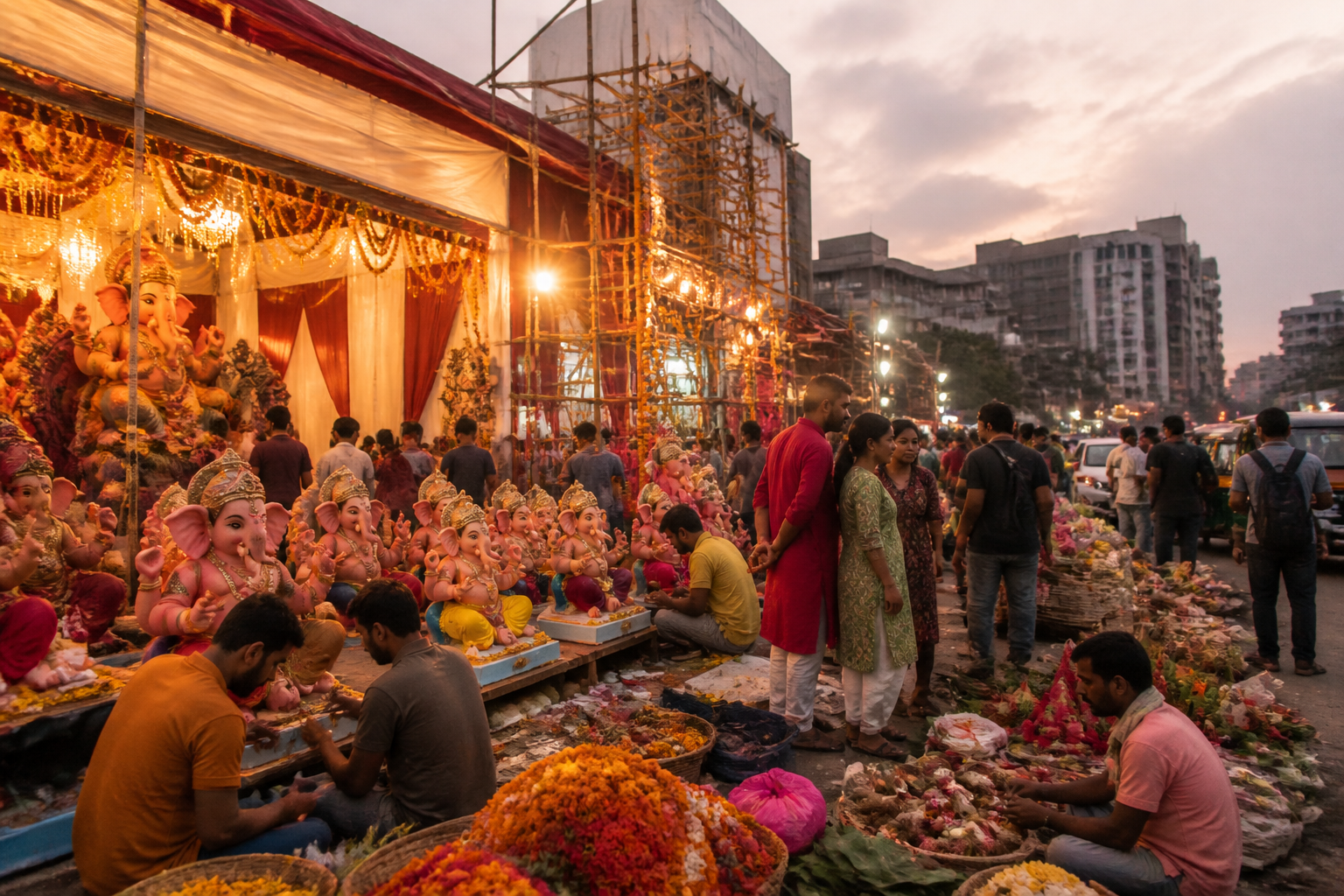
Ganesh festival trade in India is expected to exceed ₹50,000 crore this year, according to an estimate by the Confederation of All India Traders (CAIT), as spending rises on idols, pandals, decoration, food, transport, tourism and locally made products during the 10-day celebration.
The festival began on September 14 and is scheduled to conclude with immersions on September 25. CAIT said the estimate is based on discussions with trade organisations, markets and other stakeholders across major states and cities where Ganesh Chaturthi is widely observed.
The projected figure would be higher than the approximately ₹30,000 crore estimated for 2024 and the ₹30,000 crore to ₹40,000 crore range cited for 2025. CAIT attributed the expected increase to higher consumer spending, the expansion of community celebrations, larger public pandals, tourism, event-management activity and stronger demand for Indian-made products.
The estimate covers a wide network of urban and peri-urban businesses. These include idol makers, decorators, lighting providers, tent-house operators, flower sellers, sweet and food businesses, transport services, hospitality providers, event managers, advertisers, sponsors, artisans and other small traders. The festival also creates seasonal work for workers connected to bamboo, textiles, sound and lighting, catering and local logistics.
CAIT said the market is showing increased demand for products associated with the government’s Vocal for Local and Atmanirbhar Bharat campaigns. According to the traders’ body, many idols, decorative materials, worship supplies, lighting products, handicrafts, textiles and gifts used during the festival are being sourced domestically, with traders and consumers giving greater preference to local goods.
The economic activity is closely linked to the temporary transformation of public and commercial spaces. Community groups install small and large pandals, arrange lighting and sound systems, organise food and cultural activities, and draw visitors from surrounding neighbourhoods. These arrangements generate demand not only for products but also for services such as fabrication, electrical work, security, transport and venue management.
CAIT also reported stronger interest in environmentally oriented decoration. Pandal themes using banana leaves, marigold flowers, natural fabrics, earthen lamps, bamboo and handmade materials were identified as popular choices. Other themes mentioned in the report include temple architecture, Indian cultural heritage, rural India and traditional regional styles.
The festival is particularly prominent in Maharashtra, Karnataka, Delhi, Telangana, Andhra Pradesh, Gujarat, Goa, Uttar Pradesh, Madhya Pradesh and Tamil Nadu, as well as in several major metropolitan areas. CAIT said millions of artisans, vendors, small businesses, service providers and workers participate in the seasonal economy generated by the celebrations.
Praveen Khandelwal, CAIT’s secretary general and a member of Parliament from Chandni Chowk, said the festival was supporting traders, artisans, micro, small and medium enterprises, women entrepreneurs, self-employed people and workers. The statement characterised Ganesh Chaturthi as both a religious celebration and a major source of economic activity.
Ganeshotsav forms part of a wider festive trading cycle that began with Raksha Bandhan and is expected to continue through Navratri, Durga Puja, Dussehra, Karva Chauth, Diwali, Chhath Puja and the subsequent wedding season. CAIT said the cumulative period would sustain demand across retail, food, transport, hospitality, event management and local manufacturing. The ₹50,000-crore figure remains a trade-body estimate based on stakeholder consultations, rather than an independently audited measurement of festival-linked economic activity.
