


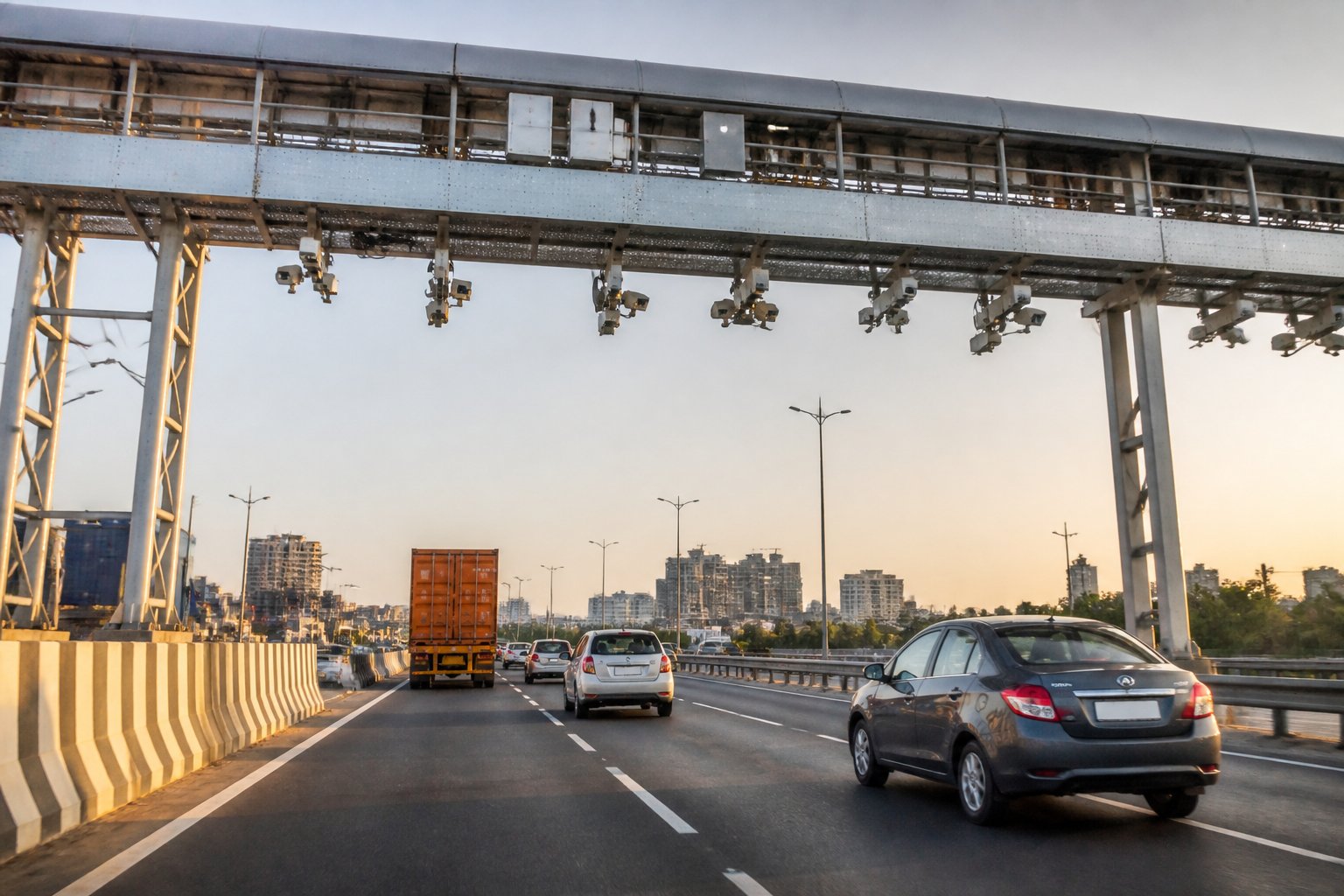
India plans to make all toll booths on national highways barrier-free by March 2027, a move the government says could deliver an annual financial benefit of up to Rs 25,000 crore while reducing delays and operating costs across the highway network.
Road Transport and Highways Minister Nitin Gadkari said the transition would combine FASTag electronic toll collection with automatic number plate recognition (ANPR) technology. More than 70% of toll booths are expected to become barrier-free by the end of December, with complete coverage targeted for March 2027.
Gadkari said FASTag adoption had already increased toll collections by 10%, or about Rs 7,000 crore, taking total toll booth revenue to more than Rs 82,000 crore. He was speaking at the Global Fintech Fest 2026 during the launch of One Tag, a FASTag portability facility in Mumbai.
“When the system will go fully live, then our department alone would deliver a benefit of Rs 20,000-25,000 crore per year to the Government of India because of the use of FASTags,” Gadkari said at the event.
The minister said the barrier-free tolling system currently being piloted could generate a further 10% increase in collections, equivalent to an additional Rs 7,000-8,000 crore. He also said the operating cost of toll booths had fallen to 2-3% from about 12% earlier.
The first multi-lane free-flow tolling system under the wider programme was introduced at a Mumbai toll plaza on May 11, 2026. Unlike conventional toll plazas, barrier-free systems allow vehicles to pass without stopping at physical booths, with payments and vehicle identification handled through digital systems.
For motorists, the government has linked the rollout to shorter queues, lower fuel consumption and fewer stoppages on national highways. Gadkari said vehicles had earlier spent around 12 minutes waiting at toll plazas and cited studies estimating annual fuel savings of more than Rs 5,250 crore through technology-based toll collection.
FASTag penetration at National Highway toll plazas has crossed 98%, according to the minister, while around 13 crore FASTags have been issued across the country. The government is now seeking to expand the system beyond toll payments by integrating mobility data related to vehicles, insurance, banking and road use.
The One Tag facility launched in Mumbai allows vehicle owners to connect an existing FASTag to a new bank account through the Rajmarg Yatra app. The facility is intended to improve portability for motorists who change banks without needing to replace their FASTag.
Gadkari also urged technology companies to develop systems capable of detecting overloaded trucks, saying the freight sector currently lacks transparency. He said action would be taken to address the issue and mentioned that one operator had been booked by the Central Bureau of Investigation.
The minister described FASTag as an example of digital technology being used to improve the operation of physical infrastructure. The next stage of the programme will focus on expanding barrier-free tolling, integrating mobility-related data and completing the national highway rollout by March 2027.
